


This thread is the official product listing for member gear reviews of this product. Add your review as a reply to help build the shared knowledge base. – Mods
BPL Listing ID: 2026-01-03 03:07:10 UTC / d746facbfb
Topic
Become a member to post in the forums.
.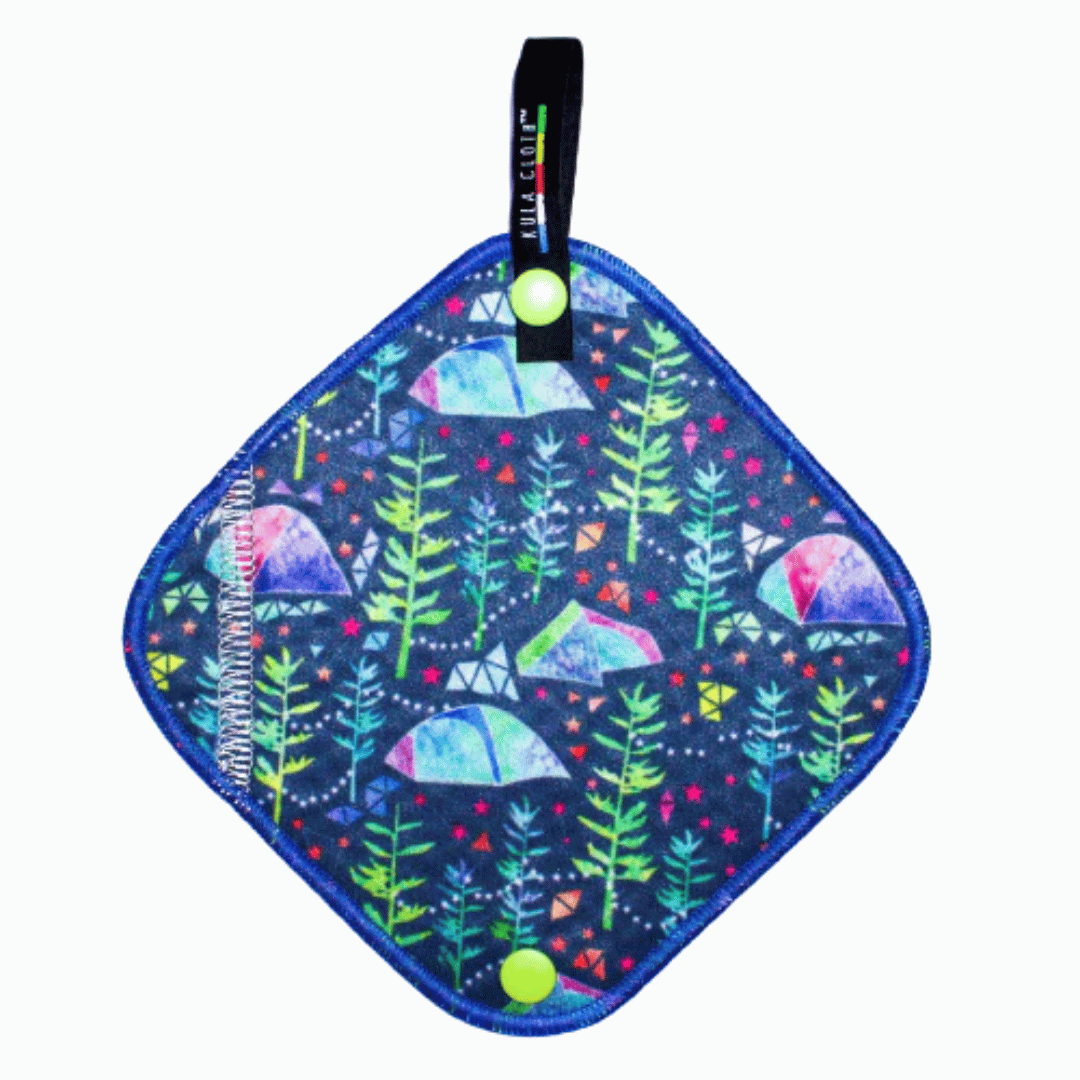
The Kula Cloth (0.5 ounces / 14 g) is an antimicrobial, reusable pee cloth featuring a highly absorbent, silver-infused fabric on one side and a waterproof, non-permeable layer on the other to prevent leaks. It includes a snap closure for easy attachment to your pack and a stealth-mode fold for discreet storage.
This thread is the official product listing for member gear reviews of this product. Add your review as a reply to help build the shared knowledge base. – Mods
BPL Listing ID: 2026-01-03 03:07:10 UTC / d746facbfb
Designed to be a sustainable alternative to using toilet paper while backpacking, the Kula Cloth is a double sided antimicrobial pee cloth that claims to have the added bonus of being less odorous than using a cotton bandana. Measuring 6 by 6 inches but designed to be folded in half while being stored on the outside of your pack, one side of the cloth has a black or colorful design (there are hundreds, take your pic) to be displayed on the outside, while the other is a black woven antimicrobial material which makes use of woven silver fibers. The cloth has a snap on both ends so it can be attached to the outside of your pack and closed.
I am on my second Kula Cloth since I started backpacking, and the only reason that I don’t have the original is because the first fell off my pack (after 120 nights on the Appalachian Trail). The second cloth has made it through another 60 nights on the Appalachian Trail, a 13 day Tahoe Rim thruhike, a month on the Colorado Trail, and 3 weeks on the Arizona Trail without any visible wear and tear. It is easy to use, doesn’t smell, hides menstrual blood well, and can be thrown in the wash with the rest of your kit easily.
The Kula cloth also has a reflective thread woven into it to make it easy to find in the dark, although I can’t say I ever noticed this feature in the field. I also only used a bandana as a pee cloth for about a week when I was first backpacking, and I can say that the Kula Cloth dries more quickly than the cotton bandana (essential on places like the Appalachian Trail), I cannot say that I noticed a smell from either product. I will also say that the Kula looks different enough from other items in my kit that I won’t confuse it with the bandana I keep attached to the front of my pack as a reusable handkerchief.
While Kula cloths are certainly colorful and a fun way to add personality to your pack in addition to being a useful item (which I recommend for those with uteruses, since urinary tract infections from going without some kind of pee cloth), I am not sure how sanitary they are compared to a cotton bandana. In addition, the marketing for Kula Cloth, and the individual product listings, use vague terms like “all natural” and “anti-microbial” , “non-toxic”, “eco-friendly and other marketing heavy terminology. Although the company claims that you can contact them to learn more about what the product is made of (and I have seen some independent gear reviews which list the materials as Polyester, bamboo viscose, organically grown cotton, cotton, and Silvadur) I would prefer that the actual percentages of the materials were listed on the company website for the sake of transparency. I am also curious if anyone has done an anti-microbial study comparing Kula to other products.
Become a member to post in the forums.
 How to Plan with Decision GatesKeep going, change your route, or turn back? Watch how decision gates help structure these choices in our YouTube video.
 © Beartooth Media Group Inc.
 Loading...