


The x post
Topic
Become a member to post in the forums.
 .
The x post
Ripstop by the Roll is a great company and I like how they try to improve and innovate their products. I’m a regular customer when I need materials and backpacking hardware.
I think a great addition to their fabric line would be high quality, WOVEN polypropylene fabrics.
As far as I know, there aren’t too many sources for lightweight, woven PP fabrics (especially not tightly woven). Even looking at Alibaba and the like, mostly what can be found is non woven PP fabric which is not suitable for garment or backpacking type use. Doesn’t have enough strength (tensile and shear) and durability.
Some pros and cons about woven PP fabric (and keep in mind, just like with a lot of things, the PP fabric of today is not the same as was in grandpa’s time; improvements have been made. I have some Terramar PP based baselayers that are quite strong and durable).
Pros:
1. It’s density is about 20% less than nylon’s.
2. It’s a cheap base material, because it’s cheap to make and it’s commonly and easily recycled.
3. More environmentally friendly than most other plastics.
4. Tensile strength almost on par with the most common/inexpensive polyester/PET fibers, but at lower density.
5. Lowest thermal conductivity of fibers, which could affect condensation positively in some situations/conditions and/or slightly improve warmth of garment or shelter (especially a bivy).
6. Slightly less stretch than nylon, but a bit more than polyester. May have a more ideal stretch to increase strength in relation to high wind, while not sagging appreciably (especially since it absorbs so little moisture–practically none).
7. Last and perhaps most importantly next to it’s low density is that it’s surface energy/tension is just low enough to not require a DWR coating or finish, which would make it an excellent face fabric for WPB membranes or fabrics with micro porous coatings.
Cons:
1. Lower UV resistance/durability than polyester and even nylon (though, this can be altered/improved, such as adding carbon in the colorant).
2. May be harder to achieve ultra tight weaves as compared to polyester and nylon fabrics because of it’s lower surface energy/tension? (Not sure on this one, but I know it’s an issue with Dyneema and Spectra type fabrics, which has a similar surface energy. Conversely, Rohan had an all PP fiber based windshirt).
3. Appreciably lower tensile strength than nylon, and (very) slightly lower than most common polyester.
4. While it has low enough surface energy/tension to not require a DWR coating, it readily bonds with bio-oils, which could negatively impact that over time, however a good detergent washing and/or highly alkaline wash additives (which it resists well) can most likely remove surface oils well enough. MUCH cheaper than buying and reapplying DWR’s and a bit more convenient and easy to do.
5. Garment wise– most quickly developing and longest retaining of the stink factor–but this is only a real issue when used as a base layer, and not as a garment face, tarp, etc fabric.
6. Hard to bond/laminate with most other materials (really not that much of an issue since perimeter and X + — sewing through two layers is plenty good for keeping them together permanently (and a little air space between two fabrics can be a good thing thermally and rain resistant wise). The thread holes can be sealed with a tiny bit of thin hot glue, which would bond well to the PP surface (we’re talking real and resourceful MYOG/DIY’ers and not some namby pamby, fast food mentality typical consumers here, aren’t we?)
Some examples of proposed applications:
Combine this with say RipStopbytheRoll’s Robic .74 oz WPB fabric to get a more truly and longer lasting waterproof fabric without significantly decreasing the breathability.
Using fibers equivalent in size to nylon’s 20D fibers, combine two layers of tightly woven, non ripstop fabric to get a highly water repellent and yet breathable, and low condensation tarp or tent material that would be much stronger and more durable than say a 1443R Tyvek based tarp/tent at around the same weight of a single layer of common silnylons.
Or for a fully water proof version, take a 20D or 30D nylon equivalent sized fiber base, and blow dry or pressure+heat bond some polycryo sheeting to one side (obviously the lightest/thinnest you can find). This is somewhat theoretical, but since polycryo is made out of blend of PE and PP plastic (which are molecularly similar already) and such plastics readily molecularly heat bond/fuse with each other–there is good logic foundation for the theory. May be somewhat hard to DIY/at home do it, but should be no problem for factories with calendaring equipment. Especially since precise temp calculations would have to be determined and set to not appreciably decrease the strength of the woven fibers part of the composite.
Anyways, a business won’t listen to a lone voice crying out in the wilderness, but they might pay attention to a largish group from a site that provides them with a chunk of their regular business. Call, email, reply positively here, etc, but join in this cause if you have any interest in such fabrics if they are feasible. I think there just hasn’t been much demand yet, rather than it not being doable. It requires a little thinking outside of the box.

This would probably be better served living in the MYOG section. Anyways, you would be surprised on how receptive @kcbaker-2 is to new ideas. He’s obviously staying busy but if this is something that’s feaible, it very well might be entertained. I’m not familiar enough with PP outside of your description above to say that I am dying to have it but I love new stuff.
Hi Hoosier,
I do think this thread probably more so belongs in MYOG section, but this section seems to be more visible and frequented overall.
I’ll just say, I’ve gone that route already and am trying a different approach. I think the more people who show interest, the more they’ll take it seriously.
Become a member to post in the forums.
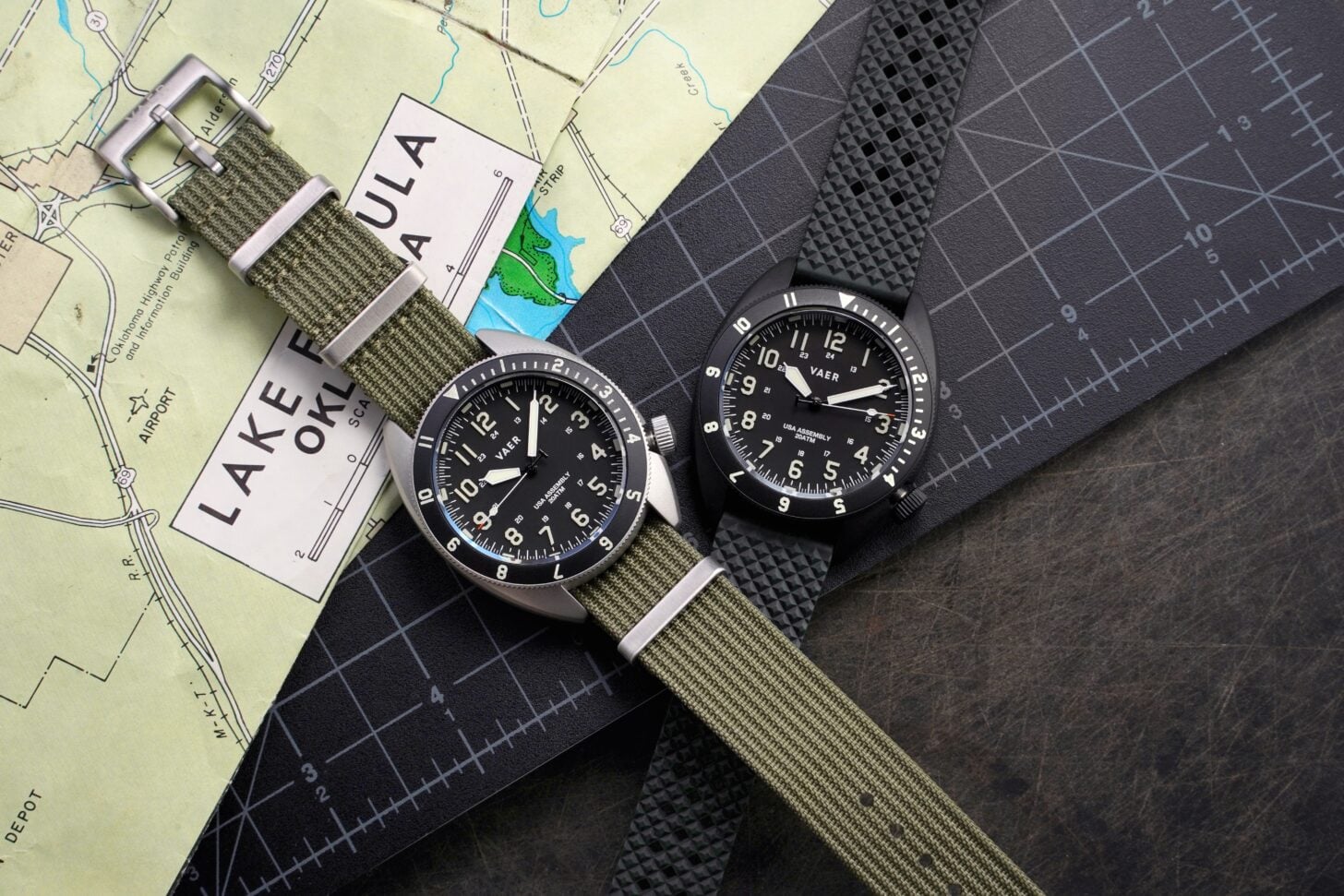 Analog by Design: The Vaer C4 Tactical Field SolarThe best gear works the moment you reach for it. The VAER C4 Tactical Field Solar (41.5mm) combines rugged functionality with everyday practicality, featuring a matte dial with bold stencil numerals, raised 3D Super-LumiNova markers, and a 12-hour bezel for timing a climb or tracking a second time zone. Powered by light, it delivers up to six months of operation from just six hours of exposure, with no routine battery changes required. A sapphire crystal, 200 meters of water resistance, USA assembly, and a two-year waterproof warranty make it a dependable companion for adventures on and off the trail.
 © Beartooth Media Group Inc.
 Loading...