ToodT: I’ve seen peer-reviewed articles on how even humans can discern faster-diffusing, small molecules versus slow-diffusing, large molecules differently in each nostil. They used some C-8 compound versus a larger (C-12?) species. (Every 45 minutes-ish, which of your nostrils is taking in more or less air switches – check right now by blocking each and one is breathing more than the other. 45 minutes later, it will have switched).
I can tell how large a dead animal is by its smell. There’ll be something in backyard and I’ll sniff from a few spots, ponder it, and conclude it is cat-sized. And it’ll turn out to be something like that size like a opossum. Or something died in the car and I estimate it is as rat-sized or small squirrel and it turns out to a be a family of dead mice. Being human, it has to be a pretty powerful smell like a dead animal for me to do that.
I notice our dog not caring about a small crumb very close but being interested in a large piece of food further away, even when they’re both out of sight and only perceptible by smell and seemingly would smell the same amount.
There’s an obvious survival advantage to percieving the size of a food resource and not chasing down every little scent. And there’s a pausible mechanism for how that happens. Whenever I see a survival advantage and a feasible mechanism (like highly-efficient heat-exchangers in Arctic whales’ tongues), eventually, it’s proven some years later. Evolution is powerful.
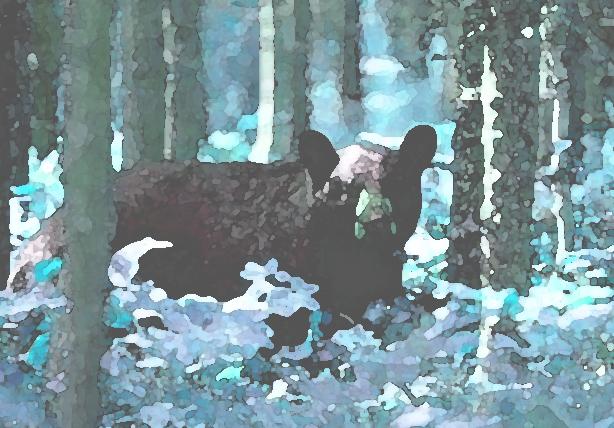
jscott: habituated bears develop different, successful strategies, like “Bite every zip-lock bag” because 1/3 of the time, they win.


 .
.