


This thread is the official product listing for member gear reviews of this product. Add your review as a reply to help build the shared knowledge base. – Mods
BPL Listing ID: 2025-12-29 06:18:32 UTC / 59738d5482
Topic
Become a member to post in the forums.
.
2-person, side-entry, 2-doors, dual vestibules, single-wall DCF dome-style shelter that can use trekking poles for eyebrow pole support for additional stability in extreme weather.
This thread is the official product listing for member gear reviews of this product. Add your review as a reply to help build the shared knowledge base. – Mods
BPL Listing ID: 2025-12-29 06:18:32 UTC / 59738d5482
Disclosure details: HMG provided this pre-production version of this tent as a product sample to Backpacking Light.
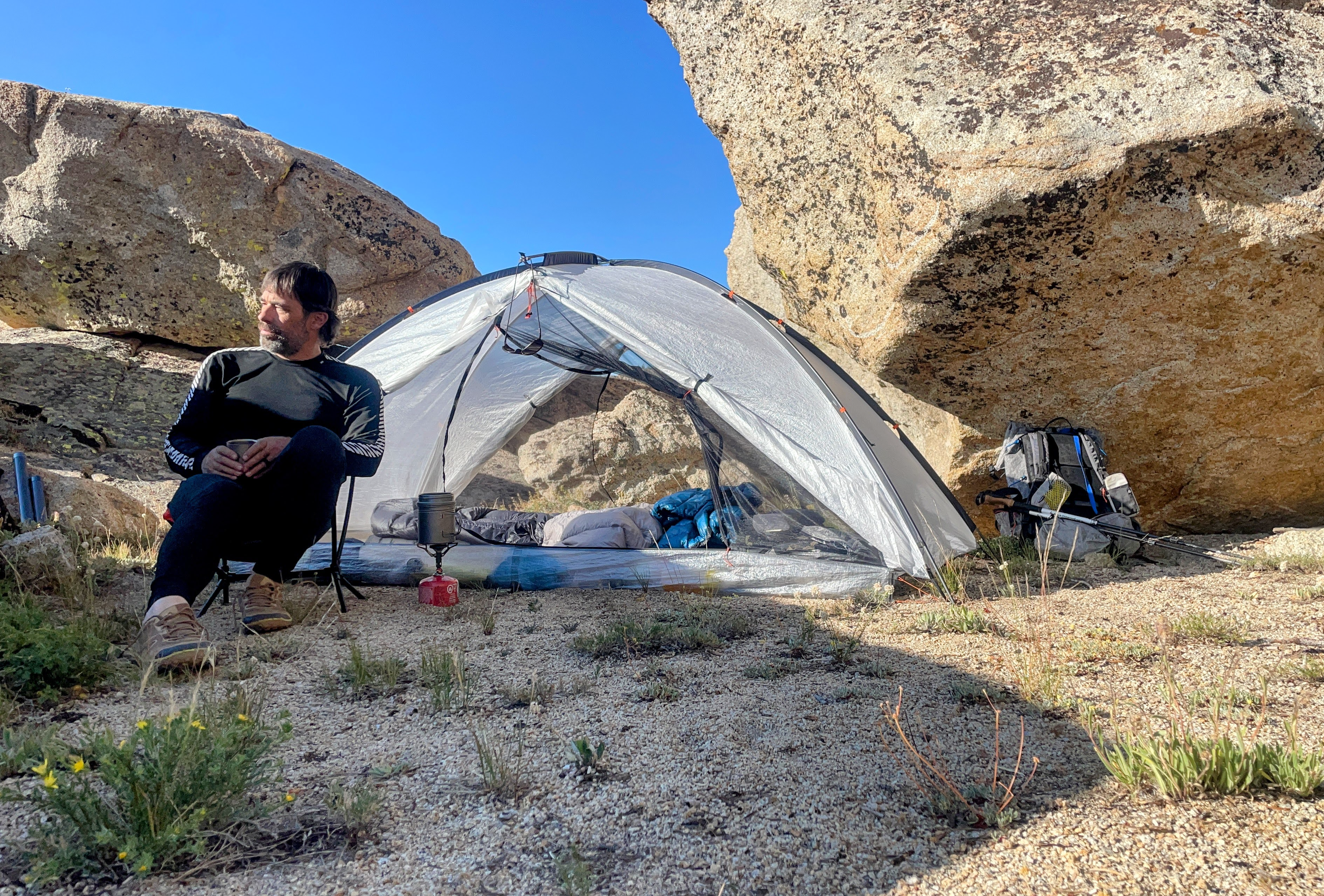
This is a single-wall, dual-vestibule, dual-entry, side-entry, dome-style (crossing arch) DCF tent with a rectangular footprint. This sample weighs 33.2 ounces on my (non-certified) kitchen scale; that weight includes just the tent body and poles, no guylines or stakes or stow bags.
I have two primary use cases for this shelter:
I have been using the tent since early spring 2025, and it has seen heavy snow (storms dumping up to about 16 inches overnight), blizzards (spindrift), heavy rain, and high winds (gusts up to about 60 mph).
In heavy snow and wind, I used trekking poles as struts to support the eyebrow/peak pole, along with apex guylines (2) and up to eight (8) guylines attached directly to the main crossing poles. This kind of pitch is essential to support heavy snow loads and to maintain stability in high winds. Without trekking pole struts and a complete set of guylines, this tent will not support heavy snow or remain stable in winds this high.
Rocky Mountain National Park, May 2025:

As a freestanding summer shelter, it’s light enough and offers the advantage over most trekking pole tents of more usable volume inside, which is nice if you’re hiking with a partner or want to spread out a bit if solo. I appreciate the extra real estate in the winter, especially, because I want to cook in one (mostly empty) vestibule, store my pack/wet gear in the other, and keep the rest of my gear inside the tent. And because the vestibules can be rolled up and the inner tent has two full-length, full-height mesh walls, there’s plenty of ventilation for summer nights.
Emigrant Wilderness, Aug 2025:
Become a member to post in the forums.
 New Gear with Aluula FabricsLighter, stronger, more abrasion-resistant, and highly water-resistant - explore ultralight backpacking gear made with ALUULA Graflyte fabrics. Engineered for exceptional strength, durability, and lightweight performance, ALUULA Graflyte helps reduce pack weight without sacrificing reliability, making it ideal for demanding backcountry adventures.
 © Beartooth Media Group Inc.
 Loading...