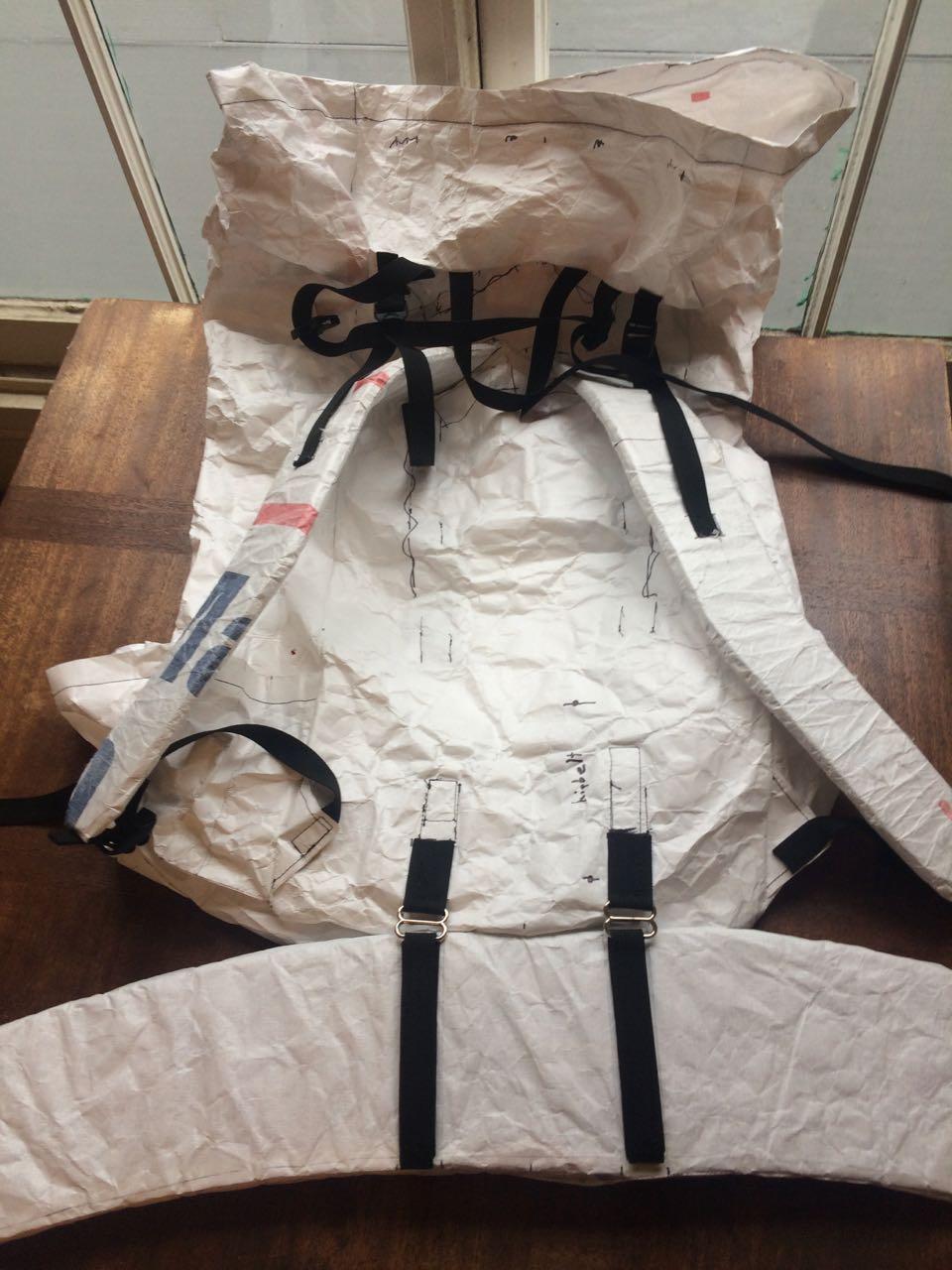
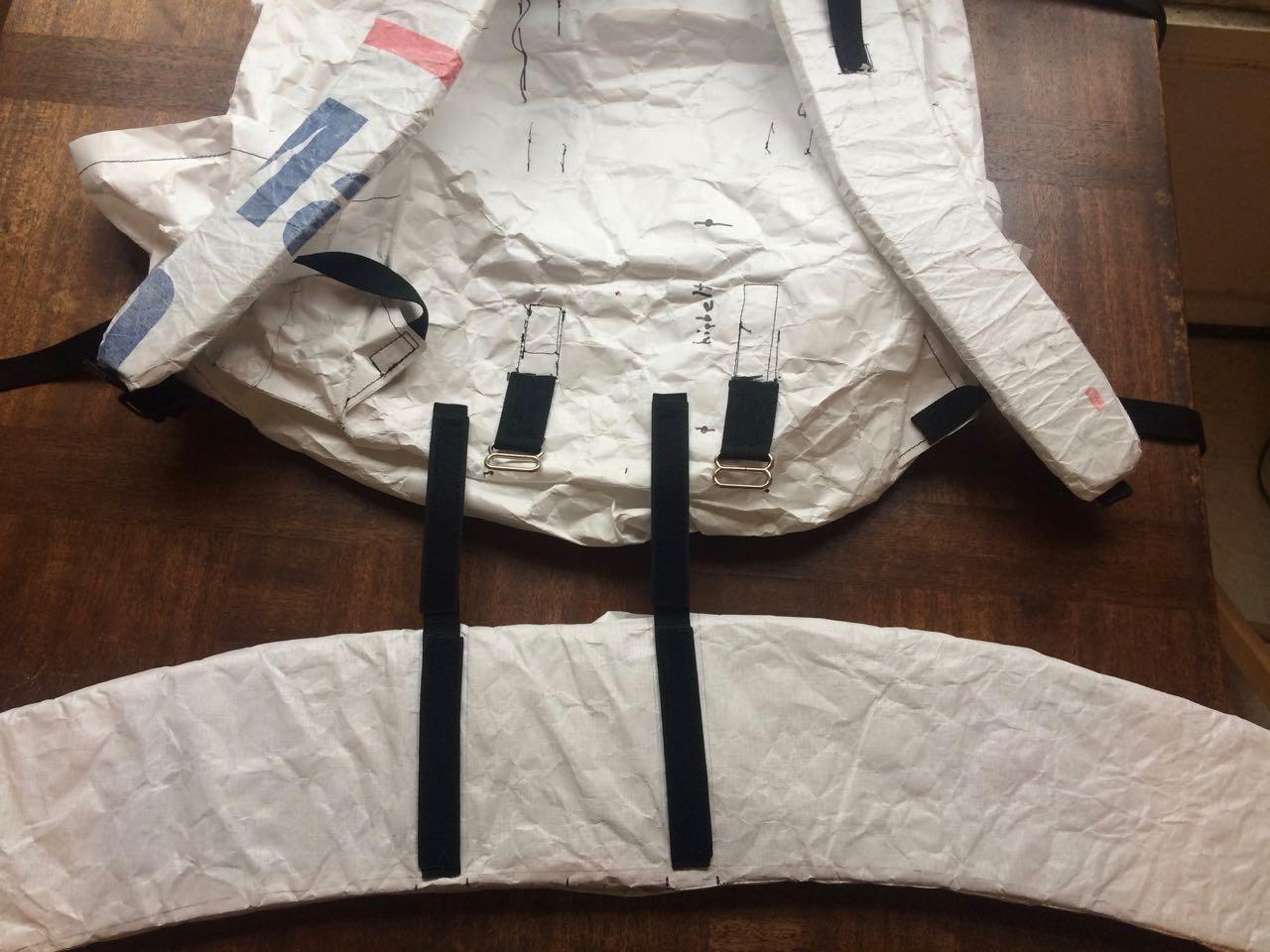
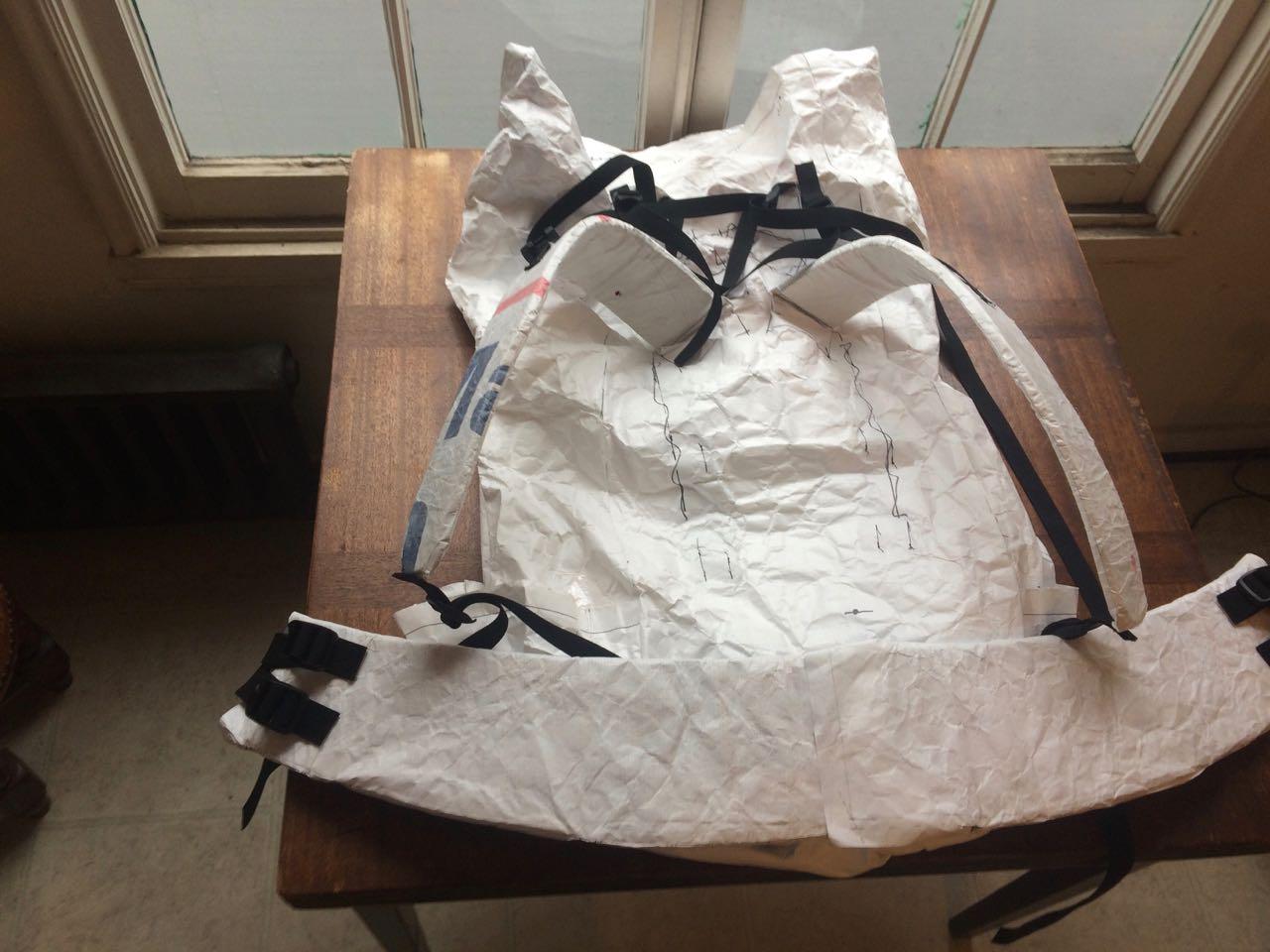
Doug,
I once did a bunch or prototyping packs in Tyvek, and I tried a few iterations of this type of belt attachment. It almost afforded too much mobility of the pack. I think you’ll really want hip tensioners to stabilize the pack.
And as Jerry said, there’s slippage – or maybe rolling is a better word for it. I’d start out with a sleeping bag in the bottom of the pack and other gear loaded on top. Then things would slip, and the sleeping bag would have migrated a few inches as the whole pack sort of slid under it, creating a new lowest point that was actually a few inches up the front panel.
Here’s a way to visualize it. Attach a thread to the toe of a sock. Put a golf ball in the sock and hold the sock up by its opening. Now lift up on the thread. The golf ball will roll away from the toe. If the pack is the sock, the thread is the belt attachment.
A frame will fix this, but I’m assuming you’re frameless here.
When I eventually got to a nylon prototype, I made a wrap around belt, and attached it with a big square seam. I held a ruler across my lower back where the belt sits, to see how wide the flat part of my back is. So that was the width of the square, and it spanned the height of the belt. This way the belt isn’t loading the seams by pulling the pack forward around the sides of my hips – it really just has the vertical shear force from the weight of my gear. This is a frame pack, but the frame is just 2 carbon rods down the edge seams of the back panel – the ends are an inch or two away from the seam attaching the belt. This gives good load transfer to my hips while still allowing plenty of mobility. I added hip tensioners but tend to leave them loose.