Topic

high altitude pulmonary edema at 9000 feet elevation

Viewing 9 posts - 26 through 34 (of 34 total)
David Gardner BPL Member
PostedMay 10, 2023 at 10:57 pm

“Alternatives for treating pulmonary edema include viagra and cialis.”

Now, *that’s* using your heads. Use of Viagra has also been found to reduce incidence of melanoma, which is good for us old, alpine-loving crackers. I’ve been told. (Don’t know about Cialis).

SIMULACRA BPL Member
PostedMay 11, 2023 at 8:44 pm

Just in case anybody else was curious:

nifedipine
nī-fĕd′ə-pēn″

Nifedipine (3,5-dimethyl 2,6-dimethyl-4-(2-nitrophenyl)-1,4-dihydropyridine-3,5-dicarboxylate[citation needed]), sold under the brand name Adalat and Procardia, among others, is a calcium channel blocker medication used to manage angina, high blood pressure, Raynaud’s phenomenon, and premature labor.[2] It is one of the treatments of choice for Prinzmetal angina.[2] It may be used to treat severe high blood pressure in pregnancy.[2] Its use in preterm labor may allow more time for steroids to improve the baby’s lung function and provide time for transfer of the mother to a well qualified medical facility before delivery.[2] It is a calcium channel blocker of the dihydropyridine type.[2] Nifedipine is taken by mouth and comes in fast- and slow-release formulations.[2]

Common side effects include lightheadedness, headache, feeling tired, leg swelling, cough, and shortness of breath.[2] Serious side effects may include low blood pressure and heart failure.[2] There is tentative evidence that its use in pregnancy is safe; however, it is not recommended during breastfeeding.[1]

Nifedipine was patented in 1967, and approved for use in the United States in 1981.[2][3][4] It is on the World Health Organization’s List of Essential Medicines.[5] It is available as a generic medication.[2] In 2020, it was the 135th most commonly prescribed medication in the United States, with more than 4 million prescriptions.[6][7]

PostedMay 21, 2023 at 10:34 am

Indrit S – those symptoms are possibly suggestive of a heart issue, for example Atrial Fibrillation. Did you have a headache? If no, it’s more likely a heart issue than an altitude problem.  Just being a bit out of shape shouldn’t send your heart rate rocketing like that while hiking.

AK Granola BPL Member
PostedMay 21, 2023 at 11:54 am

Why high carb diet? What does that actually do for adjusting to altitude?

bjc BPL Member
PostedMay 21, 2023 at 3:36 pm

Lots of studies on this but here is the gist:

Studies have shown that a high carbohydrate intake can reduce the effects of altitude by 1000 ft – 2000 ft at a height of 13,000 ft and 17,000 respectively. This is most likely due to the fact that carbohydrate requires 8-10% less oxygen for metabolism, compared to fat and protein. The ideal fuel at high altitude is carbohydrate.

Bruce Tolley BPL Member
PostedMay 21, 2023 at 6:37 pm

@ Stephen, I did not see any reference to cialis or viagra in the article you linked.

@ the others. My recollection is that viagra was discovered in the search for a blood pressure treatment.

@ why someone who has climbed above 14K many times before, dies of altitude sickness.  The sample is so small I think we will never be able to generalize.

What we do know is that the demographic is mostly male between the ages of 20 and 39, much like the demographic that dies in avalanches.

Lots of interesting reading in the annual publication of AAC’s Accidents in North American Climbing, here and at AAC website

https://www.mountaineers.org/books/books/accidents-in-north-american-climbing-2022

PostedMay 21, 2023 at 9:48 pm

The reference included this statement under reference of HAPE, “If nifedipine is not available, tadalafil and sildenafil (Viagra) are unproven alternatives.””
Stephen

Ken Larson BPL Member
PostedMay 22, 2023 at 7:01 am

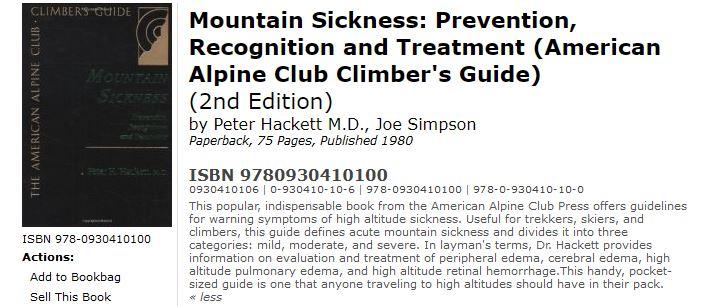
For those of you that are interest in leaning more concerning the three types mountain sickness and their treatment, may I suggest reading Peter Hackett’s book as it covers the subject in detail and he is considered an authority in the subject and had studied many climbers for a period of time on Denali.

Acute mountain sickness (AMS) is the mildest form, and it’s very common. The symptoms can feel like a hangover — dizziness, headache, muscle aches, nausea.

High-altitude pulmonary edema (HAPE) is a buildup of fluid in the lungs that can be very dangerous and even life-threatening. This is the most common cause of death from altitude sickness.

High-altitude cerebral edema (HACE) is the most severe form of altitude sickness and happens when there’s fluid in the brain. It, too, is life-threatening, and you need to seek medical attention right away.

Bruce Tolley BPL Member
PostedMay 22, 2023 at 11:07 am

@ Stephan. Thanks for pointing me to the specific reference

@ Ken. thanks for the reference to the definitive AAC guide aimed at those who travel, climb, hike, ski at altitude.

Viewing 9 posts - 26 through 34 (of 34 total)
Loading...