Hi Diane,
So here’s my story, for whatever it’s worth.
Background:
I’ve grown up skateboarding and surfing in Southern California. Which means I’ve spent my life barefoot or wearing classic Vans shoes, meaning no support, rise, cushion, etc. So there’s that.
Around 2006 I shifted away from endurance cycling into distance running. I had just come off hiking the JMT solo and was interested in wilderness endurance events and ultra running. I’ve never been fast, but my goal was running a marathon and then getting into ultras. I went to the shoe store and told them I was training for a marathon. I’m 6’2″ and was about 190 pounds at the time. They took a look at me and prescribed the biggest, most supportive “motion control” shoes they could find. So I assumed they knew what they were doing and went on my way.
Over the next year I worked up to running marathon distances but had some fits and starts. I missed the 2008 Los Angeles Marathon, my first goal race, due to the flu (I was overtraining/not resting enough and was getting sick a lot that first year). I kept running, now shooting for the 2009 LA Marathon. I was primarily running road.
In the lead up to 2009 I was starting to get the first twinges of ITB syndrome in my left outer knee. I made it to race day and completed the race. But the ITB issues kept nagging, only getting worse. Within a month I couldn’t run and could barely hike without it flaring up. I had to take the better part of a year off because it got so bad. I did all the stretches, all the roller techniques, had my shoes and stride evaluated. Custom orthotics, making my shoes even bigger, were recommended but I couldn’t afford them.
All of this time I was a heel striker.
The ITB issues slowly died down and I got back into running. But I could feel it flaring up again, but this time in the right knee. Completely frustrated and still determined to run distance, I started looking for alternatives. I discovered Barefoot Ted online, lots of other barefoot and minimalist runners, and soon read Born to Run. I was so frustrated that my progress was completely halted that I figured I had absolutely nothing left to lose.
I remember my first barefoot run. It was about 10:30 at night and I set out to do a 5K road loop I trained on a lot. Mind you, I was coming off of running a marathon (or close to it) in training almost every other week. Because you have to run with a forefoot strike when running barefoot, your calves and achilles will get worked quickly. The backs of my legs felt like steel cables about to pop only a mile into the run (which started on a slight uphill).
But something completely clicked. It felt like I was running the way I was supposed to run. Granted, my pace was slower, but the impact was far less. I completed the 5K and had calves and achilles so sore I could barely walk the next day.
But there wasn’t a hint of ITB pain to be felt. At all.
At around this time I shifted to running almost exclusively on trail. What I had read about the repetitive nature of pounding even, hard suffices made sense. I experimented with Vibram Five Fingers, but hated them because leaves and sticks would get caught in the toes. I ran a good deal of pure barefoot (up to about 6 miles) and wore either New Balance MT100s or the New Balance Minimus when they came out. I worked up to bigger distances in these shoes, having run numerous 50Ks in the Minimus or MT100s, MT101s, and later the MT110s with no issues.
And I became injury free.
I believe it mostly has to do with the basic mechanics of running mid to forefoot as opposed to heel striking. I also know I have fewer blistering issues with more minimal footwear. M feet and toes are wide from a lifetime of being barefoot; traditional shoes are typically stupidly pointed, causing too much toe rub for me.
I did start wanting something with a little more protection for distances over 15 to 20 miles and settled on Inov8 Roclites. They have a slight drop, but most importantly, they fold, twist, and bend, allowing your foot to move pretty naturally. I did events like the Grand Canyon R2R2R and long, hard backpack routes in them. They seem to be the best compromise.
I’ve tried just about everything. I really wanted to love Altras, but the traction on the Lone Peaks I had absolutely sucked (the forefoot lugs disappeared in less than 50 miles) and they were so wide and relatively stiff I felt like I was wearing clown shoes, tripping on everything.
Fast forward to about a year ago and I started to second guess myself, looking for something more supportive to take a little of the beating off. I got some Brooks Transcend road running shoes, full featured, full support. I have to say, after my first road run in them I was amazed at how fresh my feet felt. But with time, I noticed I was feeling it in my knees again. Personally, I think the theory that thick, padded shoes increase strike forces is spot on. In addition to knee issues again, I was clumsy as hell in them, slipping and tripping on anything and everything. I had some Cascadias for backpacking; same problems. Toe too tight, heel too high, super clumsy. I tried a pair of La Sportiva Bushido recently; couldn’t even get them on; my toes are too splayed from being barefoot so long.
I’m back to Inov8 Roclites (in size 14 for extra toe room) for distance and backpacking, New Balance Minimus MT10v4 for daily running and multisport stuff. The Inov8 Roclites are far more minimal than they look, especially when broken in. I can literally twist them in circles and fold them in half. Very flexible, very low riding, very lightweight for their size.
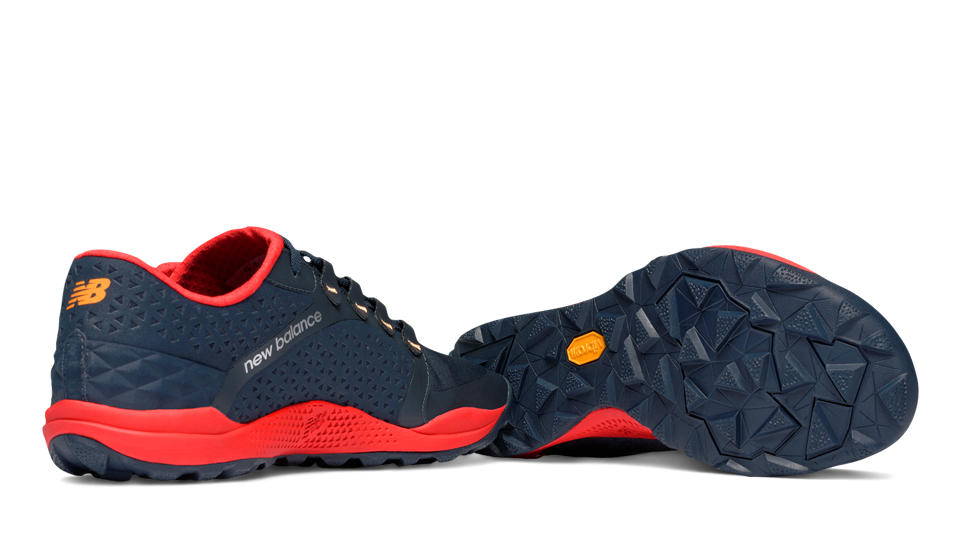
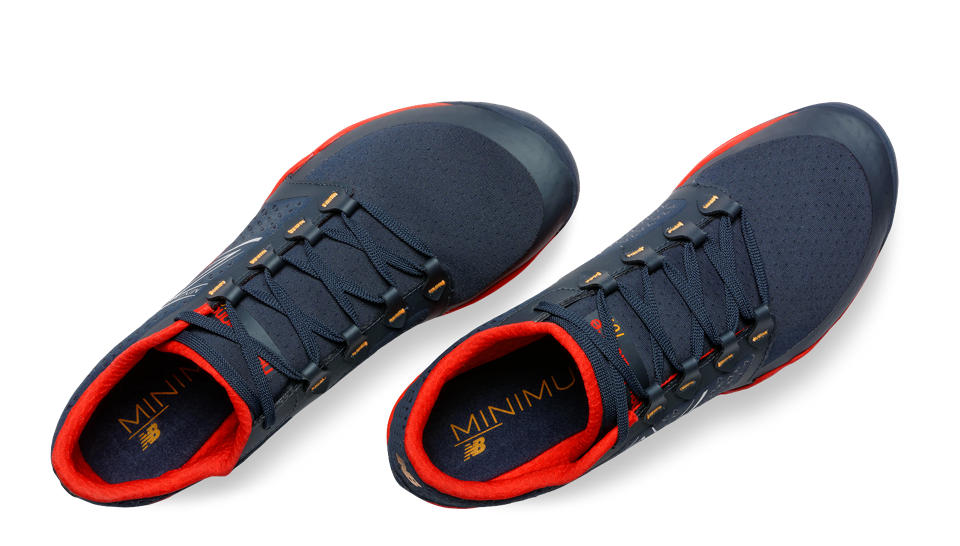
New Balance really nailed it with the newest Minimus MT10v4. I’ve had nearly every iteration of this shoe and this one seems to have eliminated all previous flaws. Full Vibram sole with good lugs, no seams (I prefer sockless), very natural feeling, and they come in wide for extra toe room. The toe box is super wide to begin with.

I do a lot of multisport activities and that’s where I believe minimal shoes really shine. For example, today I mountain biked about 4 miles to get to and from a 6 mile trail run. I try and do a lot of plyometric type exercises while I’m out on daily runs- broad and “box” jumps, climbing trees, scrambling steep hills, etc. so I need a shoe that I have good balance in, that rides low, and feels very natural. My run has a lot of stream crossings; I find stiff shoes like Altras and Cascadias don’t conform to rocks well enough, making them too dangerous to rock hop in. I also do a lot of canyoneering; same thing- dealing with water, rappelling, balance, climbing, jumping, etc… minimal shoes are safer here too.