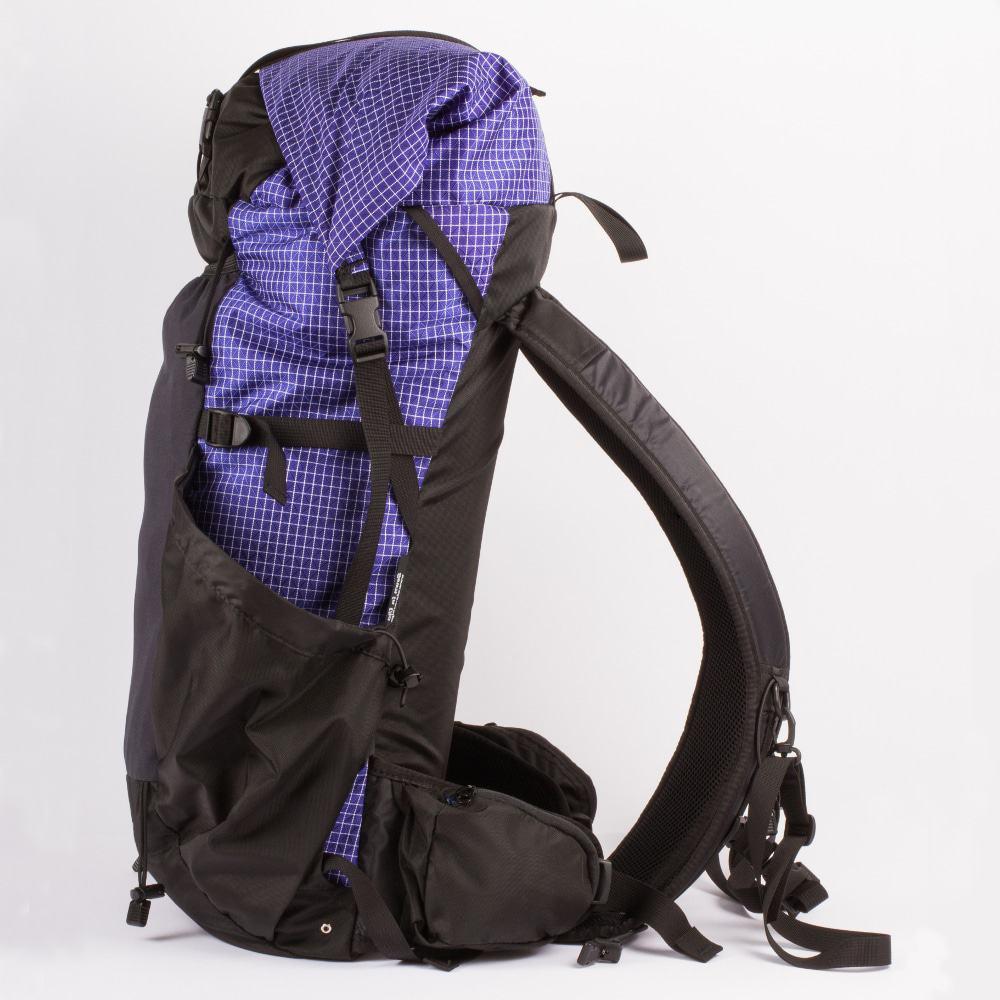
Mathew, you had PM’d me before a question about how I pack things in my framless pack, but I was traveling and then forgot about it. So I’ll respond here.
I own 3 packs. An framed ULA Ohm that replaced a heavier ULA Circuit that I use for carrying heavy weight (25+lbs), but I rarely ever use this pack (once every couple of years) because it’s bigger than I ever need. And 2 frameless packs, a ULA CDT, that I call my long hauler, and a smaller ULA Burn for short trips.
I often carry 20-24 lbs in my ULA CDT pack for those longer sections or large water carries. I don’t really notice the weight. I did when I got my first one, but after trying various packing strategies, it no longer bothers me. I don’t think its because my shoulders got stronger, because I can go several months in winter without carrying a pack at all. I very rarely carry more weight than that, but I definitely feel it above 24, though if it is only for a few hours I might not notice it for awhile.
I find that even the minimalist hipbelt on the CDT, really helps with the weight. It is definitely better than the MLD Burn though even that one’s hipbelt helps. Years ago, when hiking the Tahoe Yosemite trail, I once injured myself where I was peeing blood for the last few days (I think I bruised my kidney) and I couldn’t comfortably wear my hipbelt, so my shoulders were carrying everything. The weight on my shoulders was painful compared to a day earlier of almost not noticing the weight at all when I was using the hip belt (I was carrying a bear can).
I do not use an inflatable pad when carrying above 20lbs. I want the rigidness my foam pads provide. I use a Gossamer Gear 3 section Torso pad and an additional section from an older pad (their sit pads use to be the same thing, but they changed the designs so their sit pads don’t nest anymore). That does take a lot of interior volume which is why I don’t do it in my smaller MLD Burn pack. But the CDT will easily carry a weeks worth of stuff for me (with my gear) so I only use my CDT for longer sections or when I need to carry a lot of water. But all that pad thickness against my back does help transfer the weight better to my hipbelt. The other thing is to try to pack it in a way where you don’t have any empty space inside the pack. The more solidly your gear is packed into it, the more rigid it becomes which helps with weight transfer. That said, you want to be careful to not deform the shape of the pack very much either when stuffing things (reason I will go into when talking about the bear can below).
So after putting my pads against my back with the elastic straps to help hold it in place, I stuff my sleeping bag at the bottom of my pack so any space below the pads (there is a short bit) has some nice comfortable padding. Prefer to not use a stuff sack for my quilt so it can fill out the bottom completely. I put my food back above that in the center. I put my tarp on one side of the food bag, my bivy sack on the other which does mean I have to shift my food bag contents a little to get the width of these to fit. I then stuff my 2 small hygene and misc stuff sacks as low as they will go on the front of my food bag (the area facing furthest away from my back). I then stuff down my down jacket and rain jacket into any gaps around all of that, with some staying above the top of my food bag as I have filled pretty much all the space below that. I then put my clothing bag on top with anything else and cinch down the sides and top tightly.
I then put in my water bottles in the side pockets; I often carry 1 or 2 Gatoraid or Poweraid bottles (better for drink mixes and I don’t often use a filter, just Aqua Mira so I don’t need a compatible bottle like a smart water one), they tend push in on the sides of the pack as well which compresses things just a little more. If I’m carrying more than 2L of water, I put the rest inside next to my food bag, which influences what I can pack down around it; so some of the rest stays up higher. I found that 2x 1L smart bottles next to the food bag next to my sleeping pads tends to stiffen things up even more.
If I’m carrying a bear can, I prefer the small Boxer Can, though I have carried a Garcia can a few times. It basically replaces my food bag and there is less I can stuff around it. You definitely do not want to fill in the corners of your pack around the back part of the can (the part that faces furthest away from your back) too much or you’ll round the shape of your pack where it fits against your back which will pull on the shoulder straps more and you will most definitely feel it from my experience.
I do not like putting alot of gear outside of my pack strapped on as I want to use it as filler. So if it is strapped on or in the front mesh pocket, it is very light such as my 1/8″ thin pad, my 2oz wind jacket, my pack cover, or toliet paper, and maybe my small bag of chips I snack on during the day. If I had to carry something heavy on the outside of my pack (say snowshoes or carrying a bear can externally), I think I’d go for a framed pack as the gear weight isn’t contributing with making the pack rigid and is putting strain on the pack in a way that tends to deform the pack, putting more strain on the shoulders.
I will put in one disclaimer, last summer, I did the Uinta Highline trail over 7 days plus some change, so I carried a lot of food weight with 3L of water to start and thought the weight was carrying just fine, but then on the last day of the trip, my shoulders started bothering me despite the weight being pretty light at that point. So some unnoticed strain did build up from the weight over time. Never noticed that before except when carrying a Garcia bear can with the rounding of the pack that I mentioned before. Don’t know if it’s because I’m now over 50 or because I so rarely go for sections that long without a resupply that I never had that issue before.