Jason, isn’t this a R2R2R, not just a R2R?
I just got back from GCNP a week ago. I’ve tried to go at least once year for the last 45 years, and have probably been 40 times. I usually just hike to the River and back from the South Rim, but also did NR-River-NR one night (Half Dome, Angel’s Landing and NR-River-NR in a frantic 3-day weekend), a R2R2R when I was 1/3 my age and most of a R2R2R on a BPL-associated trip in 2012(?) – other people ran the whole thing, but I don’t run.
I would fret a lot less about altitude sickness at GCNP than 1) hyperthermia* and 2) altitude acclimatization. In round numbers, the SR is 7,000 feet, the NR 8,000 and the river is 2,500. Altitude sickness has been reported at 7,000 in the literature but only among susceptible individuals coming from sea level, with no acclimatization, and going hard at it on days 1 and 2. It’s more likely at the of highest ski resorts, again among flatlanders, who ski long and hard on the highest runs and don’t stop the first day when they’re feeling bad nor the second day when they’re feeling worse. The classic places for AMS in my mind are the iconic walk-ups like Whitney (14,496′) or Shasta (14,179), again, if coming from sea level, and if spending a night at altitude.
* oh, “in a few weeks”, so in late April? I’ve seen 80F at Havasupai / Indian Gardens on May 1 and it was still getting hotter that day. But that’s not the 110F in the Inner Canyon that the summer can bring.
My understanding of your trip is:
Day 1: hike the SK from the SR to Cottonwood Camp dropping 7 miles and 4,780 feet to Bright Angel Campground and then climbing 7.2 miles and 1600 feet to Cottonwood;
Day 2: Hike the NK from Cottonwood up 6.8 miles and 4,160 feet to the NR and then 6.8 miles and 4,160 feet back down to Cottonwood; and
Day 3: the reverse of Day 1.
Three 14-mile days, with very few hiking hours spent at 6,000-8,000 feet. Most of your miles, most of your hours, and both your nights are below 4,000-5,000 feet. Given the vertical climbs and descents, each of those days will tire you out as much as 22-25 flattish miles in a day. For a 3-day trip, it’s as evenly spaced out as is possible.
So AMS would not be a worry of mine, even though I live at sea level. But the lower energy, huffing & puffing, and the feeling of being winded when hiking your usual pace uphill isn’t fun. You can minimize that by getting yourself to high (or still somewhat helpful – an intermediate) elevation for some days in advance. When I was doing Whitney once/twice a year (pre-permit system), I felt noticeably less horrible at 13,000 feet if I’d spent a night at the 8,400′ trailhead than if I just drove from SF and started hiking. The easiest time I had on Whitney was after coming off a 9-day Sierra backpacking trip at 7,000-10,000 feet.
So, for GCNP, I try to add 1-2 nights on the SR (in Tusayan, I usually stay at the Red Feather Lodge; or I’ll treat myself to a Xanterra lodge right on the SR, usually the Maswik Lodge as the more affordable option). Then I’ll spend that first day or two walking the flat rim trail, popping a few miles down whatever trail BA, or SK or one of the lesser-used trails I’m not taking on my big hike day, and let my body adjust a bit to 7,000 feet. I’m usually not into that sort of thing, but actually recommend the iMax movie about GCNP in Tusayan. And, if I get tired to all the tourists oohing and aahing along the rim trail, I’ll just strike off south in the juniper forest – it’s all pretty flat and easy to hike off trail, and if you just head north again, you’ll hit the roads and rim trail easily.
As Terran points out, Flagstaff (7100′) is another place to hang out in advance and get a little acclimatized.
“Lots of water”? Enough so you keep peeing. Not more a lot more than that – you can piss away your electrolytes. I find water applied to head, neck and shoulders more relaxing than sweating to achieve the same cooling. So I’ll dip my bandana or a micro-fiber clothe into streams as I head uphill, drape it on my neck and flip it over every 2 minutes to bring the coolest side against my skin. Less water to treat, carry, drink, sweat, and piss out your electrolytes. If I time it perfectly, a old men’s 100% cotton dress shirt (that I was about to toss) holds lots of water, keeps the sun off your arms and neck, and works for me. BUT you have to quit wetting it out BEFORE the sun goes down and the temps drop or it’ll be cold and clammy when you no longer want that.
The ultimate UL gear on that trip is several $20 bills. Each one is only 1 gram, but at Phantom Ranch can be converted into 2 large lemonades, two granola bars and a Snickers bar. (Or 3 beers, but maybe not on your hike-out day!).
Driving or flying? (sometimes, when I’m squeezing in a GCNP trip from Alaska in 2.5 days, my only acclimatization comes from being in business class at 33,000 feet with a cabin pressure equivalent to 7,500′). If driving, consider routing through Denver or better yet Vail (8,200′), etc on your trip to GCNP.
My other big training thought is that trail miles that include ups and down are great. You’re more sore at the end of the day from the down than the up, so do NOT rely only on a stair climber or treadmill at the gym. You only go up on those. I’ll use the stairs in my house or multiple flights of stairs in a hotel when traveling so I’m going up AND DOWN. 10 minutes every morning before my shower for a few weeks prior really helps.


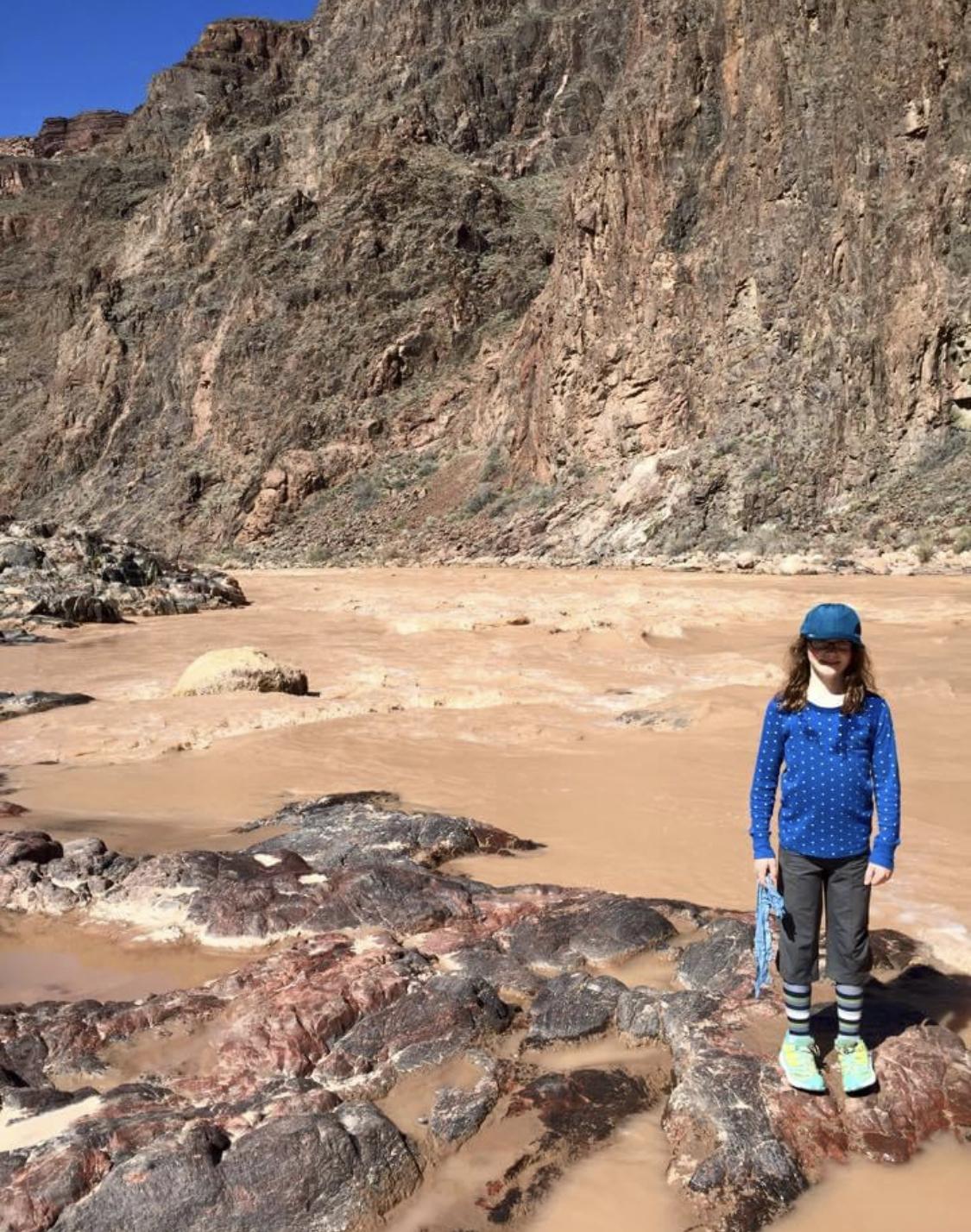
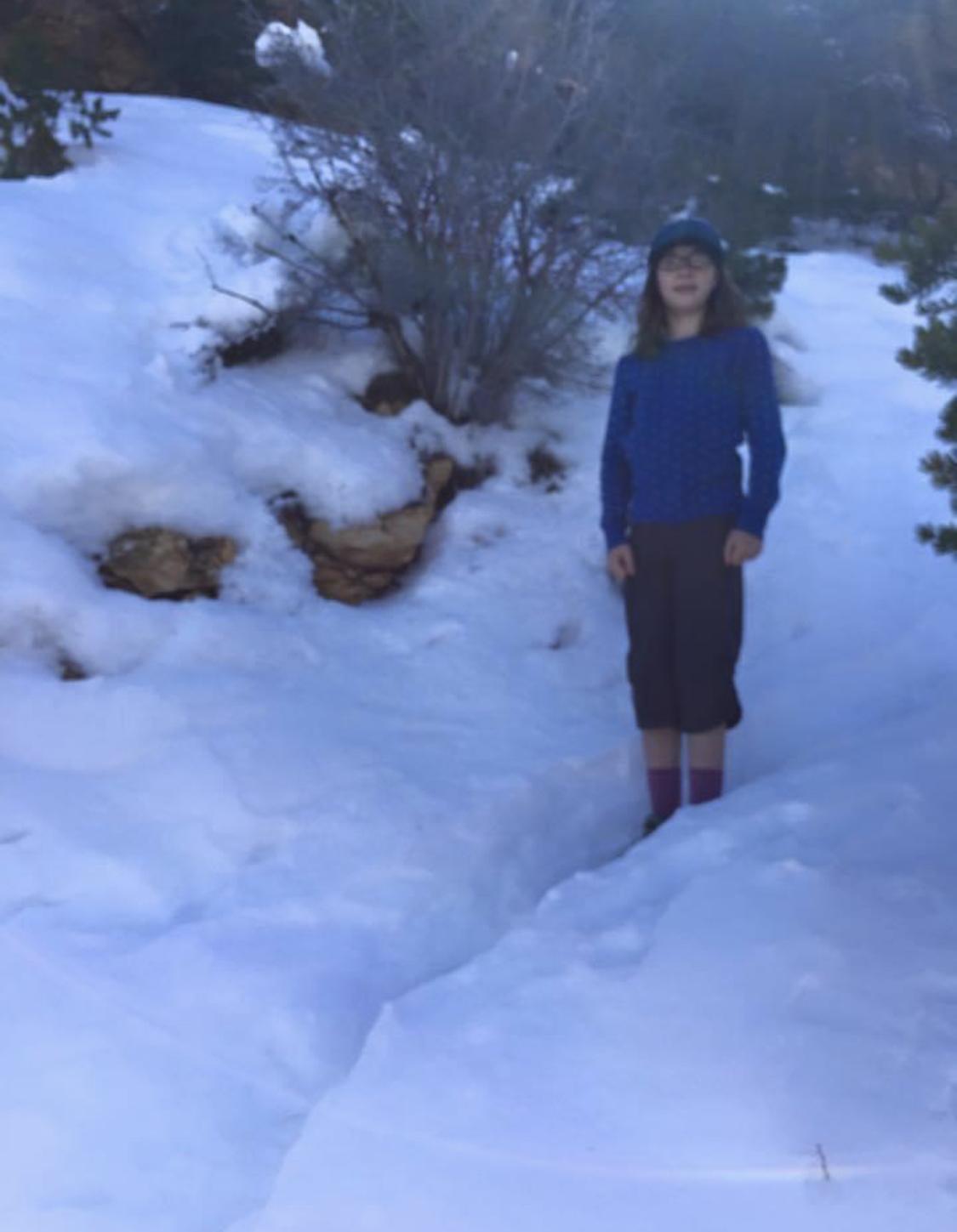 And here she is at the Colorado:
 The park service of course has a sampling bias about stupid hikers. The Havasupai Gardens ranger station alone has 600 rescues a year (mostly an unplanned nights rest, food and water so they can complete their “day hike” under the own power, if not on their original plan).