


Learned the Katabatic quilt with goose down I wanted is delayed until June but the duck down can be had now. Some reviews I’ve read say difference bet the two types are loft, weight, smell but overall it’s minimal. Agree?
Topic
Become a member to post in the forums.
 .
.
Learned the Katabatic quilt with goose down I wanted is delayed until June but the duck down can be had now. Some reviews I’ve read say difference bet the two types are loft, weight, smell but overall it’s minimal. Agree?
I expect that the insulation quality of a particular duck down would be dependent upon the geographic location where it originated (think about eider down…). For example, the burly red parkas we were issued when I worked in Antarctica were extremely warm, and they were filled with (I think) ~700 fill duck down plucked in Canada. I expect that ducks in colder climates have evolved to have a more insulating form of down clusters. The thing about duck down is that it has more robust shafts (pumules?) that are more resistant to crushing. This was critical for those heavy Antarctic parkas.
Correct. Very little difference for the same loft, Eider Duck down not withstanding, which has some unique properties that allows the down to “stick” together in a large mass, greatly reducing shifting and cold spots.
I had an eider down bag in the 70’s that was either an Eddie Bauer or Sears Hillary bag that was 700 or 750 fill. I repurposed the down years later and the texture of it was very different than the typical goose or duck I had handled.
to add some trivia to this, I was recently reading a bio on George Finch, an Australian climber and chemist.
He made his own Eider Down Parka in 1922 using “air balloon” fabric ,I suspect very similar to what we call silnylon now.
(in 1922 he reached 8320 m on Everest, the highest anyone had climbed up to that time)
As far as I know he was the first to use down in a jacket of some sort.
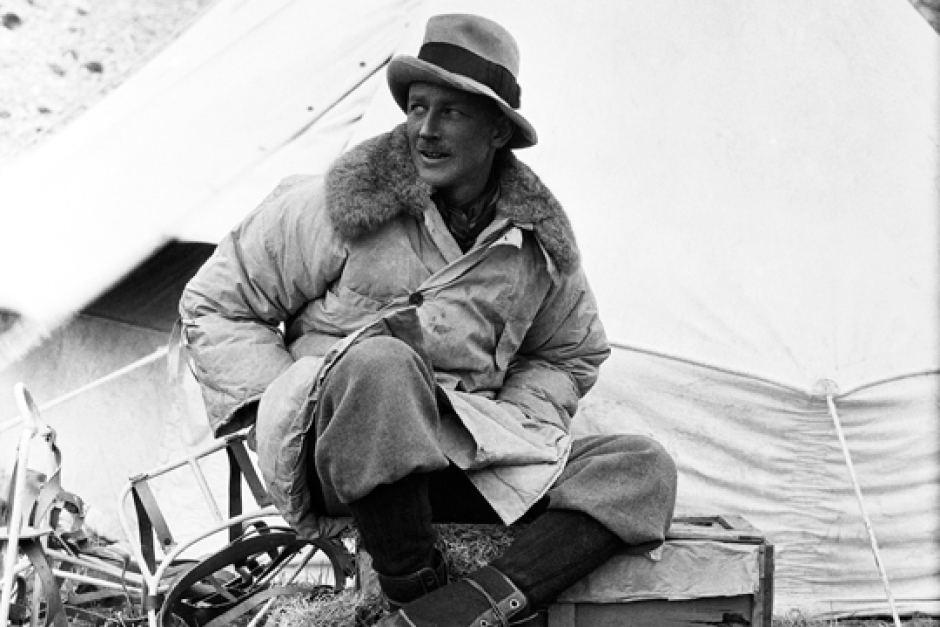
Franco, thanks very fascinating!
I first learned of the eider down from reading about Shackleton and Scott’s adventures in the Arctic in the early 1900’s. I highly recommend The Worst Journey in the World by book or audio book (while hiking!).
As far as I know both Scott and Shackleton used raindeer fur and in the case of Shackleton some sennegrass lining apart from wool,cotton and linen.
This was one of the amusing/frustrating part of the mallory/Finch releshionship on that first Everest expedition.
mallory was establishment, Finch an outsider.
Apart from the dispute about the use of oxigen , Finch, at first, was derided for his self made coat.
This photo tells the story
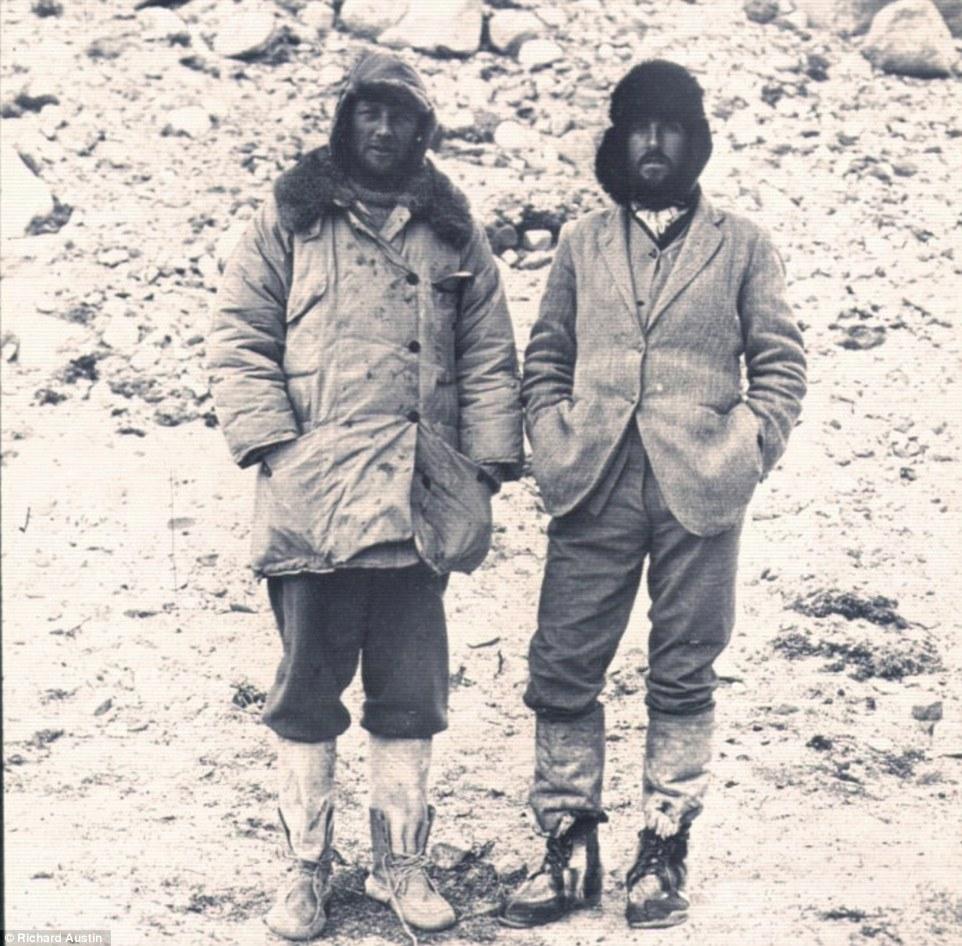
Finch on the left , Charles Bruce (expedition leader) on the right wearing wsimilar clothing to the British climbers in that expedition.

To the OP: Just get the duck one. If that’s the quilt you need and you want it now, it totally makes sense.
For me as a manufacturer it does not make sense, however. Risking issues with odors and perceived quality loss, whether real or not, to be able to offer a slightly less expensive product is not worth it. Substituting with 850 goose instead is, imo, a smarter way to go, given that it is half the price of 900 goose.
Re Eider: This stuff is wild. Completely unlike any other type of down with its Velcro like plumes.
I do not find it to be the Holy Grail, tho. Due to this interlocking property it does not readily pat out and effectively fill chambers, leaving empty corners with comparable amounts to goose down. But if upping the fill about 30% one can get close to a consistent appearance. Even more would be better.
The resulting relatively dense loft is very resistant to compression and shifting, and certainly appear to be warmer than other down types. One can therefore reduce the baffle height and resulting loft for a given rating. But a baffled eider down product from us will still be heavier than a comparable goose down one. Sewn thru construction would level the playing field some, but we do not do that.
We go directly to a licensed harvester and clean the down ourselves. The last batch was $112/oz.
Goose down and duck down are only slightly different, mostly in the size of the plumes.That said, 800fp is still 800fp after sorting, this is loft per weight. So, it doesn’t make a damn bit of difference. The process of sorting (similar to distillation but without heat) will level out any differences. There is a wide overlap between individual plumes. But, 800fp is always 800fp. Duck is harder to sort at the higher grades, 900fp duck is usually not available, even with Eider. As I remember, Eider is around 800-825fp. As was said, the big difference is the “stickiness.”
A true down plume doesn’t have a central stalk. A stalk indicates it is a feather, not a down plume, indeed that is the classification. The bird usually has a use for all three types of plumage, flight feathers, body feathers, down plumes. Most feathers have down like growth at the base, or, nearest the body. But, that doesn’t make a flight or body feather a down plume. Most commercial “down” is a mixture of immature feathers (body and flight) and down plumes. The largest plumes are ostrich, I believe. They can be 3-4″ long. But, they have little “oil” in the structure and are not very stiff. Duck can be around a 1/4″ (half a centimeter) but be very stiff and bushy, and, more moisture resistant. (I used to tie fishing flies. )
Become a member to post in the forums.
 Tactical Wool Thermo ShirtSuperfine merino wool-blend mesh baselayer with a slim unisex fit and densely knitted shoulder panels for pack-carrying comfort. Weighs 4.9oz | 140g
 © Beartooth Media Group Inc.
 Loading...