Topic

Fleece/Base layer for insulated jacket replacement

Viewing 20 posts - 1 through 20 (of 20 total)
Garrett BPL Member
PostedDec 21, 2017 at 4:38 pm

So I’ve been contemplating replacing my Patagonia Nano Air for a fleece or base layer/Houdini combo. Has anyone ever done this before? Outside of the weight argument is there any difference between the two during inactivity (assuming that I am wearing the windbreaker with the fleece)? I’ve been thinking of utilizing the following setups as a replacement.

  • R3 / Monkey Man II Patagonia / Houdini
  • Capilene Thermal Weight hoody / Houdini

Would the following setups be an ideal replacement for a 60g insulated jacket?
 

Richard Nisley BPL Member
PostedDec 21, 2017 at 6:41 pm

Garrett,

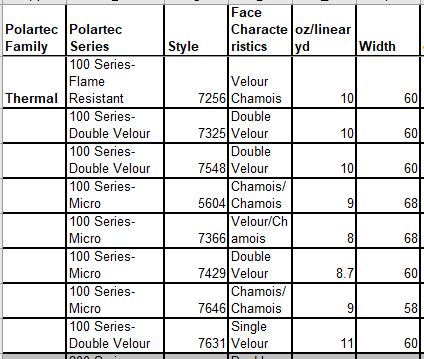
Patagonia Nano Air is an active insulation layer with my lab measured Iclo = .382. Your suggested Thermal Weight Hoodie + Houdini would be less warm at .144 Iclo and your suggested R3 + Houdini would be warmer at .675 Iclo. Your best equivalent is a Polartec 100 top at .334 – .467 depending on the fabric variant. Alternatively, a Polartec 200 vest can be used in place of the Polartec 100 top.

Garrett BPL Member
PostedDec 21, 2017 at 7:49 pm

Oh wow thats a pretty big difference. So a Patagonia nano air would be comparable to an R1 + Houdini? A recommended jacket would be great as well. Thanks Richard for providing the information above.

Richard Nisley BPL Member
PostedDec 21, 2017 at 8:04 pm

Garrett,

An R1 is .290 Iclo, you want a Polartec 100 + Houdini, not an R1 + Houdini, for equivalent warmth to your existing garment.


Paul S. BPL Member
PostedDec 21, 2017 at 8:20 pm

I thought R1 was nearly the same clo as a 100 weight fleece.  Referencing your old chart you have Polartec as 0.3 and R1 as 0.32.  Have they changed?

Richard Nisley BPL Member
PostedDec 21, 2017 at 8:51 pm

Garrett,

Garments, called windshirts by their manufacture, range from 1 to 100 CFM. For the typical UL backpacker, for wear during three seasons ~35 CFM is the optimal. Based on your location, it appears that this also applies to you year-round.

The Arc’teryx Squamish is one windshirt model that has consistently been manufactured close to this CFM level over the years. Other models have been in this range for variable periods of time. You can use a coffee filter for a DIY gauge to evaluate other models. https://backpackinglight.com/forums/topic/86001/#post-2060105

There are three other use-cases that can benefit from different ~CFM values. 1) For cold and wet conditions, with low or intermittent aerobic output <10 CFM. 2) For moderate to cold conditions, that are drier with more moderate aerobic output 10 – 35 CFM. 3) For cold and wet conditions, with maximum sustained aerobic output (racing) >35 CFM.


Garrett BPL Member
PostedDec 21, 2017 at 9:06 pm

Thats good to know. I will need to make the switch soon.

Garrett BPL Member
PostedDec 21, 2017 at 9:22 pm

Richard, I generally hike in the desert under extremely dry conditions. Would the lower CFM of the Houdini have a huge impact in this particular circumstance? I generally hike at a steady pace without much exception. I believe this would fall under 10-35 CFM category, however do you happen to know the CFM for the 2016/2017 Houdini?

Richard Nisley BPL Member
PostedDec 21, 2017 at 9:22 pm

Paul,

In the last year, I used more accurate lab equipment to retest some common base layers and active insulations. For the R1, .290 vs .320 can be explained by sample variance for the same fabrication. Polartec 100 labeled garments can be found in different fabrications.

Although they are fairly close in warmth, the R1 was primarily designed as a base layer to efficiently move liquid water away from the body. Polartec 100 was designed as an active insulation layer that can pass vapor water through it.

Richard Nisley BPL Member
PostedDec 22, 2017 at 6:03 am

Garrett,

For many years prior to 2013, the Houdini tested ~35 CFM. The 2013 and later Houdinis tested ~3.5 CFM. You will have to be the judge as to how it performs for your application/environment.

Garrett BPL Member
PostedFeb 2, 2018 at 1:04 am

Richard,

Not to resurrect the dead, but is there a fleece jacket on the market that is comparable to a 100g insulated synthetic jacket? This is assuming I was wearing my Houdini. Maybe like a high loft melanaza?

Richard Nisley BPL Member
PostedFeb 2, 2018 at 2:33 am

Garret,

Yes, a Melanzana Thermal Pro high loft hoody + windshirt provides ~ 1.2 Iclo, which is about the same as a generic 100 g synthetic using recycled polyester.

A premium PL1 version will be warmer initially but, after it is stuffed or sleep in for a couple weeks, it will be about the same.

PostedFeb 6, 2018 at 5:55 am

Richard,

What fleece fabrics have hollow fibers? I’m assuming they are warmer due to their greatly increased boundary layer area in the hollow tube.

A Clo or R  value comparison of hollow and solid fleece of approximately the same weight per sq. yard., ft., or meter would help if it is available.

Richard Nisley BPL Member
PostedFeb 6, 2018 at 7:30 am

Eric,

None of the fleece products use hollow fibers although hollow fibers are commonly found in other types of insulation.


My GUESS is that the fleece fiber diameters are less than the threshold to benefit from being hollow.  In some conventional insulation (Exceloft as an example) it is only the largest / most rigid fibers which are made hollow. The medium and fine fibers, in the mix, are not hollow.

Brett Peugh BPL Member
PostedFeb 6, 2018 at 3:34 pm

Richard,

I am trying to read your chart above but I am unsure if I am doing it correctly.  136g/m2 100% polyester Polartec® Micro double velour lightweight fleece would be the same as Polartec 100wt fleece, correct? Feather Weight Microfleece (100% Polyester) would be a bit less?  Thank you.

Viewing 20 posts - 1 through 20 (of 20 total)
Loading...