


Outside magazine bringing this issue back to our attention.
I know Roger and others have talked about it in the past.
One initial question I have is what is the likelihood of these chemicals on the fabrics used by cottage companies?
Topic
Become a member to post in the forums.
 .
.
Outside magazine bringing this issue back to our attention.
I know Roger and others have talked about it in the past.
One initial question I have is what is the likelihood of these chemicals on the fabrics used by cottage companies?
Some States demand it, others ban it.
ALL chemical flame-proofing treatments are toxic, and none of them work. The laws are driven by the flameproofing chemical mfrs ass’n.
My tests showed that silnylon does not go up in flames anyhow. The silicone coatings don’t ‘burn’.
Cheers
Good article, and Roger is right. Avoid chemical flame retardants. At one time, they were in everything from electronics to children’s pajamas to mattresses, sofas, and carpets. Studies a few years ago found these toxins throughout American homes, even in the dust. Well-known mountaineer and PhD toxicologist Arlene Blum has warned of these problems for decades. We’ve been poisoning ourselves for the profit of three chemical manufacturers, with effectively no increase in fire safety.

Back to backpacking:
Historically, I think (without solid evidence) that CPAI-84 helped kill the mainstream lightweight backpacking market that started just a few years earlier. Soon after 1984, tent fabrics changed and weights shot up. Internal frame pack weights also increased, maybe because manufacturers bulk-ordered fabrics – they had fewer options back then.
— Rex
This is so disturbing and not what I want to hear. Makes me regret my month long dirt bagging numerous summers in the tent (month long stints) sleeping and sometimes eating in the tent and now I have the urge to replace my “perfectly good” backpacking and base camping tent which are less both only 3 years old ! :(
Thanks, Interesting article. I remember asking a cottage manufacturer about this about 5 years ago when buying a high end Cuben tent. I was hoping to get it without the treatment but it was not an option. I think in that case it was just the bug netting that had it.
It’s a huge bummer overall that consumers have not had much choice in this. We bought a bed without the flame retardants but that’s because we were able to spend the $3k it costs, which is not an option for a lot of people. Same deal with couches, you can buy them without chemicals, but you have to spend thousands since they are made out of expensive but naturally flame retardant materials like wool. Same with baby clothes and everything else under the sun. It’s basically impossible to avoid.
Incredibly disturbing; the article claims as many as 10 out of 11 tents in the US are coated with flame retardants, it also says there is no authoritative source tracking this.
Applying a flame retardant should cost the manufacture a lot of overhead (I mean they arent using child labor to handle the toxic chemicals are they?)
So how is it that all the cheap tents are coated and barely labeled so? Shouldn’t you have to pay more for a tent being explicitly advertised with flame retardants?
The answer is California regulations. In this case smaller government is better. CA’s interference in the consumer outdoor gear market is poisoning consumers and the environment. The CA government is not competent enough to respond to this issue in a pragmatic matter. I doubt any elected official who has ever voted on this topic understands the chemistry/ testing/usage factors behind what the problems are. Not to mention the political issues in trying to change any prior regulations. If the CA government allowed manufacturers to market non coated tents and coated tents, then consumers (Us, the forum members here) could decide for themselves if the toxic issues are worth the benefits. Then we wouldn’t have to poison ourselves because we want to be dry and warm when we sleep outside.
Become a member to post in the forums.
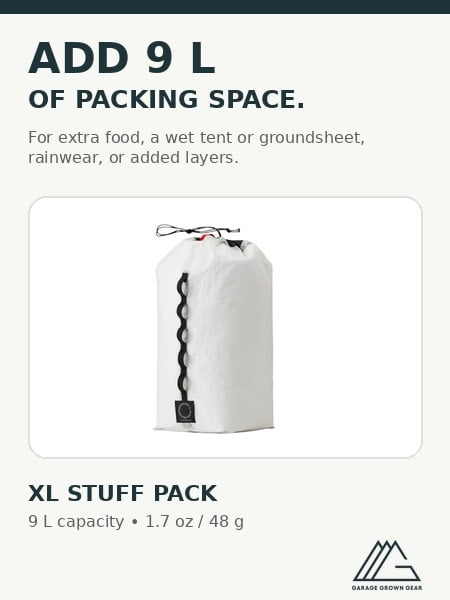 XL Stuff PackLightweight stuff pack designed to secure to the top of your backpack for carrying wet gear, extra food, rainwear, or layers.
 © Beartooth Media Group Inc.
 Loading...