


No, this is not a late April fool’s prank.
Will talk about it in detail in the next post.
Topic
Become a member to post in the forums.
 .
.
No, this is not a late April fool’s prank.
Will talk about it in detail in the next post.
Doesn’t seem to be much interest, so never mind.
Nm

Who wouldnt be interested? Heck, makes me want to get a sewing machine again thinking about it!
The closer to $20 a yard the more it would take off. The biggest set back to dcf for most people is the cost. If at .6ozyd it was anywhere close to dcf in tear but past it in abrasion tests I think you would have a winner! I would put my money where my mouth is on it as well!
Nm
Besides the lack of expressed interest by the forum, I’ve also decided that this project would be too much of a distraction from my main focus right now, which is working on developing batteries and battery-supercapitor hybrids. Just not enough time, energy, and resources for both at this point and the former is much more important to me.
But, I figured I would share the general concept if some motivated DIY’ers out there would like to experiment with making their own versions of such materials. Open source and all.
One iteration involves making highly crystalline nanocellulose as well as a graphitized version of same, mixing a combo and differing ratio of these (higher percentage of raw CNC) into silicone thinned with naptha, and then coating something like RBTR’s .5 oz/yd2 mesh or possibly nylon tulle. A more ideal fabric would be an uncoated, tightly woven 7D nylon, if you could find it.
Making highly crystalline nanocellulose is not that hard, but can take some time. Technically any cellulostic material(s) can be used, from newspapers to sawdust to dried plants. However, I use cellulose materials that start off with higher amounts of crystalline cellulose to begin with. Perhaps the best and most easily obtained sources of same are the common bast fibers such as flax linen, hemp, jute, and ramie. There are different ways to obtain some of these economically.
The method used for converting these to highly crystalline nanocellulose forms is acid hydrolysis via sulfuric acid. My source for same is Liquid Lightning drain cleaner. I’ve found that a good ratio of acid to water for these already highly crystalline fiber sources is about 1 part water to 4 parts (75% or so) acid. Acid should be slowly added to water, and not the other way around. You can use less acid (and time) for cellulostic materials that contain more amorphous cellulose, down to around 60%.
When using already highly crystalline cellulose containing materials such as bast fibers, takes longer than using materials like newspaper, etc. You can speed it up by adding some hydrogen peroxide, but this definitely more corrosive of a substance (commonly called Piranha solution) and not something I particularly recommend. Even with working with just sulfuric acid, use eye protection (especially!), rubber gloves, long sleeves and pants, etc and keep baking soda nearby. Sulfuric acid is only really dangerous to ones eyes. How I know? I’ve been working with the stuff, and using butyl rubber gloves that apparently had tiny holes in them. Was wondering why my hands were getting blotched, and then figured out the former. Had been subjecting them to sulfuric acid solutions unknowingly. Point was, the damage was very superficial, slow, and easy to heal.
Once the hydrolysis is complete, then I rinse the cellulostic goop in a lot of tap water with a little potassium hydroxide dissolved in same using a stainless steel coffee filter. I swish it around with my fingers to speed up the process of draining the water. Then I rinse it again with some distilled water. Then it needs to be dried fully to powder form, and mixed and stored in naptha, I like to use a non food/drink use blender to really mix it well.
If you’re going to make some graphtized CNC, then that amount of CNC needs to be soaked in a stronger, much more alkaline solution of distilled water and potassium hydroxide because it helps to speed up the graphitizing process as well as open up the material some increasing the surface material as it’s heating.
Graphtizing is a bit more involved of a process. The good news, is that you need less of this material than the raw CNC. If you use too much carbonized or graphitized CNC, you will overly increase the stiffness of the end composite too much. Even using too much raw CNC can also do this, but not to the extent of the carbonized or graphitized CNC.
BTW, crystalline cellulose is a bit less hydrophillic than amorphous cellulose. However, that is not why we are isolating the crystalline parts from same and turning them into nanoparticles. We are doing that primarily because of the various strengths that these impart to composites. There has been lot’s of research on adding CNC and related materials to epoxies and other matrixes to increase tensile, sheer, and modulus strengths. Raw CNC bests kevlar in many of it’s strengths, while being far more UV stable.
There has also been research showing that CNC added to various plastics and films, can also dramatically increase barrier resistance even to oxygen gas. Hence, if it can block gas, it certainly can block water, though it does tend to increase moisture absorption of epoxies etc a bit. However, since the bulk materiel (silicone rubber) is highly hydrophobic in our case, then this should not pose too much of an issue. What we are trying to do is to increase the tensile and sheer strengths of the silicone rubber and thus to the core material (mesh or tightly woven nylon). As we know, silicone alone already increases some of the sheer strengths and toughness of the base fabric vs uncoated or coated with PU.
Graphitized CNC on the other hand does not have the problem of moisture absorption. You may want to experiment with only using the graphitized version of same. The problem with using this though, is increased rigidity at lower concentrations than raw CNC, and increased thermal and electrical conductivity (these could be used as benefits in some circumstances).
In the next post, I’ll talk about how to make the graphitized version which is a little more involved.
How to make carbonized or graphitized CNC:
Take your dried and potassium hydroxide infused CNC powder and heat same to at least 900*C in an oxygen deprived atmosphere.
There are many ways to do this, but for the everyday DIY’er, the microwave version is probably the cheapest and easiest in some ways, but much harder to control the heating process. A small electric kiln is very helpful, but these tend to be expensive both in initial investment and eventually in energy costs.
Will focus on the microwave version for now. Take a ceramic baking dish with a corresponding glass top. If you have any of the old corning ware (with the 3 blue flowers), this stuff is excellent for this purpose as it handles temp changes very well. Take some high temp ceramic adhesive and some graphite. Abrade the sides and bottom of the ceramic dish as best as you can and cover with film of high temp ceramic adhesive. Coat with graphite on side and bottom. Put extra loose graphite on the bottom later on.
Line this with some paper of some kind, put your raw CNC material onto the paper which is on top of the graphite. Put some paper on top of that, and put more graphite on top of that. Then put another piece of paper on top, and put baking soda on top of that. Make sure it’s as well covered in baking soda and paper as can be. As the baking soda heats up, it converts to carbon dioxide, water, and sodium carbonate. As the Sodium carbonate further heats up, it converts to carbon dioxide, basically we’re trying to create a oxygen deprived environment for the CNC. You could also use activated carbon but a lot of these are activated by sulfuric acid, which can create nasty sulfur dioxide fumes when heated if there is any residue of acid in same. Baking soda is easier and cheaper imo.
Line the ceramic baking dish with a layer of kevlar fabric of some kind. Those protective, all kevlar work sleeves work (depending on the size of your dish, you may have to cut them open). Then line it with some cheap thrift store 100% merino wool on the outside. We’re insulating the dish to increase the heating efficiency, prevent thermal shock to the dish and glass, and to protect the microwave from excess heat. You don’t want to use carbon felt, because the microwave may directly heat that up.
Preferably do this outside or in a highly ventilated and safer area: Microwave for at least an hour at highest setting. Might be a good idea to due it in 10 to 15 minute increments with a rest of a minute in between.
You’ll need at least a 1000 watt microwave for this, but 1500 would be better. Also better if lined with metal than plastic.
Very important, once fully heated, allow to cool for a few minutes in the microwave before opening the door. You don’t want to thermal shock the glass top or the dish (probably wouldn’t happen if you use the good stuff though). And then with the microwave door open, let it cool down within the insulation until cool enough to handle with bare hands. This can take awhile.
With this method, you may not fully graphitize the material, but you will at the very least carbonize it. You’ll have to experiment some with times depending on your specific microwave. An electric kiln is far easier to control the process, but also takes longer and uses more energy.
Instead of ceramic and glass top baking dish, you could also use hollowed out fire brick material for this. Like two side by side bricks with middle hollowed out on the top, and with a corresponding top of two side by side bricks hollowed out on the bottom. (You can try using that high temp ceramic adhesive to bond these together, but ime firebrick material is hard to bond because it’s so dam porous and this kind of adhesive is too watery. Another way of keeping it together is to use the silicone self adheisve tape, and wrap same on the very outside of the bricks. Silicone can handle to about 500* F before degrading appreciably. It shoudn’t get to that temp on the outer most part of the fire brick material). If using fire brick, you won’t need as much, if any, extra insulation. If using the silicone tape method to keep the bricks together, I would probably skip using extra insulation.
You’ll have to experiment some with the ratios of silicone to naptha to raw CNC to carbonized or graphitized CNC.
Generally with CNC, less is better. Especially when also blending in carbonized or graphitized CNC.
These should be mixed very thoroughly before apply to fabric.
One could also experiment with using raw CNC and carb/graph’d CNC in films, such as a para film anaologue. Basically, you blend heated parafin wax, polyethlene plastic (grocery bags), naptha, a little glycerin, (and maybe a little wood glue) together, and then add some raw CNC and/or carb/graph’d CNC in when it’s in a very liquid state.
Then apply this to your nylon mesh or uncoated nylon fabric. I have not experimented with this method at all yet, so I do not know how well it bonds or not to the base/core material (the mesh or fabric).
I know from reading some research, that this material though, will be even more hydrophobic.
Several reasons I can think of why apart from a generic comment, nobody else bothered.
They have to do with your track record and the details on how this new fabric would be made.
Those that already know of your many failed/abandoned projects would have already guessed this : I’ve also decided that this project would be too much of a distraction from my main focus right now, which is working on developing batteries and battery-supercapitor hybrids.
You start off with a lofty claim “UL W.P. fabric that may rival & even exceed DCF in some areas” even including a per square yard price (cost/wholesale/retail ?) on something that is just theory as it becomes evident when you explain how it would be done “IF” ( yes, those IFs are always the problem….)
The various details you describe, at best, would work to produce a square foot or two, things become a little more complex when hundreds of yards need to be made at consistent weight and characteristics .
How much would it cost to build such a production line ? How much would it cost to produce enough material to test to see if it could be worthwhile expand the production capacity ?
Feel free now to once again tell me or imply that I am stupid and narrow minded, as you have done in the past. That is not going to change the above.
https://www.youtube.com/watch?v=YYWlevX7Kw0
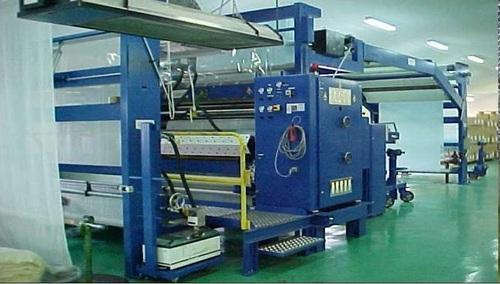
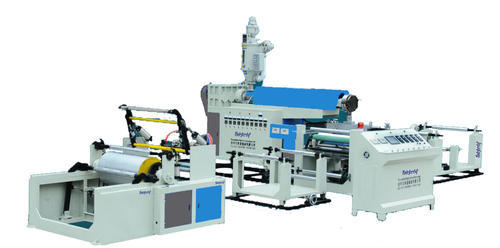
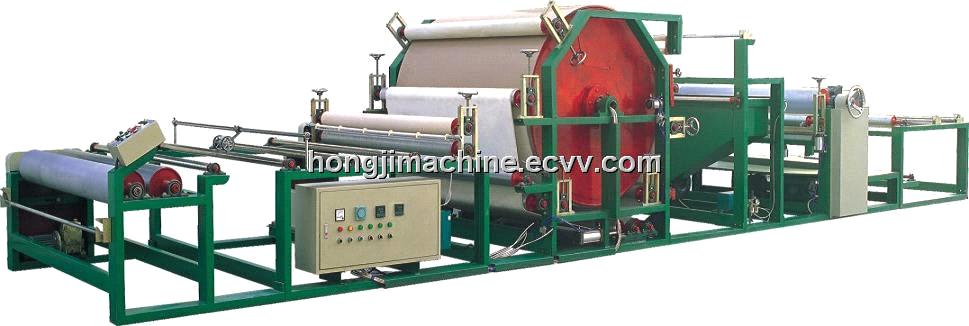
Franco, awhile back I received the following message from a moderator. I’m pretty sure you received it as well. I’ve followed the injunction. Anyways, the message:
“Franco and Justin
This is being sent privately to both of you.
And end to the constant sniping at each other please.
I don’t care who said what or who started what – I’m not interested. I just don’t want that sort of conduct in the BPL Forums.
Thanking you both for your cooperation.”
Even before the above message, I have asked you publicly to leave me alone.

Thanks, Franco. The YouTube link was worth the trip.
Youtube video describes making a fabric.
I’m not talking about making a fabric, but coating a pre made fabric. Very different. Many of us already have experience with coating nylon with silicone to create, increase, or maintain waterproofness.
This isn’t that much different, except that I’m talking about using a beefed up silicone. It’s more along the lines of a composite. But instead of using very large fibers like fiberglass, kevlar, or carbon fiber, and using an already fairly rigid matrix (epoxy or the like), we’re using nano particles and an inherently flexible, rubbery bonding matrix.
Could I compete with a corporation, a factory, or the like, as to volume or consistency? Course not, never thought nor intended to.
However, I certainly could make many, many yards of same within a single run, just by stringing up a very long stretch of fabric between two different sets of trees or pounded in poles in my backyard and using paint rollers to apply the slurry.
But, as I’ve said, after thinking about it, I came to the conclusion that this wouldn’t be a good focus of my time and energy, since I have already started working on making batteries and supercapitors. The above concept got spawned off from already working with/making and researching certain materials from this.
Since I believe the concept has merit, I decided to share the generals of same openly so that if people wanted to experiment with making their own versions they could. Why keep it to myself if others can benefit from this info? Just because I don’t have the time and energy for it, doesn’t mean that this applies to everyone else.
I fail to see what is so lacking and worthy of condemnation in doing so? But I have learned a long time ago that people that are more consistently unhappy, insecure, discontent with themselves, with life, etc, don’t need much of an “excuse” to fault find, belittle, or try to tear down others. It comes natural to them. It’s an ego defense mechanism to not deal with their own issues, self pain/woundedness, lack of self love and happinenss.
In the past, I have experienced this so much and so obsessively from Franco, that moderators have stepped in. This is just a continuation of the same old, same old despite specific warnings/commands from these to ignore each other.
Sam,
the 3 photos I posted are of the machinery used for coating fabrics.
Here is how they work :
https://www.youtube.com/watch?v=UvPgknu19f8

uh oh, Franco making personal insults at Justin, I’ll ignore that
like you said Justin, a lot of time and energy to make your idea work. If such a product was available I’d consider it. Interesting ideas though. I missed it the first time.
there’s no way the UL backpacking gear market would justify a major investment. We have to piggyback on some other application, like sails for sailboats – bigger market, rich people go to ridiculous extents to make slightly better sails
I haven’t seen that episode of How It’s Made. One of the non Brooks Moore episodes, blasphemous : )
Hi Jerry,
There is a part of me that would like to experiment with and refine this concept towards a working product.
You’re right, this is a pretty niche market, and I made my original post knowing that. And I’m far, far, far from being even close to rich.
Thank you for the thoughtful reply.
When I first started thinking about this potential application, I thought in terms of tarp and tent material.
But it might shine more in backpack fabric–especially since some increased stiffness can be an asset to backpack fabric imo/e. Helps to create better structure, which distributes load better.
Was doing some brief reading on CNC research and found one paper which talked about it increasing tensile strength most at addition around a 2% by weight for that particular bonding matrix.
Similar might apply to silicone?
Too bad there aren’t any uncoated Robic fabrics out there, something like a 100D.
Yeah, stiffness in backpack fabric is good for the reason you gave, in my opinion. Also it doesn’t snag as easily on sharp objects.
Those composite fabrics like 2.92 oz Dyneema are good because of that. A little more difficult to manhandle when you sew it.
Good points Jerry.
Become a member to post in the forums.
 A Cult-Classic GMT Reimagined for Everyday WearInspired by the famously bezel-stripped Rolex GMT-Master worn by Marlon Brando in Apocalypse Now, the G2 Apocalypse turns a piece of 1970s film and watch history into a practical everyday GMT. Its restrained 39mm design pairs a Swiss Ronda quartz GMT movement with sapphire crystal, 150 meters of water resistance, strong BGW9 lume, and USA assembly. The result is an accurate, low-maintenance travel watch with a story collectors will immediately recognize.
 © Beartooth Media Group Inc.
 Loading...