https://www.foamorder.com/foam/eva.html
They have a 40″x80″ variable thickness foam sheets available.
About 20 years ago I explored the “U” shape as a possible more efficient pad that would also support loads. It works well but it takes up a LOT of volume in the pack.
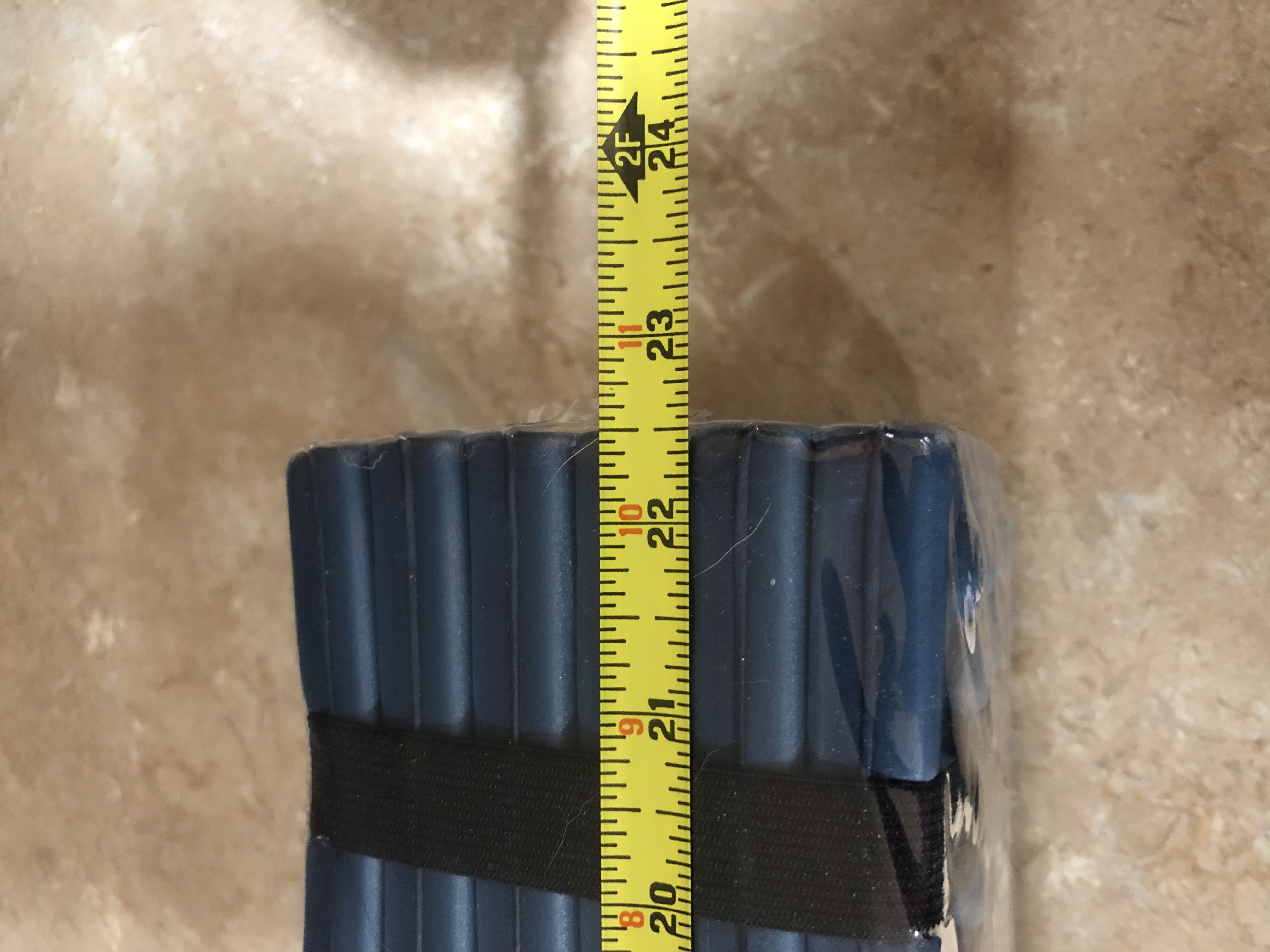
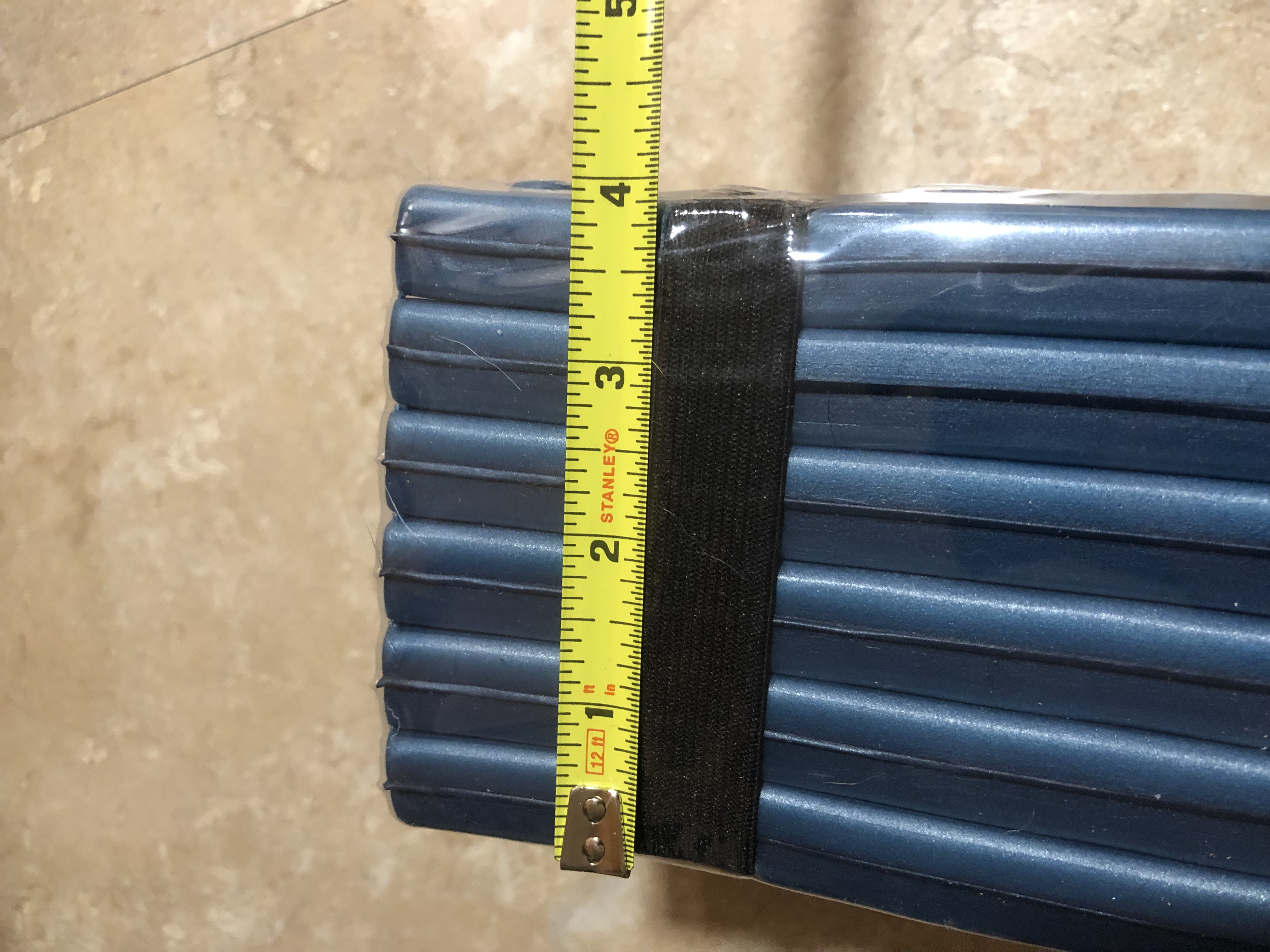
Generally, for a pack that is 12″x6″x25″ this yields a 2′ length. Doubling the standard 1/2″ thickness only gives you about a 4′ length, and so on. (Discounting the joint loss which would be about 1″ per layer.) The 1/2″ evazote pads do help with pack loads up to about 30pounds with three layers (roughly a 58″ length.) At about 25pounds the CCF starts to collapse and at 30 pounds looses a lot of rigidity despite the corners. Each layer tends to slip against the other causing overall support problems.
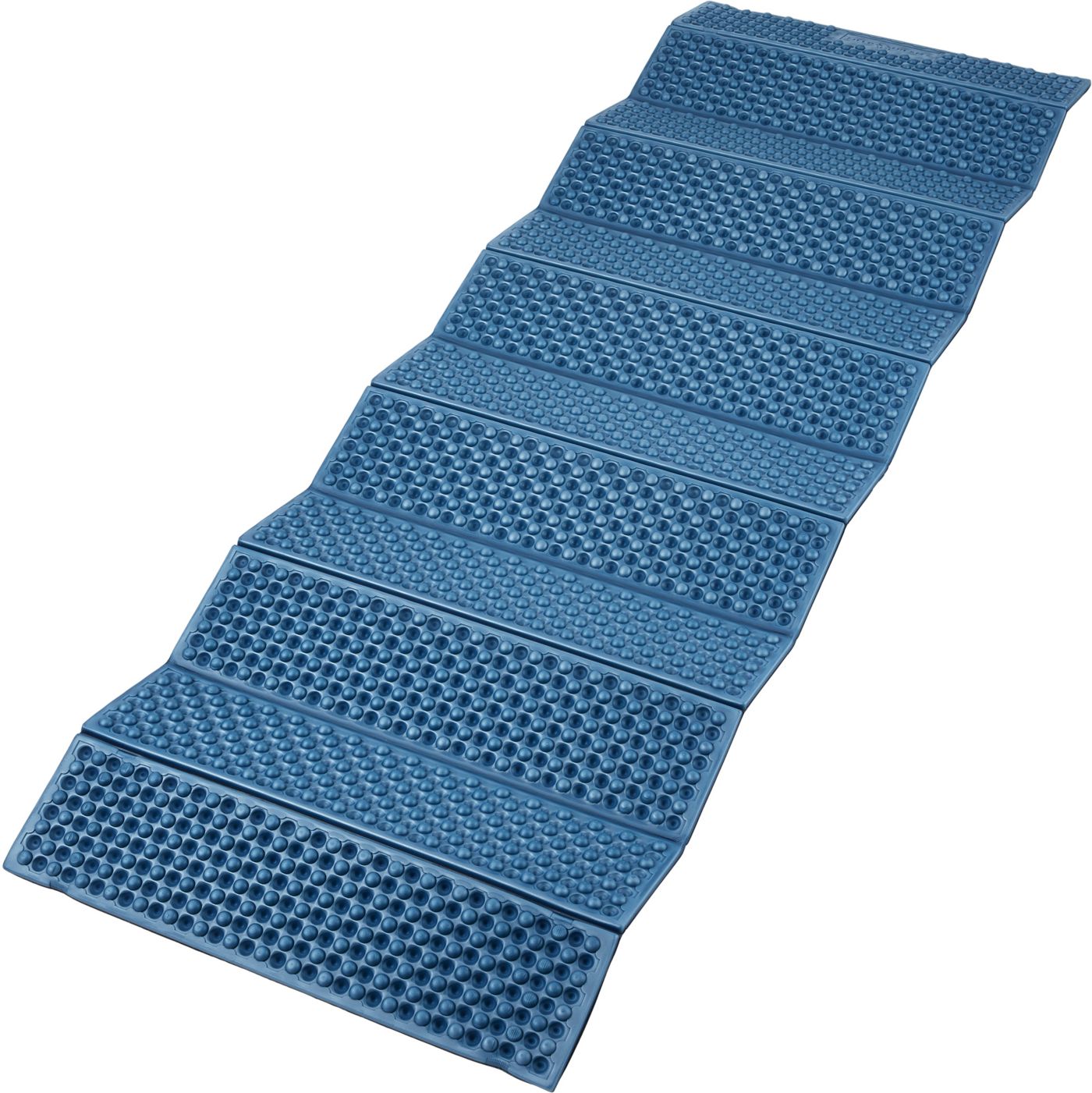
The obsolete GG Nightlight pads worked far better since these were dimpled pads. When nested together they work out to a half inch per two layers. The nested bumps lock into each other forming a single relativly rigid structure. But, these were only about 20″ wide. A simple duct-tape joint works well after the layers are cut and aligned. I usually carry a 2, 3, or 5 layer pad (24″, 37″, or ~52″.) The joints open up a bit allowing a bit of extra length, roughly about 3/4″ per joint. The tape stays pretty well for around 5-10 years. The Evazote people might have some of this around iff you ask.
The volume for the pad at 1/2″x25″x58″ is 725ci. In comparison, a standard food bag is 8″dia x 10″length is around 500ci. So the pad will take up the volume equivalent in the neighborhood of one and a half food bags…a LOT. The internal pads don’t work real well because it requires a larger and heavier pack for the internal volume. A typical Murmur looses the capacity to the point of becoming a long weekend pack rather than a two week pack. So, besides the weight of the pad you also need a larger backpack increasing overall packing weight. In it’s simplest form, the least materials in a pack will weigh less, therefore smaller packs weigh less. (Generally speaking that is. Often the manufacturers do not use the same materials, soo things can get a lot more complicated than that.)
As far as the mechanics of walking goes, the human body requires a torsional twist at the back and an oblong (lift, rotate, repeat) from your hips. While the required internal structure you describe lets this happen, it also tugs the pack up with each step. After several miles on the trail, the pack itself will feel uncomfortable since there is no allowance for twisting the entire pack…only lifting at the corners against your back as you lift your leg to make each step. To allow any torsional twist only a flat ‘back’ panel works letting this to happen with no resistance from the pack weight. The “U” shaped support structure actually interferes with walking a little, making things rather uncomfortable after several miles, regardless of the load lifters.
Anyway, give it a try. Maybe you can figure out a way to create some flexible side panels and still maintain good resistance to pack collapse.