Here are a few replies:
“I think it will stretch where the poles attach. ”
I don’t expect this because (1) these areas are carefully designed, and (2) the X-Dome Pro is actually relatively gentle on DCF.
Consider that a trekking pole tent is putting pretty much all of the strain on 1 or 2 peaks, whereas a freestanding tent like has less strain (because the stake are under less tension) and then it is distributed over many more points, so freestanding tents in general are easier on DCF. In this case there are 13 clips instead of 2 peaks like our trekking pole tents, so any given connection point is seeing perhaps 10% as much tension. Plus these areas are reinforced with DCF tape and DCF reinforcement patches. So I actually think it is quite gentle on the DCF and I expect a longer material lifespan than most Dyneema tents.
“I too like the pole gusset/sleeves better.”
There are some pros and cons here. The main advantages to clips are that they are quicker to pitch, heavier, and enables the tent to be more modular. With sleeves it is harder to pitch just the interior and you can’t as readily roll back the fly partway for ventilation. They are nice in more severe weather because you get a slight increase in stability, but they can be hard to erect in high winds, the poles can freeze inside in the winter, and sliding the poles in tends to take longer. I prefer clips for a 3/3+ season tent and then a mix of partial sleeves and clips for 4-season (e.g. Hilleberg Soulo).
“The xdome pro 1+ will be harder to find sites for out here than the xmid 1”
The footprint of the X-Dome Pro 1+ is substantially smaller than the X-Mid 1. It is 56″ x 88″ rather than 65″ x 100″, so it is about 9″ narrower and a foot shorter. Yes the floor is 50″ wide, but the there isn’t dual vestibules like the X-Mid 2 and all the walls curve steeper to trim off the edges, so the footprint is actually pretty normal for a 1P freestanding tent and noticeably smaller than our trekking pole tents.
“For people like me who value a smaller footprint, the HMG Crosspeak 1 fits the bill at same weight and price.”
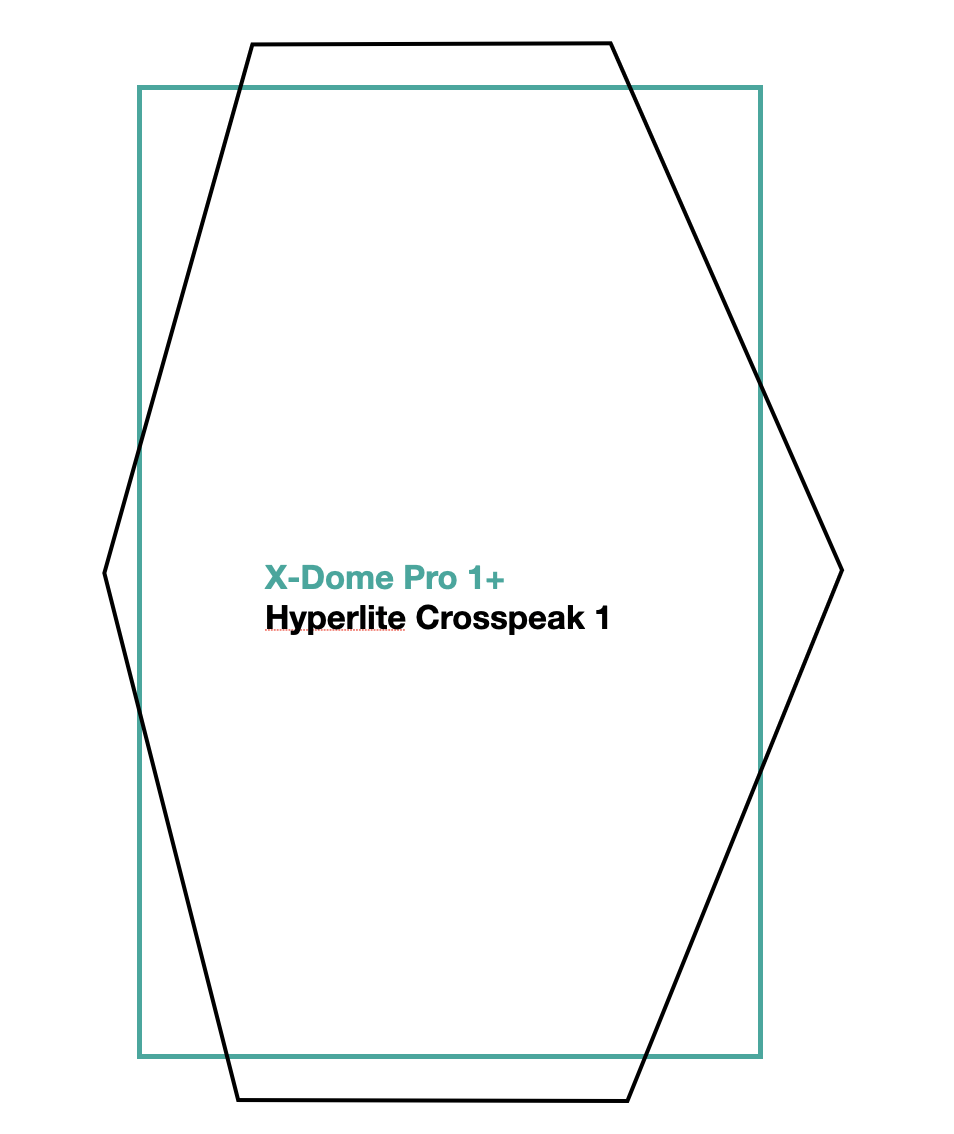
The footprints are actually pretty similar (see below). The X-Dome Pro 1+ does have a larger floor (23 vs 18 sq ft), but the HMG looses area along the back sidewall where mesh covers where a second vestibule or larger floor could have been. If they would have made this area into floor, it would have been more similar in floor size and footprint, but as is, the X-Dome Pro has a larger floor in a similar footprint.

Each tents have advantages. Where I think the X-Dome Pro 1+ stands out are that you get a larger interior, doublewall protection, and 100% freestanding while also being lighter.
“I think my the pole sets should be interchangeable between the normal and the pro”
Yes they are.
“Maybe a tad small for someone 6′ and over.”
It looked a bit short in that review but it may have been the walls not being totally tight. The floor is longer than average for a 1P tent, and you see people in the comments who are 6’3″ and happy. It’s not the longest tent out there, but usually people are happy up to about 6’2″ – 6’4″. And then that is just touching the interior walls which don’t matter if you brush them, as the fly is still a good distance away on both ends.
“While being the lightest is a great bragging point. It’s not the end all.”
I agree with you. I am actually surprised it is the lightest doublewall freestanding tent on the market because we could have made it quite a bit lighter by sacrificing more. More specifically, we could have made it quite a bit lower and narrower while still be as large as other tents, and chopped off features like vents and all the guyouts. I didn’t because the goal was to optimize the user experience moreso than purely just the weight. I think that’s what stands out about it – it is jus a comfortable, liveable and capable tent for what is quite a low weight. Other tents will be lighter like singlewalls and trekking pole tents, but typically quite a bit smaller and usually less protective.




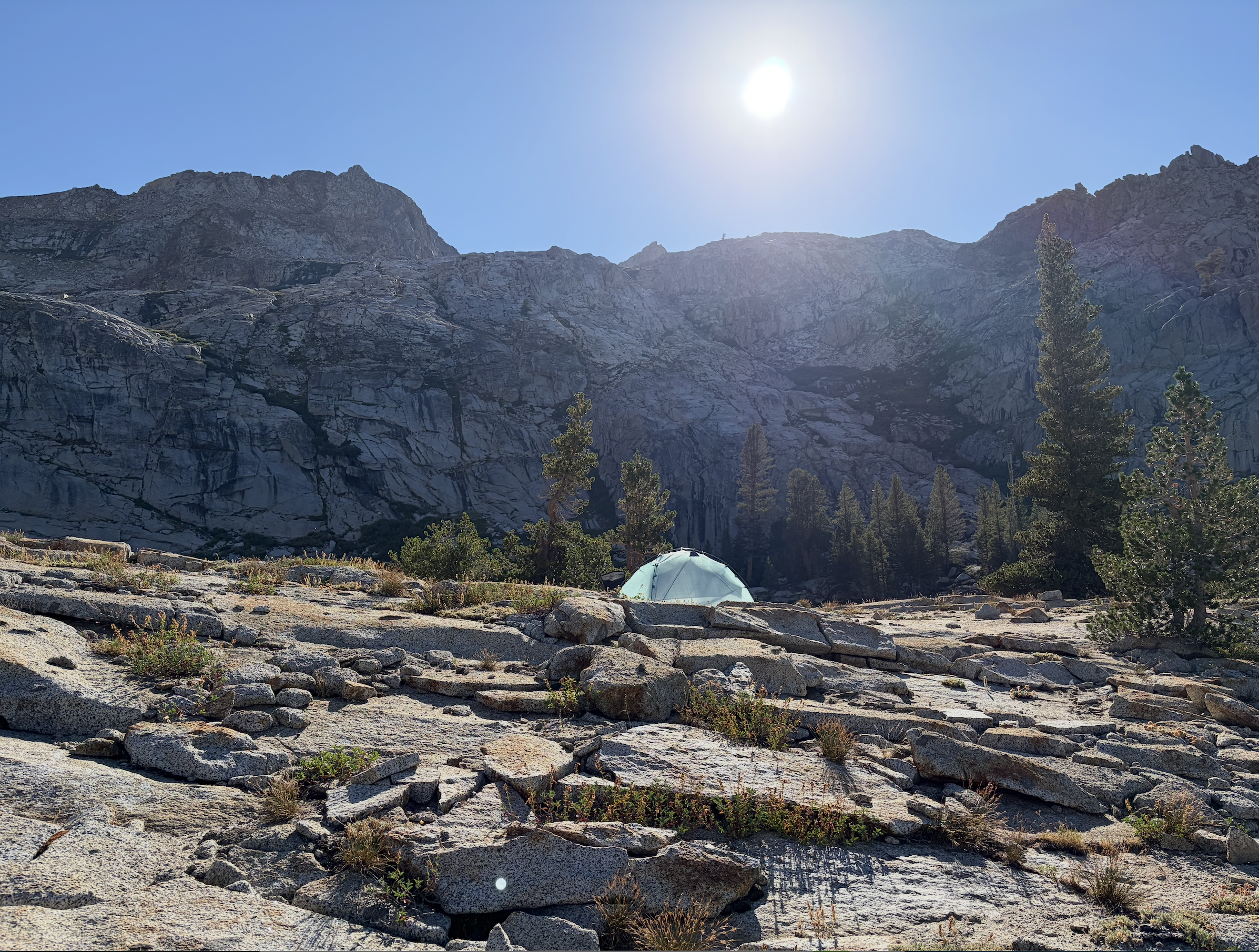 I took the X Dome Pro 1+ to the Sierra’s for 5 nights the week after it was released. Such an awesome tent!