Topic

Cyanobacteria and Cyanotoxins in Backcountry Water Sources

Viewing 10 posts - 1 through 10 (of 10 total)
AK Granola BPL Member
PostedJul 8, 2024 at 10:42 pm

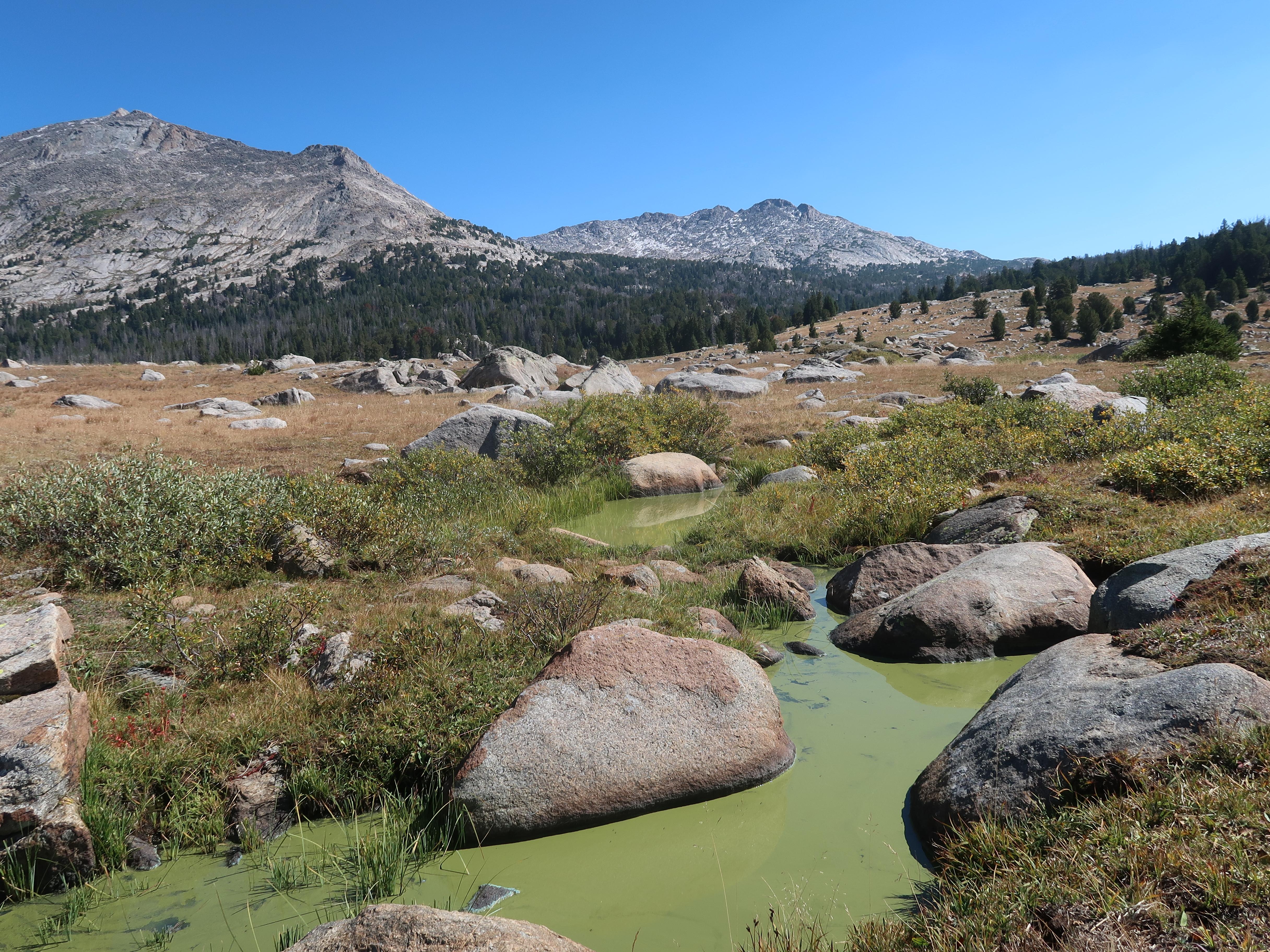
Seeing the water sources on the Arizona trail or the CDT – lots of places where your only option is a cow pond, a tank full of algae, etc. Suggestions?

PostedJul 9, 2024 at 8:52 am

Well done presentation.  Toxic algae has become a problem at Isle Royale National Park as well.  Some of the inland lakes on the island will suffer from toxic algae blooms and the NPS has to issue “do not drink” advisories for visitors.

Bill Budney BPL Member
PostedJul 10, 2024 at 9:28 pm

For first aid, charcoal is easy to make in most places below tree line. Can that help? How much do we need to eat?

Prevention is better, of course. I’m just thinking about what to do when things go wrong?

David Thomas BPL Member
PostedJul 11, 2024 at 8:53 pm

Bill: while charcoal is easy to make, and wouldn’t hurt you, what you really want is *activated* charcoal which has been heated in high-temperature steam or nitrogen to drive organics off the surfaces of former cell walls. Then the tremendous surface area of those microscopic structures can adsorb (with a “d” – a surface process) organic molecules from the air or out of water.

If you wanted to use DIY charcoal, the fresher the better.

But you’d have to administer it pretty quickly – before most of the toxics had been absorbing in the GI tract.

So in a pinch, charcoal would be far better to treat the water before drinking than as first aid after you noticed symptoms.

Bill Budney BPL Member
PostedJul 11, 2024 at 11:16 pm

Thanks for that explanation, David.

Avoidance has work so far, and that remains solidly Plan A.

I suppose that some water really needs to be distilled to make it safe. If fuel is abundant (firewood), then it isn’t all that hard to do. Maybe that’s a good reason to carry a pot, a lid, and a smaller cup. Not that I’ve ever needed to do that — I just feel better knowing that I can. :)

I wonder if stillsuits feel clammy? Probably. Sigh.

Drew Smith BPL Member
PostedSep 9, 2024 at 12:12 pm

Just got back from a Wind River trip. Due to high temps and drought, algal growth was significant. There were posted warnings at the Big Sandy TH about several lakes being contaminated with cyanobacterial toxins, and I assume this list was incomplete.

Reading through this thread, I see that there are several educated guesses that are reasonable but wrong. I went to the scientific literature to see what it could add to the discussion. Here’s the gist:

  1. Microcystins and anatoxins are the most common cyanotoxins in Alpine lakes and streams.
    (Cerasino and Sarmaso, 2012,  Jablonska et al 2024)
  2. Despite the presence of polar groups, microcystins still have extensive hydrophobic moieties (as well as the peptide backbone). They are adsorbed extremely efficiently (>99.9%) by activated carbon (Roegner et al 2013). Activated charcoal has been reported to remove anatoxins, but much less efficiently (Vlad et al 2014).
  3. Steripens are not going to do the job. Although microcystins are inactivated by UV light, they are sensitive to UV-C (300-320 nm). Steripens emit UV-A (250-260 nm).

Bottom line – Ryan’s advice in the video is good: filter the bacteria to remove intracellular toxins, then remove extracellular toxins with charcoal adsorption.

EPA summary is here

Josh J BPL Member
PostedSep 11, 2024 at 12:49 pm

What is really like to see is someone take several water sample from the cyanobateria water. 1 sample as control, a 2nd sample running it through just a filter and 3rd running it through a filter followed by activated charcoal.

Send all 3 to a lab and get test results.

If I’m dire for water I’d do the filter and charcoal but having suffered from Giardia, I’m highly skeptical it’s still safe to drink.

Jason McGrath BPL Member
PostedJan 11, 2026 at 7:38 pm

So, given that this stuff can be invisible to the naked eye, how do we do risk assessment? Almost none of the alpine lakes in Washington even have data. Is it time to drop my preferred Aquamira solution? I’ve never had an issue but Ryan’s presentation of Alzheimer’s risk to exposure is a little unnerving.

Viewing 10 posts - 1 through 10 (of 10 total)
Loading...