I have a lot of experience backpacking in Colorado but none in the PNW. I have what I believe to be a pretty well-tuned ‘kit’ for Colorado but would like to hear some of this community’s thoughts and lessons learned. As an example, I hike in breathable trail runners and don’t worry about having wet feet as they will usually dry quickly in Colorado. Should I change to a Goretex sock or shoe? I use a tarp shelter here and usually never have any bug issues. Open to any and all thoughts as I prep for a 4-day trip to the Oly’s in September. Thanks!
Topic
Colorado vs. Pacific Northwest Backpacking?
Become a member to post in the forums.
- This topic has 21 replies, 11 voices, and was last updated 4 years, 1 month ago by .
I live at the base of the Olympics. Gore-tex shoes/boots suck, especially for river fords. Unless they are boat anchor 5+ lb boots, they will wet out if it rains the whole time. Go with trail runners with proper synthetic and wool socks for conditions. Thin synthetic socks for getting wet, and thick wool ones for once at camp or cold mornings. You might see rain, but September is usually nice weather, but up in the alpine, you could get some cold coming in. I use two pairs of thin synthetic liner socks either alone or doubled up, then a pair of thick wool mountaineering socks when things get colder or I am not moving much. Important to be able to swap the synthetic socks if it is not warm enough to dry them fast while walking.
September is not very flying-buggy compared to other months. Tarp would probably suffice. Bring head net just in case. We still have creepy crawlies on the ground.
You might be surprised how cold our rain can be here, even for September. The low elevation air density and the high humidity from the ocean, make for a cold that catches MOST people off guard who are not from the coastal areas. The cold, wet wind here will sometimes bite through clothes as if the temp was 10-20 degrees colder, but lower humidity.
I grew up in the PNW, and spent some months doing trail crew work in the Olympics and elsewhere. For the Olympics in particular, I would pack assuming it will rain. Possibly for days. Even in September. I don’t have real experience with tarps. I’d prefer a reliable enclosed tent in those conditions.
I don’t have much experience in the PNW, but I’ve made one 5-night trip to Olympic a few years back. I slept under a tarp, and it worked well. No bugs that I can recall. The rains, when they occurred, were light to moderate and steady, as opposed to the more torrential storms I have encountered in the Rockies. My tarp was an 8×10 flat tarp, so fairly roomy, which was nice for rainy evenings when I spent a lot of time confined to my shelter. I’m pretty sure I wore my La Sportiva Wildcats for that trip, and they worked well. Most of my backpacking is in the mountain west, and all my usual gear worked just fine.
100% agree with Johan & jcott. Trail runners are perfect. Synthetic and fast drying being the key. Feet will get wet from creeks, rain, or wet vegetation – how fast they dry overnight in camp will decide how comfortable they are the next day.
I’ve cowboy camped and tent camped all over the Olympics and prefer a floored shelter. Not necessarily bugs, but if you do get a wet cycle come through you’ll be on mud. It’s a different kind of wet in the Olympics – everything gets wet to the core. Probably not so much in September, but if you get into a 4 day wet cycle you’ll be glad to have a dry refuge.
The weight of a tent/tarp inner is easily offset by not having to carry water. Add the 1 lb mesh inner to your setup. Lose the 2 lb quart of water you probably always have in the Rockies. Maybe much more than that. You’ll likely cross water every half hour, so no need to carry any :)
Good info, thanks! Planning the trip with my son. Will probably take his tent and consider also my tarp for cooking/lounging area. I usually carry a down puffy but may shift to a synthetic insulating layer instead… Great point on water availability. Appreciate everyone’s experience!
P.S. Now to battle the permit monsters! :-)
Just curious, where were you planning to visit in the park? One of the super popular areas like Hoh valley, Seven Lakes, Royal Basin, Lena Lake, etc?
There are plenty of areas in the park that might be popular, but not as restricted in terms of permits. If your original plans fall through, you could plan plenty of fun for 4 days in the Marmot Pass, Mt. Constance, Home Lake, Buckhorn Mountain area.
It would also be VERY worth spending one day driving around and exploring the coastal park areas like Ruby Beach and Rialto Beach if that wasn’t already in the plans. It would be a shame to visit the park and not see the ocean.
@Johan… Thanks! Good ideas… TBH, we haven’t settled on that level of planning yet and have some flexibility with dates (i.e., avoid weekends). My son lives on Whidbey Island and mentioned the Hoh valley last night but very much appreciate your other suggestions!
I stayed 1 night along the northern Oregon coast in July and was amazed how cold a 55* foggy wind felt. The thick, wet air felt way colder than the thermometer indicated. There was mist floating in the air which didnt actually wet anything, but you could feel it. Even under my tarp which blocked the wind, the damp air felt much colder than dry air. I had a 40* quilt and thought it was near its lower limit in those conditions (but in dry conditions its comfortable at 40)
If you’re used to dry air, I also agree the damp coastal air will make it feel 10-20* colder.
@Marcus- That’s another one of the reasons I love Colorado. I lived in VA for a time and could never get over how cold a humid 45 feels compared to a dry 20!
Based on experience in similar wet environments (BC), I’d highly suggest one or two fleece layers. Things just seem to get soggy and stay soggy. Fleece is great under a raincoat when it’s drizzling all day.
Daniel, I think all your conclusions are good ones, even though I’ve not trekked in the PNW, and my time in the wet has been limited mostly to NNE (northern New England) and mostly northern Colorado. There is a reason I spend four days almost every year driving to Colorado, and it is awesome. Last year I called the Nat. Forest in July in Walden, and they said they were in “the monsoon season.” But when I got out there in August, it was just like any other August. Though there had been wildfires the previous year, and the signs were still evident. So I think caution is good, because weather seems more unpredictable these days.
@luke @sam- Appreciate the inputs! As I kind of anticipated, it may be time to refresh my rain kit…:-)
@sam – If you haven’t been in the Pine Creek Basin, you should really check it out. Only 11 miles in but surrounded by four hikable 14k peaks at the top is heavenly!
Daniel,
I’ve only done one walk-up of a fourteener, and that was Holy Cross in the Gore range. During the years when Twin Peaks cabins were open in Twin Lakes CO, hiked all over the Collegiates, but not looking to peak bag. Prefer long treks in the high country above timberline, on or off trail depending on the best routes. The inn a bit down the road from Twin Peaks was a great place to eat, and put the frosting on the cake after my trips. I hope to visit the former owner of Twin Peaks and possibly some other Coloradoans this summer to reminisce a bit.
In recent years, I’ve become attracted to the mountains in the Rawah and Never Summer wilderness areas in an attempt to find the best wilderness routes from Mountain Home on the WY border south to bypass Rocky MNP. The peaks along the western boundary of RMNP make the wilderness areas on west side quite remote, except during the few days annually when a 100K trail running event takes place. Those running folks have also kept some of the more remote routes open, since the routes formerly maintained by Never Summer Nordic grew over and became almost impassable. Only once did I take a route through Rocky. Could not believe how wasted places like Lulu City were due to the crowds. Hitched a ride on the Park road just to get out of there. In crossing back to the CDT, had a bizarre experience when passed a man in a civil war uniform complete with ancient long barrel pistol strapped to his leg who was followed by a woman struggling with a steamer trunk strapped to her belly. Really wondered if I’d passed through a time warp, and when posted about it on BPL, some said I may well have.
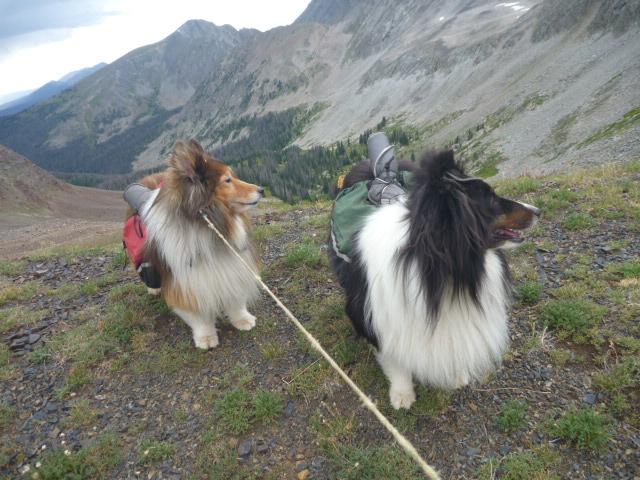
But it is not just the remoteness of that area that lures me, it is also a way to avoid the dog prohibition in Rocky:
This was taken at Red Dog Pass in the Never Summer.
So guess we all find areas that we are attracted to for a variety of reasons. Above are some of mine.
That’s awesome! Some beautiful trailmates, too… My sons and I hiked around the Holy Cross massif a few years ago. Intended to summit on day three but didn’t have the legs, opting for beer and pizza, instead! As a resident of the front range, getting out to the NW ranges is challenging but it’s on the list. Thanks again for your thoughts. Stay well…
For what it’s worth, there are some fairly high and dry areas of the Olympics with no water availability. At least close by. I carry a 1L Smartwater bottle that I’ll frequently fill in the areas with plenty of water, and a backup 2.5L collapsible Platypus that I’ll only fill if I know I’m going into a dry camp. Even with that, listen and look for signs of water in those dry areas. You can usually find some within 2-4 miles of your camp roundtrip. Of course this is all dependent on which side of the park you’re on and how high up you decide to climb. As for rain, depends on the park area. I always just plan on rain, even in the summer, but get fair to clear weather more than often enough. I’ve had 20 degree temps in July during the late night/morning damp air and breeze. But that’s rare. Usually 30-40’ish night temps. Unless we’re having a heat wave, then maybe 50. I’ve had my shoes soaked more thoroughly from walking off trail through damp grasses than any stream crossing. They all will have some log bridge or way across it. More often than not, you can hop it. Most major stream or creek crossings with no other way across but through, are far and in between. I’ve worn both Goretex and non. During the extremely wet early spring times I prefer Goretex, especially if there’s a lot of snow travel. During September you’ll be safe without, even if you travel up to the snow, it’ll be compact. Bugs mostly are gone by September. At least the hordes of them. You’ll still get some mosquitoes at night but they’ve mostly all lost their enthusiasm by then. I prefer having a bug net all the same. Best of luck :)
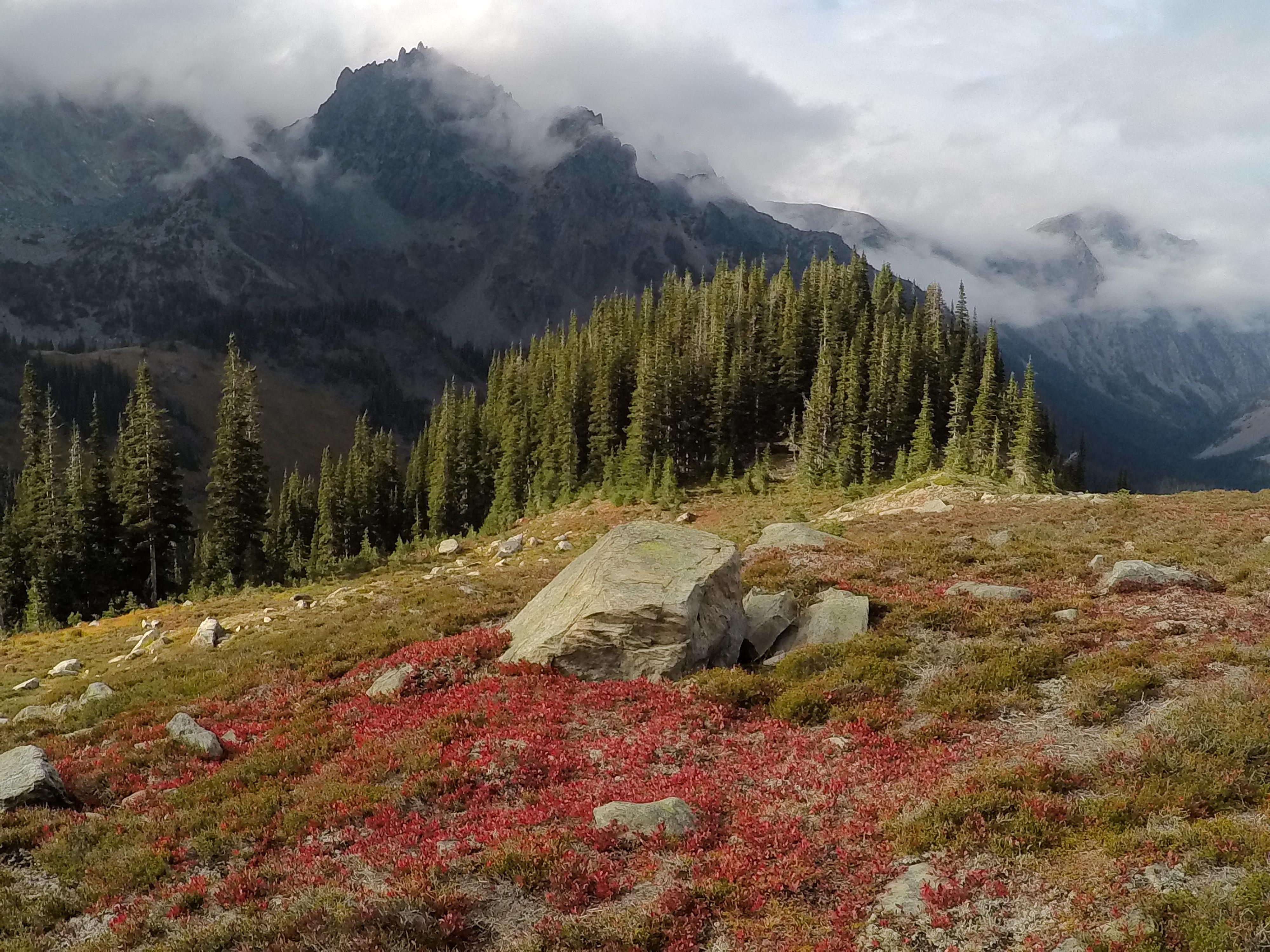
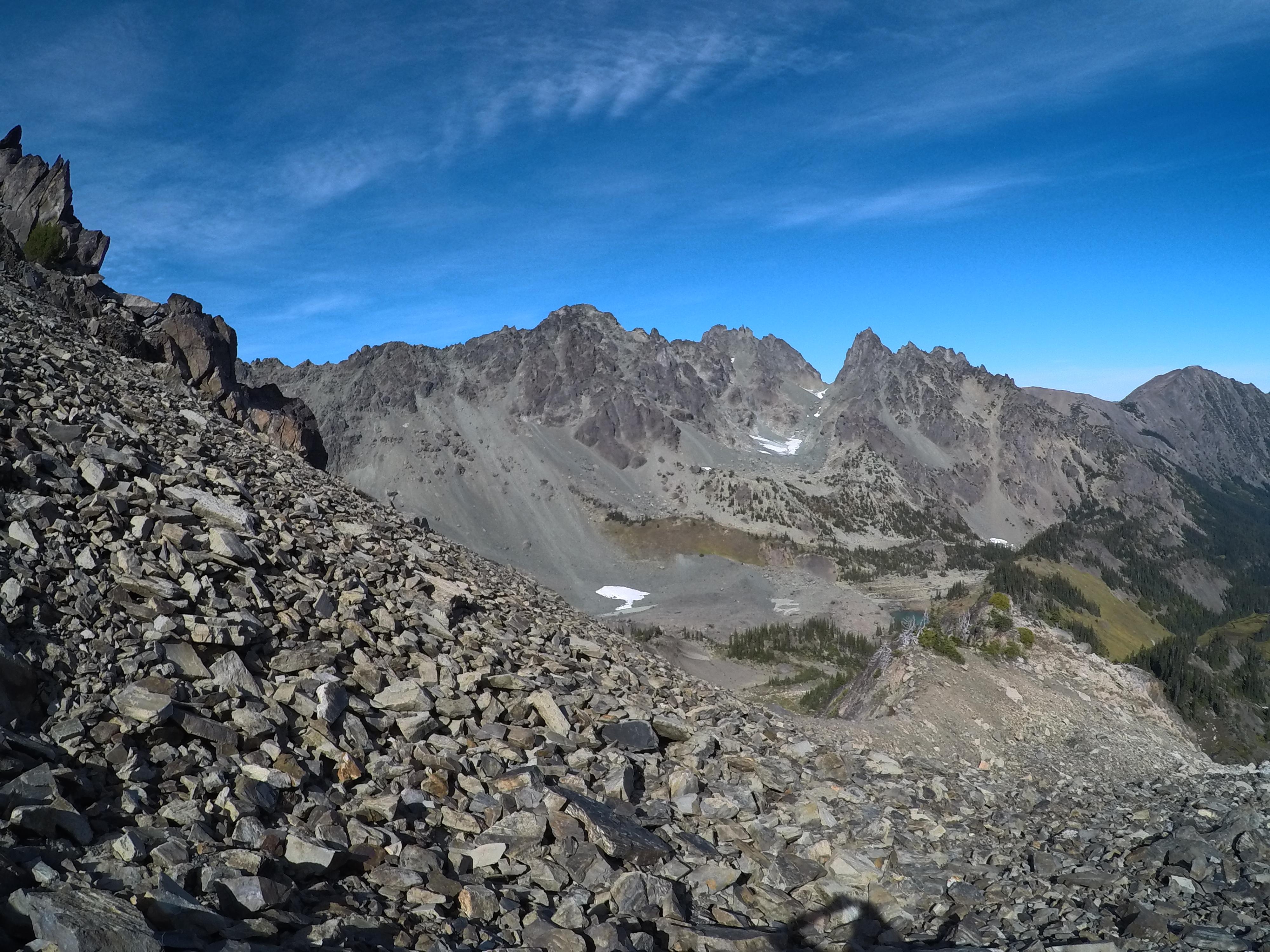
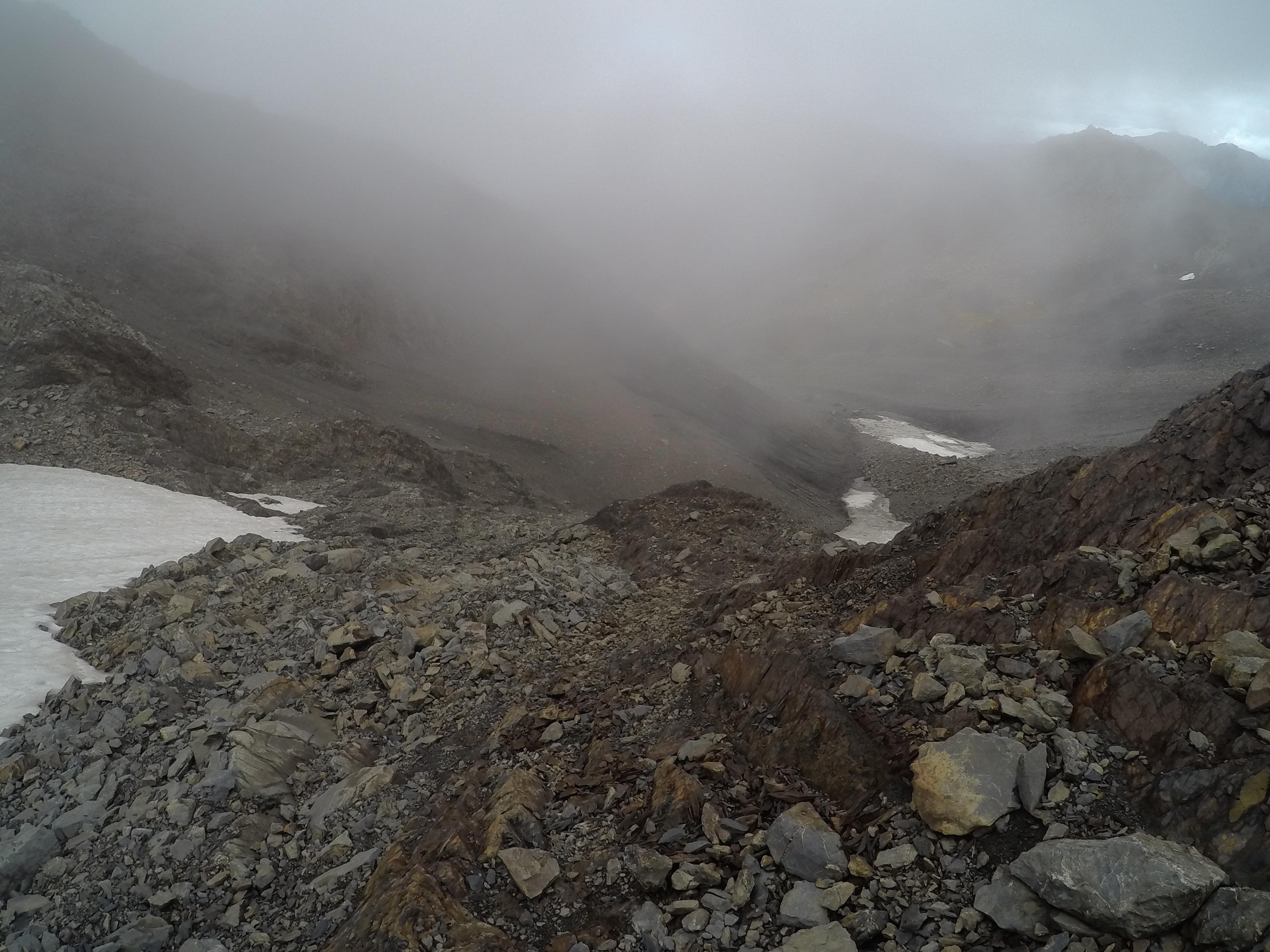
September in the Olympics.
Great pictures and words of wisdom! My next concern are the crowds. I’m looking at entering at Staircase Ranger/Lake Cushman and then the lollipop around Marmot/Hart Lakes. Anyone with experience in that area? I think we’re going to be limited to four days/three nights and that seems reasonable. Thanks for everyone’s inputs/ideas!
Hart Lake is one of my favorite lakes in ONP. There is a well defined trail from Marmot Lake to Hart (I can’t remember if it is marked but it is very easy to follow and can be seen on google maps). Across the lake is a high slope covered in blueberries, usually with several black bears who want nothing to do with you but are fun to watch. If you have time, hike up to O’Neill Pass from Marmot Lake for the great views and then turn around from there. Make sure you are aware of the elevation changes for the number of days you have in ONP; not so much for the altitude, but because everything there is climbing up and down river valleys.
There will be lots of people around Staircase as there are a few shorter dayhike trails in the area, but that should taper off considerably after a few miles. At any particular campsite (especially High Divide, Marmot Lake & Hart Lake, you probably won’t have total solitude, but it’s beautiful and worth it.
Great info! Thanks… Your comments about solitude reminded me of a trip (Four Pass Loop) with my oldest where we thought about stopping at Snowmass Lake. Unfortunately, we could see and hear the crowds from nearly a half mile away! Including swimmers with inner tubes and big floatie toys… Looked like a summer camp waterfront. We kept going… :-)
I have some, but not a lot of hiking experience in the NW, but do have a few multi-day rain feats in the Adirondacks. Ditto the no GTX trail runners. You’ll want the water draining from your shoes.
For hiking, consider injinji toe socks their standard weight and thicker trail weight coolmax socks besides not retaining water, keep your wets toes from rubbing. And unless you have dry camp shoes, carry a couple bread sacks to slip over your wool socks when want to be up and about in camp or make a night time potty run. They’ll keep you feet dry from your wet shoes.
Thanks, Steve… Good reminder to have something to keep the night socks dry. I usually don’t take any camp shoes and appreciate the point…
Become a member to post in the forums.