


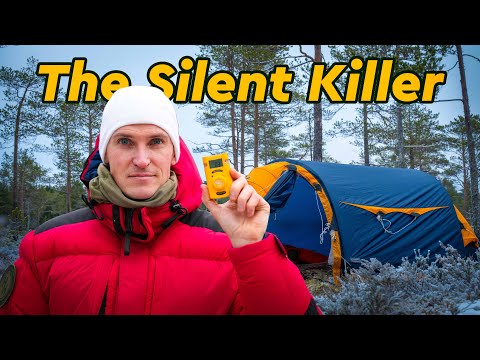
Useful info/intro to the topic of using a stove inside the tent;
Topic
Become a member to post in the forums.
.
Useful info/intro to the topic of using a stove inside the tent;

Much more interesting than I thought it would be. Worth watching. Thank you.
I don’t cook inside my vestibule, I worry about damaging the fabric.

Yeah, interesting. That’s like Roger says – quench the flame and you get carbon monoxide
I don’t like using stove in tent because the nylon fabric is very flammable, and it melts and rains down flaming balls. Hard to get out of a flaming tent.
Sometimes I’ll leave the door of my mid open all the way and put the stove just inside where rain won’t fall onto it but there’s lots of ventilation. Just run it for a few minutes to boil water so there isn’t enough time for CO to accumulate.
Based on this video, when I put the pot of water on my stove it will produce CO. And, any stove will do this.

Haven’t radiant heaters (and some (most?) heat exchangers) been demonstrated to generate more carbon monoxide than other systems? I think he had a worst-case scenario there.
Still, who uses a stove inside their tent (instead of in the vestibule)?
I think it’s quite common to use a stove inside the tent when wintercamping, at least here in Norway. But for the purpose of warmth, and not cooking. At least I hope people are aware of the difference between the two when it comes to CO. I think I will invest in a CO monitor/alarm to check if my way of doing things – with my stoves and my tents – is sensible and safe.
PS; also heard that that combination is pretty bad. But that combination might be more relevant to test, since they often are the preferred gas systems for winter camping – when using a stove inside the tent also is more relevant.
Still, who uses a stove inside their tent (instead of in the vestibule)?
I do.
But like everything in life, it depends. Down to about -20C/-4F I’m fine having my stove in the vestibule, but in very cold weather the quality of life improvement I get from moving the stove inside the tent is huge.
With proper risk mitigation I have very few qualms using my stove inside my tent.
Henrik, Haakon: Are you guys using a hot tent stove with a chimney?
No.
Haakon: Are you guys using a hot tent stove with a chimney?
I do sometimes, but it’s a heavy setup that isn’t always practical. Very comfy though
Condensation issues?
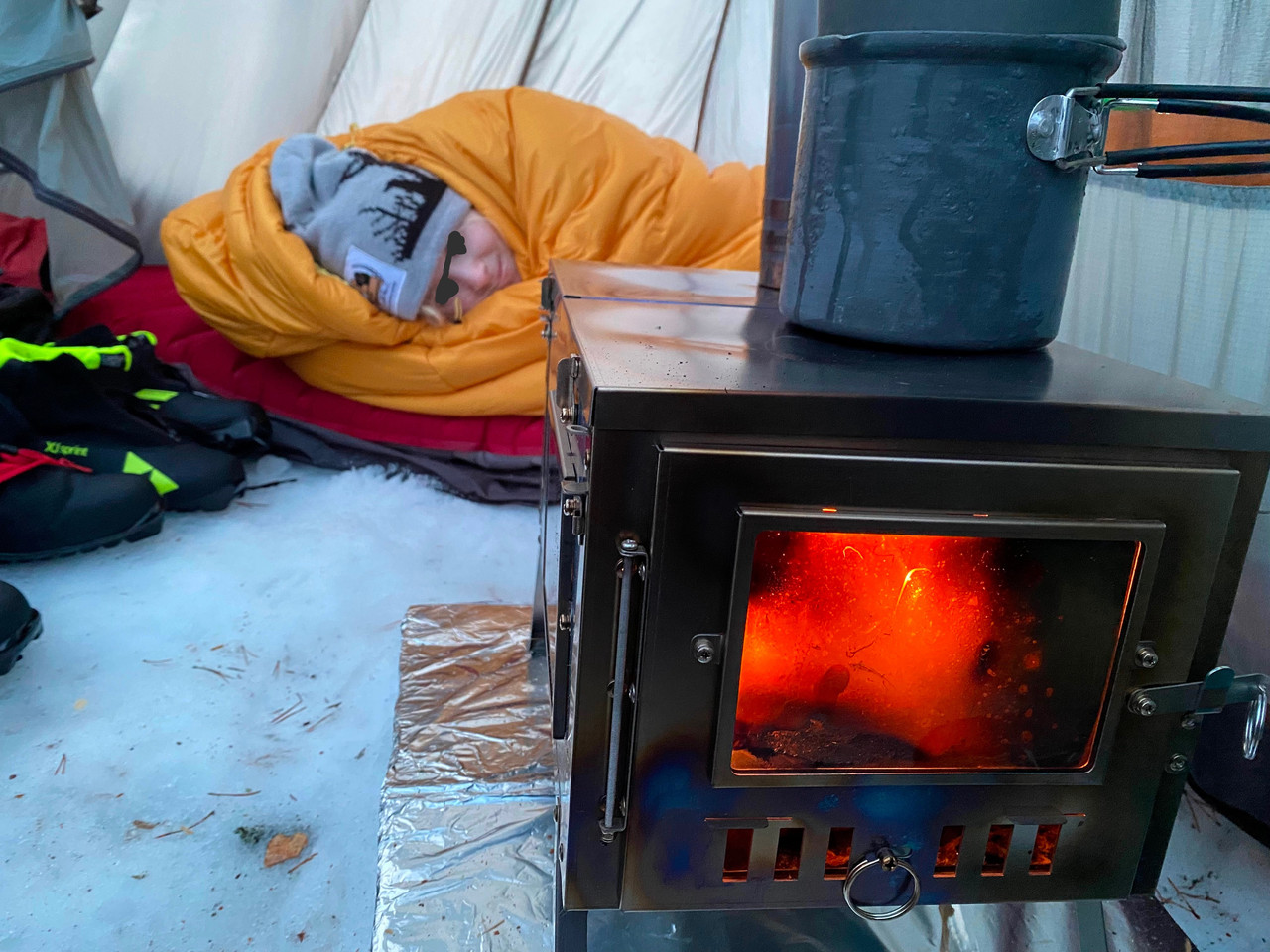
Must be melting snow – condensation on the sides of the pot
I meant from using propane with no exhaust.
Yeah. I couldn’t help noticing the condensation though, maybe a separate subject, but it does show there’s some humidity inside the tent.
The water vapor from burning propane must go up the chimney.
Or does the water vapor freeze to the walls?
I couldn’t help noticing the condensation though, maybe a separate subject, but it does show there’s some humidity inside the tent
definitely no condensation issues when hot tenting. The water/moisture visible on the outside of the pot is just excess snow that melted outside the pot
Haakon, I think that Terran is referring to the fact that water is a byproduct of combustion. The act of burning fuel inside a tent (without a chimney) will create moisture. Of course, your breath also adds moisture to the air, so the question is whether you are burning enough fuel to make a noticeable difference in condensation on the tent walls.
I was trying to ask whether you and Henrik were saying that you sometimes use a stove without a chimney inside your tent (not the vestibule)? I believe Henrik said that he does.
Haakon and Henrik: I’m just curious about the practice. What technique(s)/precautions do you use? Do you do it in a tent with a floor? With some kind of ventilation? I understand stoves with chimneys, but I don’t completely understand the technique of using a stove without a chimney in a tent. I’m sure it happens, I just want to learn “how”?
I use it for heat. I open the inner tent somewhat, and also a bit of the zippers to the fly. I don’t have a picture to show, but I use a Soto Stormbreaker and white gas on a plate. Found a picture of my previouse stove-plate (for my former stove – a Optimus Polaris). I fire it up in the vestibule since the start of the process can be a bit unpredictable. I cook only in the vestibule. But I use it for heat inside the tent in colder weather. It has worked for me – but I guess a CO monitor is sensible. at times, and then move it inside. My new plate is larger.
In my experience it’s not really rocket science. It’s how everyone is thought to do it in military training over here, so maybe that’s why we worry less about it (because it’s so familiar, not because of ignorance).
but I don’t want to give advice on the internet that lacks nuance and context and unwittingly contribute to put someone in a dangerous situation.
Most important advice is don’t skimp on ventilation. A good double walled 4-season tent with ample ventilation options is a good start. Use the vents, and even doors when necessary.
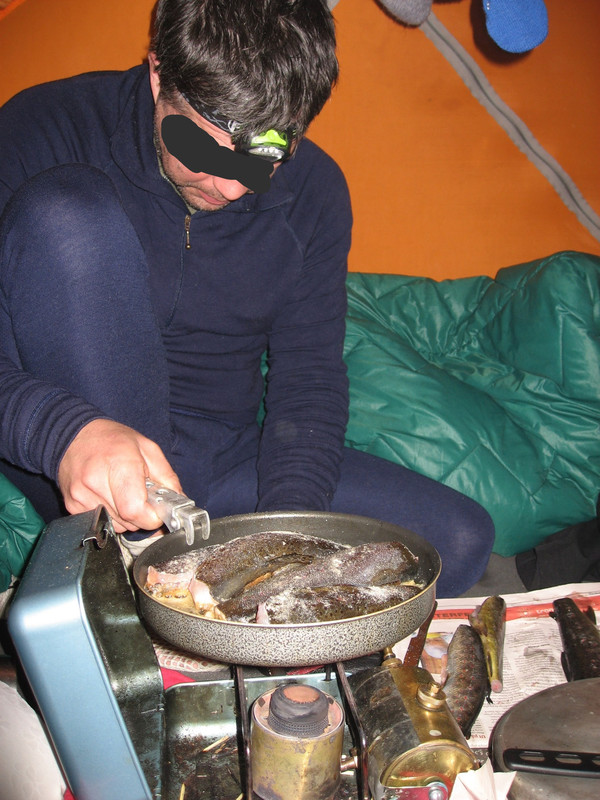 edit to add picture
I wouldn’t mistake it for ignorance. My curiosity is mainly about practices in areas with colder climates. My experience with propane is a lot of condensation. Overall, I try not to rely on heat, but I’m rarely out in really cold subfreezing weather. I do keep a CO meter in my truck topper.
Depending on where you live the limits can very and should be researched. For example the WHO limits are 9-10 ppm for no more than 8hrs and 25-35ppm for no more than 1hr, where in the USA OSHA allows up to 50ppm for 8hrs and physical symptoms don’t start showing up until 70ppm. life threating doesn’t start until exposed to 400ppm for more than 3hrs. only after 6,400ppm will you die in 10-15min. so the big take away is be smart, keep well ventilated and don’t run heaters while your sleeping.
Become a member to post in the forums.
 Magic 100 Sleeping BagMinimalist 900-fill-power down sleeping bag with a 55°F | 13°C comfort rating. Weighs 8.46oz | 240g
 © Beartooth Media Group Inc.
 Loading...