


Has anyone sent in their clothes to be treated by Insect Shield? Curious how it’s been working and if you noticed any shrinkage/damage to the clothes.
Topic
Become a member to post in the forums.
 .
.
Has anyone sent in their clothes to be treated by Insect Shield? Curious how it’s been working and if you noticed any shrinkage/damage to the clothes.
Yes, with at least a dozen items of clothing over the years. Never any noticeable shrinkage or damage with synthetic clothes; I’ve never sent in any merino or natural fibers. I’m a big fan of this process–way less messy and longer lasting than DIY, at a reasonable cost, pretty quick turnaround. Here in the Northeast with our tick situation I find it a necessity.

I have treated synthetic woven clothing and merino socks a couple times and have not noticed any shrinkage.

It’s illegal in Canada as is permethrin.
I hope they reconsider or they could soon have a serious Lyme disease situation to contend with
I first used it for a trip to some game parks in Africa and it worked great. I now treat all my hiking clothes with no negative effects.

Dad said he was sprayed before being shipped to Iwo Jima. Said he didn’t see a single insect.

Thanks for the reminder
I just sprayed Sawyer Permethrin on my gaiters and pants. Let them dry for 24 hours. Maybe 5 minutes of my time.
We are approaching tick season. About time to hike along the Rogue River. I frequently get ticks there.
It’s illegal in Canada as is permethrin.
I don’t think permethrin treated clothing is illegal in Canada but it does look like individuals are not allowed to treat their own clothing.

I’ve been a big fan of permethrin-treated clothes for about the last year, since coming home last spring from a single overnighter pretty much encrusted in ticks and getting very sick a couple weeks later.
So far I’ve just used the clothes that come pre-treated, but I’m planning on sending some items in to Insect Shield for treatment. One of the challenges I’ve run into is that permethrin treatment apparently doesn’t “take” on items with DWR. This is particularly a problem with pants: It seems like manufacturers almost universally use DWR on their hiking pants.
In case this is of interest, here are the brands I’ve been using: Simms Bugstopper, Columbia Skien Valley, ExOfficio BugsAway (discontinued, but still available through REI and probably elsewhere), and I just picked up a couple pairs of Farm to Feet No Fly Zone socks. I tried LL Bean’s insect-repellent wool hiking socks, but they felt more like a winter/expedition-weight sock to me. LL Bean also has shirts and pants, Craghoppers and Rail Riders both offer a few permethrin-treated products, and I think there are a couple brands for hunters that do, too.
I haven’t used Insect Shield’s clothes, but I do have their blanket and sleeping bag liner. I use these to wrap gear in for a couple days after I get home, in hopes that any ticks that caught a ride on my gear won’t find their way to my dogs or me. My understanding is that, unless they have some source of moisture (if the gear was wet, for instance), most types of ticks can’t survive more than a day or two inside a house.
that’s interesting. I asked Gemini and it said permethrin doesn’t work on DWR
“Because a DWR coating creates a hydrophobic barrier, the permethrin spray tends to bead up and roll off the surface rather than saturating the weave.”
“Notably, Insect Shield (the industry leader in factory-applied permethrin) typically refuses to treat waterproof or DWR-heavy garments because they cannot guarantee the treatment will last the standard 70 washes.”
When I sprayed permethrin on my pants, which are DWR treated supplex, the spray beads up, but after a while soaks in. The DWR on them isn’t very good. I’d really rather it wasn’t DWR treated, so poor DWR is better than good DWR. I can see it soaks in so I think I’m good.
My gaiters are polypropylene which is hydrophobic by nature even without DWR. I didn’t look real carefully, but I bet the permethrin didn’t stick very good. I never wash them so maybe it’s good enough. And I still get coverage from the pants so maybe the gaiters don’t matter.
I have a jacket with a good DWR. I bet the permetrhin would be more likely to bead up. But I don’t treat it anyway, I just treat my pants and gaiter because they rub against brush which is how the ticks get on me.
I don’t think permethrin treated clothing is illegal in Canada but it does look like individuals are not allowed to treat their own clothing
Its complicated but its functionally nearly illegal in practice.
DIY spray permethrin for home use is illegal. It’s allowed only for military use, meaning you can’t walk into an outdoor store and buy it. That creates a loophole but almost no one in Canada knows how to exploit it. After talking with numerous fellow backpackers, hikers, and home or cottage owners with tick infestations, I’ve never met a single one aware of permethrin.
The only available line in Canada is Mark’s Work Warehouse, a few Wind River (their in store brand) items (last I looked, and I did extensively). I bought the shirt and it was so heavy you’d never want to wear it during bug season. Quickly returned. It’s not a high performance brand, it seems meant more for low aerobic field work.
I contacted Insectshield about 4 years ago and was told that they weren’t allowed to sell to Canada. I have a buddy in Michigan I’ll probably send some items to. The cost of certification is a barrier to entry that only Mark’s tried to work with.
Its well known that cats can be harmed by freshly sprayed permethrin but less well known is that its a potent neurotoxin for fish which are a big tourist industry and ecological concern up here.
So in reality, there isn’t an item suited for high pace backpacking officially available in Canada, or spray….officially…
is it that liquid permethrin can harm cats and fish?
what about permethrin leaching from clothing treated with it.
i asked Gemini. It said permethrin was okay when dried because it bongs to the clothing fibers.
It said that if you soak clothes in a permethrin solution, don’t pour the left over solution down the sewer. Por it on ground instead.
Maybe it’s better to spray it on clothing instead

I have sent numerous items to Insect Shield and I have not had any shrinkage and insects do in fact stay away, even a few years later after treatment.
Once it’s dry it’s supposed to be fine.
Insectshield claims their process binds to the fibers much more durably than diy spray. I would hope so given the efficacy of the spray fades with a few washes and ime after a couple months even not being repeatedly washed (how, does it offgas?). I sometimes have to repeat treatment 2 or 3 times a year where bug season is only May through sept
Given how washing affects it, it must get partially stripped off when exposed to agitation and soaking. I keep my diy sprayed clothes out of lakes and rivers and rinse it when needed 200 ft from water in my large ziploc freezer bag “sink”
We are in Texas. Which is termite city. I got some termites in my shop. Since we have a service, they came out and treated. the man noticed swarming termites out of my neighbors railroad tie retaining wall. So he sprayed over the fence onto their wall. It was a direct stream. Treatment was pouring the solution all along the ground at the wall to my shop. With……a permethrin solution! I told him about treating my own camping clothes and he said he would take the left over solution and just pour it around the foundation. It goes bad after it’s diluted anyway, or it did for me.
Another idea for DIY’s on this topic.
I should treat some of my clothes again.
Oddly, we’re seeing an ‘uptick’ ;) in tick “content” on social media, but I guess it’s timely as tick season appears to be in full-swing – here in Kentucky at least…
We’re pretty sensitive to the topic, as we know lots of folks with Alpha-Gal syndrome, but also after my son was diagnosed with Lyme disease last fall – at 7 years old! :o He was successfully treated after antibiotics and subsequent labs, but we’re concerned about long-term affects… Naturally, we’re scared about Alpha-Gal as well…
We’ve been really pleased with Nantucket-Spider’s “all natural” tick spray for a while now. I don’t think we’ve ever seen a tick while wearing this, and will sometimes spray our clothes as well. Thankfully, it’s smells nice & floral (if not a touch overwhelming) rather than like poison, so that’s nice.
We have a trip planned for this coming weekend, so we’ll probably treat clothing in permethrin, and apply the Nantucket-Spider stuff liberally.
https://nantucketspider.com/products/nantucket-spider-extra-strength-tick-repellent
For anyone buying the permethrin from farm supply stores, make sure you get the water based concentrate. The oil based concentrate when diluted smells pretty strong on clothes. This one is water based. https://www.tractorsupply.com/tsc/product/control-solutions-permethrin-10-1-pt
I personally don’t trust permethrin intended for agricultural or livestock use for use on my hiking clothes because the inert chemicals (solvents, carriers, emulsifiers) can be toxic, notably more so than the permethrin itself
“The name “inert” does not mean non-toxic.” https://www.epa.gov/ingredients-used-pesticide-products/basic-information-about-pesticide-ingredients
Suppliers are under no obligation to disclose this because the intended use isn’t for application to garments. https://pmc.ncbi.nlm.nih.gov/articles/PMC1764160/
@David that is understandable. Beyond the active ingredient, I have found no carrier/inert specifics for any permethrin, including the Sawyer brand. Sawyer is the least odorous of any I have tried. Martin’s water based when diluted to 0.5% has the slightest odor for a few days. Just giving options as Sawyer is quite expensive if you are doing heavy treatments on lots of clothing.
Hi Brad, the thing is there are incentives in agricultural products to add inert but toxic chemicals that aren’t needed for residential clothing use. These are to aid large area spread, quicker absorption times etc.
So while the full cocktail isn’t evident on the label, there’s a notably higher chance of risk with the agricultural products because of the needs inherent in their end use, and the lack of incentives to not use them.
I’m not judging anyone’s personal risk tolerance. I do some pretty risky things in my life. However I often see these agricultural products framed as indifferent in terms of risk or worse openly stated as equal in risk (not that you did either) and that’s not the case. Sharing this info so people can decide for themselves, because its not commonly brought up.
David, I appreciate the perspective and information. All of that makes sense. I wish there was more competition on the clothing application side of permethrin. The active ingredient doesn’t appear to be expensive but the current clothing offerings are.
The treatment option looks like its $10/piece: https://www.insectshield.com/products/insect-shield-your-clothes-per-piece, not too bad to do a couple pairs of pants and a couple shirts and augment the hats, socks and small stuff with DIY pump spray.
Its a pretty clever technology, like a colourfast dye. I wish we had it here.
I recently asked Insect Shield about treating clothes with DWR:
Me: “Many nylon and polyester outdoor clothing items are pre-treated with DWR – a few drops of water may bead up on the surface, but the fabric is easily wetted out in heavy rain or submersion. Are these items treatable by the Insect Shield process? Example: Prana Zion Pants”
Insect Shield Customer Service: “We cannot treat any clothing that is treated with DWR as our treatment cannot penetrate the fabric.”
This doesn’t quite make sense to me – DWR on items like nylon hiking pants is typically poor and wets out easily. Especially if I’ve worn and washed the pants dozens of times. I could see the treatment being slightly less effective or long lasting?
Has anyone had Insect Shield treat their clothing (normal clothing, not rain gear or wind shirts) that was manufactured with a DWR finish? Was the Insect Shield treatment effective?
What if you treated the DWR items from the inside of the garment? If we’re talking about gore-tex/membrane layer items, perhaps the permethrin could travel through the membrane layer, and into the underside of the face layer?
Flip inside-out. Treat with permethrin. Flip outside-out. Somehow “seal” the garment – close up the openings with binder clips, etc… Place in the sun, or heat gently/slowly, so that the permethrin tries to “breath” through the membrane layer, and into the face layer…
Become a member to post in the forums.
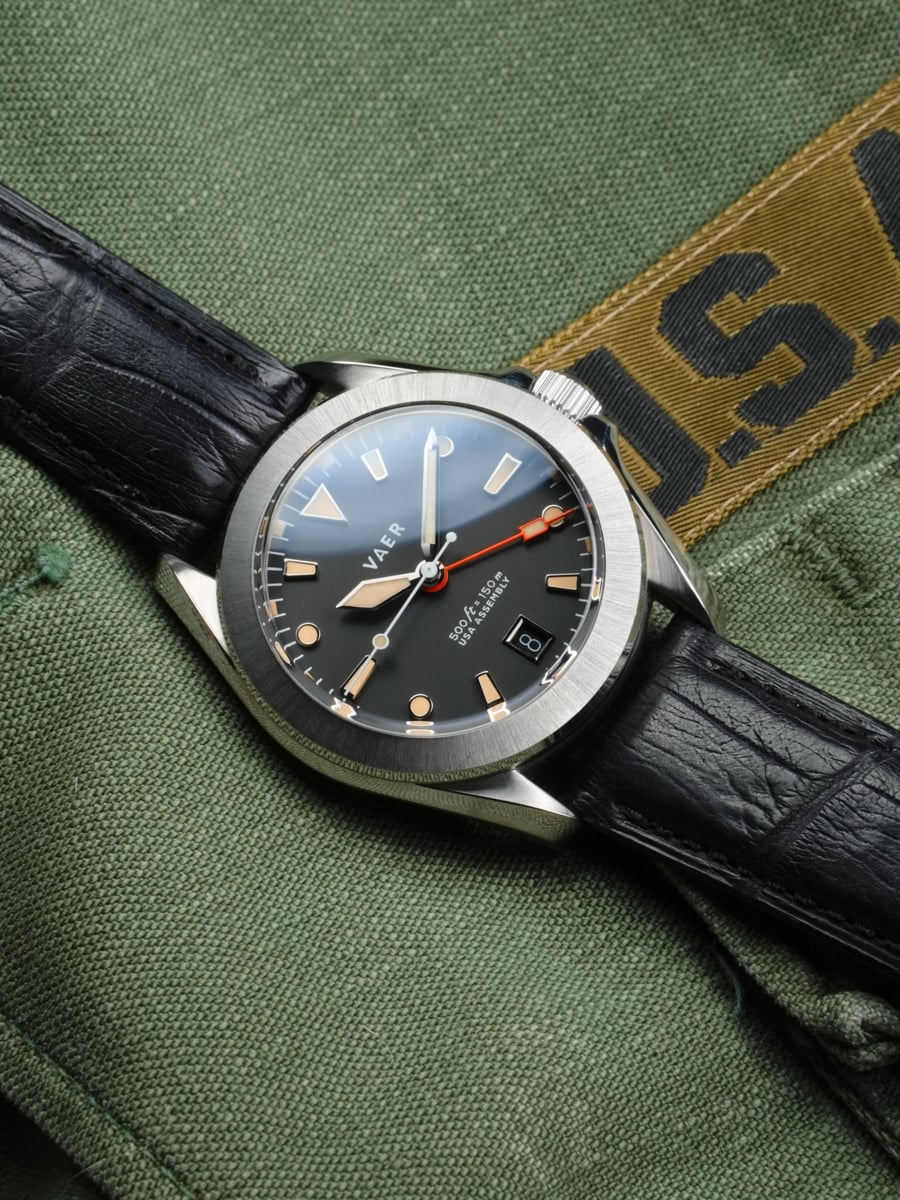 A Cult-Classic GMT Reimagined for Everyday WearInspired by the famously bezel-stripped Rolex GMT-Master worn by Marlon Brando in Apocalypse Now, the G2 Apocalypse turns a piece of 1970s film and watch history into a practical everyday GMT. Its restrained 39mm design pairs a Swiss Ronda quartz GMT movement with sapphire crystal, 150 meters of water resistance, strong BGW9 lume, and USA assembly. The result is an accurate, low-maintenance travel watch with a story collectors will immediately recognize.
 © Beartooth Media Group Inc.
 Loading...