Christopher here is additional info that relates to your link:
Topical azithromycin for the prevention of Lyme borreliosis: a randomised, placebo-controlled, phase 3 efficacy trial
<h2 class=”sectionTitle”>Summary</h2>
<div class=”content”><section>
<h3 class=”sectionTitle”>Background</h3>
<div class=”content”>
Lyme borreliosis develops in 1–5% of individuals bitten by ticks, but with a diagnostic gap affecting up to 30% of patients, a broadly applicable pharmacological prevention strategy is needed. Topical azithromycin effectively eradicated Borrelia burgdorferi sensu lato from the skin in preclinical studies. We assessed its efficacy in human beings.
</div>
</section></div>
<div class=”content”><section>
<h3 class=”sectionTitle”>Methods</h3>
<div class=”content”>
In this randomised, double-blind, placebo-controlled, multicentre trial done in 28 study sites in Germany and Austria, adults were equally assigned to receive topical 10% azithromycin or placebo twice daily for 3 consecutive days, within 72 h of a tick bite being confirmed. Randomisation numbers, which were stratified by study site, were accessed in study centres via an interactive voice-response system, by pharmacists not involved in the study. The primary outcome was the number of treatment failures, defined as erythema migrans, seroconversion, or both, in participants who were seronegative at baseline, had no further tick bites during the study, and had serology results available at 8 weeks (intention-to-treat [ITT] population). This study is registered with EudraCT, number 2011-000117-39.
</div>
</section></div>
<div class=”content”><section>
<h3 class=”sectionTitle”>Findings</h3>
<div class=”content”>
Between July 7, 2011, and Dec 3, 2012, 1371 participants were randomly assigned to treatment, of whom 995 were included in the ITT population. The trial was stopped early because an improvement in the primary endpoint in the group receiving azithromycin was not reached. At 8 weeks, 11 (2%) of 505 in the azithromycin group and 11 (2%) of 490 in the placebo group had treatment failure (odds ratio 0·97, 95% CI 0·42–2·26, p=0·47). Topical azithromycin was well tolerated. Similar numbers of patients had adverse events in the two groups (175 [26%] of 505 vs 177 [26%] of 490, p=0·87), and most adverse events were mild.
</div>
</section></div>
<div class=”content”><section>
<h3 class=”sectionTitle”>Interpretation</h3>
<div class=”content”>
Topical azithromycin was well tolerated and had a good safety profile. Inclusion of asymptomatic seroconversion into the primary efficacy analysis led to no prevention effect with topical azithromycin. Adequately powered studies assessing only erythema migrans should be considered. A subgroup analysis in this study suggested that topical azithromycin reduces erythema migrans after bites of infected ticks.
</div>
</section></div>
<div class=”content”><section>
<h3 class=”sectionTitle”>Funding</h3>
<div class=”content”>
Ixodes AG.
<hr />
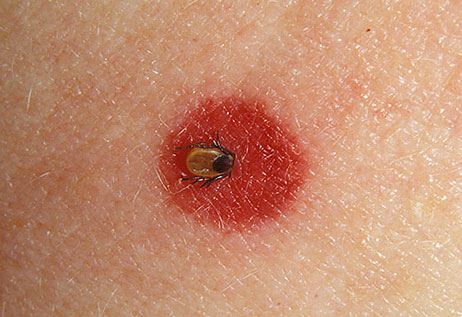
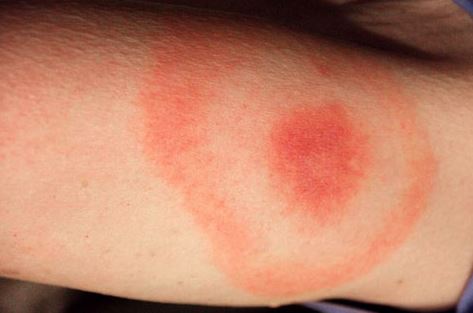
In a recent study conducted in Germany and Austria, researchers applied a 10% azithromycin gel to the site of a tick bite for 3 days. The trial was stopped early after it failed to prove that the gel worked in preventing Lyme disease (LD) for the 995 subjects. The topical treatment failed to prevent a combination of seroconversion or an EM rash in 11 (2%) of 505 individuals in the azithromycin group and 11 (2%) of 490 participants in the placebo group.
4 REPLIES TO “AZITHROMYCIN GEL FAILS TO PREVENT LYME DISEASE”
Louise Alban 03/07/2017 (2:18 pm) Reply
Thank you for this post, Dr Cameron. This was widely reported in the press as being a trial which showed that the gel had “promise” as a treatment for infected bites. As here: http://www.news-medical.net/news/20161220/Antibiotic-gel-shows-promise-in-preventing-onset-of-Lyme-borreliosis-following-tick-bite.aspx
Dr. Daniel Cameron 03/07/2017 (7:23 pm) Reply
It is a shame the gel failed to work
Yemel Bryan 03/15/2017 (8:05 pm) Reply
Is Azithromycin in tablet form affective to treat Lyme?
Dr. Daniel Cameron 03/15/2017 (8:58 pm) Reply
Oral Zithromax has been effective in most studies. Doxycycline beat Zithromax in on study my Massaroti in 1992.
Topical azithromycin for the prevention of Lyme borreliosis: a randomised, placebo-controlled, phase 3 efficacy trial
</div>
</section></div>