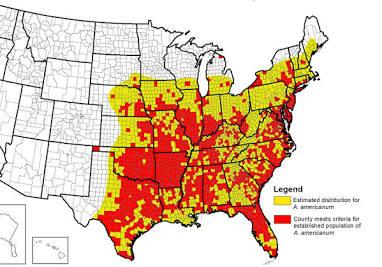
For some reason, I’m on this mailing list and get these articles from medscape which is intended for doctors. I thought this one was interesting
”
Alpha-gal is the oligosaccharide galactose-alpha-1,3-galactose, a sugar found in most mammals, but not in primates. It is also found in tick spit, specifically the spit of the lone star tick (Amblyomma americanum).
A person who gets a lone star tick bite is automatically at risk for the alpha-gal allergy, according to Commins.
Not all tick-bitten persons will develop the allergy, and not all persons who are affected by the allergy will have the same severity of symptoms, he said. What makes a person more susceptible, however, is still unknown.
Alpha-gal allergy is immunoglobulin E (IgE) mediated, causing the sufferer to develop an inability to tolerate meat and other animal products such as dairy and gelatin, two ingredients that appear in many prepared foods.
If alpha-gal is in all mammals, why don’t people become allergic to meat after, say, being bitten by a cat?
“A cat is not injecting you with anything,” Shahid Kamrim, PhD, a professor of microbiology and cellular biology at The University of Southern Mississippi, Hattiesburg, Mississippi, told Medscape Medical News in an interview. Karim studies tick vectors.
“The tick’s saliva has a protein that is triggering this whole cascade of reactions where we have an allergic response,” Karim said.”
”
The symptoms of AGS include severe urticaria, intestinal distress, sudden drop in blood pressure, and other presentations. These only appear after a person with a tick bite has eaten meat or related product, and even then, there is a delay of at least several hours before symptoms present, according to Commins.
The CDC, which published its first guide to the emergent condition earlier this year, warns AGS could be deadly because of the possibility of severe anaphylaxis.
Respiratory complaints are less common in persons with AGS than with other allergies, according to Commins, but asphyxiation has been reported in several alpha-gal-related deaths. Still, in addition to hives and diarrhea, cardiovascular symptoms are more prevalent than respiratory ones, he said.
“We call it cardiovascular collapse. Things like chest pain and low blood pressure,” Commins said.
AGS will eventually resolve itself, typically within 3-5 years. “But if you get another tick bite in that time period, the clock resets itself,” Commins said.”
etc.
Has anyone got this allergy?