


Looks like certain well-known American Senators and shock jocks to me.
'Endangered: No'
'Deadly: Yes'
'Good for America? Absolutely not!'
Yep, fits to a T.
Cheers
Topic
Become a member to post in the forums.
Looks like certain well-known American Senators and shock jocks to me.
'Endangered: No'
'Deadly: Yes'
'Good for America? Absolutely not!'
Yep, fits to a T.
Cheers

the other side is getting into it too.
The wolf problem is getting so bad in California that we can't get them to stay. Two years ago, a young male wolf from northeastern Oregon came all the way down into California. It had a GPS radio collar for tracking. It got a couple of hundred miles into California, and then it did not like the tax situation, so it went back to Oregon. There, it found a female wolf and they had puppies.
–B.G.–
Here is what the stakeholders on all sides agreed upon for WA state. Looks good to me, but it is hundreds of page long. Don't know if there are details that will prove problematic.
Right now they are not moving wolves to the areas where they want them, just letting them find their way on their own.
https://warawdotorg.files.wordpress.com/2014/11/wolf-conservation-and-management-plan.pdf
"GOALS AND OBJECTIVES (PG. 9)
• Restore the wolf population in Washington to a self-sustaining size and geographic
distribution that will result in wolves having a high probability of persisting in the state
through the foreseeable future (>50-100 years).
• Manage wolf-livestock conflicts in a way that minimizes livestock losses, while at the same
time not negatively impacting the recovery or long-term perpetuation of a sustainable wolf
population.
• Maintain healthy and robust ungulate populations in the state that provide abundant prey for
wolves and other predators as well as ample harvest opportunities for hunters.
• Develop public understanding of the conservation and management needs of wolves in
Washington, thereby promoting the public’s coexistence with the species.
Three recovery regions were delineated for the state: (1) Eastern Washington, (2) Northern
Cascades, and (3) Southern Cascades and Northwest Coast.
WHERE WOLVES WILL LIVE:
Land Ownership of Potentially Suitable Wolf Habitat in Washington (PG. 61)
Land ownership of potentially suitable wolf habitat (≥50% probability of occupancy, modeled by B.
Maletzke, using Oakleaf et al. 2006) was determined for each of the wolf recovery regions in
Washington (Figure 11, Table 3). The majority (64%) of this habitat is on public land, varying from
53-87% per region. The U.S. Forest Service is the primary administrator of these lands, both
statewide and in each recovery region (Table 3). The National Park Service and Washington
Department of Natural Resources are other significant public landowners supporting extensive
amounts of potential wolf habitat, especially in the Northern Cascades and Southern Cascades and
Northwest Coast recovery regions. Private lands (particularly those owned by private timber
companies) comprise 27% of the state’s potential wolf habitat, with the most extensive area
occurring in the Southern Cascades and Northwest Coast recovery region. Tribal lands comprise
9% of potential wolf habitat statewide and are especially significant in the Eastern Washington
recovery region.

"Looks like certain well-known American Senators and shock jocks to me."
You're close Roger, but for it to be a fully accurate comparison, the wolf would need to have rabies and be foaming at the mouth as well…give the wolf some credit after all.
Good lord….yep, that "wolf" needs a foaming mouth and blood dripping. Yeesh.
> give the wolf some credit after all
OK, OK, I apologise to the wolves.
Cheers
Cute carnivore.https://www.youtube.com/watch?v=lTMwrAefIVQ#t=35
Deer boxing match. Wonder what they would think of kangroos?
https://www.youtube.com/watch?v=i80r58cy0QU
Large carnivores in the US are a completely different animal ;) than their return/ reintroduction in Eurpoe .
Most people in central Europe have not had to learn about and deal with wolves and bears. There isn't much demonizing going on, from what I have been reading, but there has been livestock lost and unhappy farmers. The way countries are dealing with the increased numbers and the impact on small villages, is quite varied.
The most interesting and surprising part to me is how well these predators have done in between such densely populated areas. There are going to be conflicts and to me the best chance these animals have is for people of different persuasions to have honest conversations about it.
That means acknowledging the impact, both positive and negative.
Become a member to post in the forums.
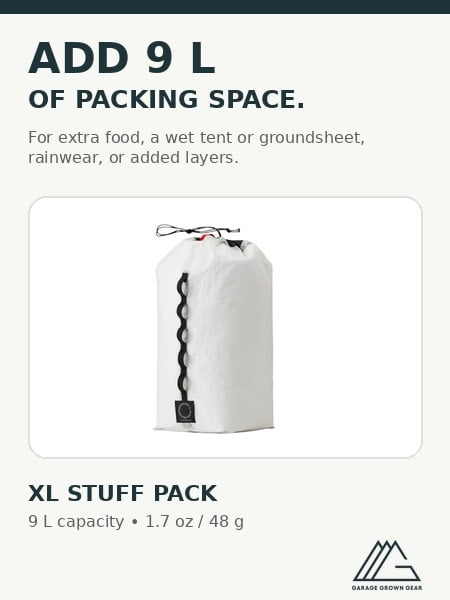 XL Stuff PackLightweight stuff pack designed to secure to the top of your backpack for carrying wet gear, extra food, rainwear, or layers.
 © Beartooth Media Group Inc.
 Loading...