Topic

Acclimitization to cold

  • This topic is empty.
Viewing 25 posts - 1 through 25 (of 25 total)
Jerry Adams BPL Member
PostedOct 19, 2014 at 9:51 am

Anyone have any experience acclimitization to cold to reduce the amount of insulation required to stay warm?

for example: http://www.coolantarctica.com/Antarctica%20fact%20file/science/cold_acclimation_human.php

several (contradictory) ideas:

if you acclimitize, you'll feel warmer but your core temperature will be the same – that seems a problem to me because you'll get hypothermia with less warning

if you acclimitize, your base metabolism will increase – you'll burn more fuel and generate more heat which will warm you up so you need less insulation

to acclimitize, you can dump ice water on you, make snow angels, spend a period of time in cold, 60 to 68 degree F water is sufficient, sleep with fewer blankets at home

eating fat and protein and less carbs will keep you warmer

shorter stout people do better in cold, tall skinny people do better in hot climate

PostedOct 19, 2014 at 10:58 am

i don't know if there is any physical change, but i tell ya what .. you work outside long enough, and you just sort of get comfortable with being miserable.
so, in the regards that "if you don't mind, it don't matter", there is a change. so if you bang away at it long enough, things seem to be not quite as desperate.

as far as freezing hands in the morning, they simply get cold and stop working. but with experience, we'll know how far to take that routine, when to put a stop to it, and how to best break camp so they'll hang in there almost to the end (when the very very final last move before setting out is to rinse out the washcloth. that act will lock them solidly, and we'd best be moving shortly afterwards)

i think that for the greatest part, we just get used to cold.

v.

Jerry Adams BPL Member
PostedOct 19, 2014 at 11:07 am

yeah – my hands get cold and don't work so good. It takes longer to pack up. Fingerless gloves help a little. Holding a hot drink helps. Drinking hot liquids heats core, and then there's more heat to send to your fingers. Wearing sufficient warm clothes – same. I'm looking forward to some cold trips, it's nearing winter. I just don't like going below about 20 F because then it's too hard keeping water liquid.

Of course, where I was going with this is, if you acclimitize for a couple weeks before a trip, then you can reduce the weight of insulation that you have to carry.

PostedOct 19, 2014 at 11:19 am

Even if physiologically humans are able to acclimatize to the cold I can't imagine we could acclimatize enough to reduce the amount of insulation we require to stay warm. I live in a cold environment and I can be quite comfortable in the cold. Though I'm not sure whether that's because my body has become acclimatized or because I've found methods to cope with the weather more effectively through trial and error. My guess is the later.

My favourite way to stay warm in the winter is fire and the three B's – butter, bacon, and baby-making.

Tipi Walter BPL Member
PostedOct 19, 2014 at 11:24 am

Check out this neato thread on BushcraftUSA—

http://bushcraftusa.com/forum/showthread.php/100900-Swedish-tips-and-tricks-for-the-winter

A guy named Fnixen says—

"I'm from Sweden as well and I have also been told not to wash my face with soap because the dirt and fat will protect the skin in cold weather."

I know this one is true cuz I experienced it when living outdoors for months at a time and then having the opportunity to take a hot shower in town and feel so much more colder when I return to the woods. Something to consider.

As mentioned, the more a person is outdoors in the winter the more they can "handle" the cold. It becomes routine.

To keep your "winter chops" I recommend backpackers at home to sleep outside every night in the backyard or on the deck or porch. Gotta keep your chops up.

Tipi Walter BPL Member
PostedOct 19, 2014 at 11:36 am

I agree with Travis on this—

"Even if physiologically humans are able to acclimatize to the cold I can't imagine we could acclimatize enough to reduce the amount of insulation we require to stay warm."

In other words, the body may get tougher but the geese remain the same. In fact, unfortunately the older I get the more Geese I need to stay happy and warm in camp. When moving under load up a mountain—not so much and never geese. Moving up a 3,000 foot mountain climb under load generates a tremendous amount of heat—summer, winter or fall.

In camp things are different. I carry crap I never used to carry in the winter—down pants, down parka and down booties.

PostedOct 19, 2014 at 3:35 pm

Look into/research Wim Hof aka the iceman and his practices. If you are not familiar with him, he is well known for things such as running a marathon in the winter in Canada with only shorts and a hat in -5 degree weather. He has also set a few records for swimming various distances in ice cold lakes and oceans among other things.

The key is exposure and awareness. Step number 1 would be to start taking cold showers if you don't already. The goal is to train the blood vessels not to constrict when faced with cold, which sends much of your blood to your core. The body is capable of doing amazing things if you train it correctly.

PostedOct 19, 2014 at 5:19 pm

"Anyone have any experience acclimitization to cold to reduce the amount of insulation required to stay warm?"

Absolutely. One of the reasons I wear so much less clothing at low temps than I see most people talk about here is likely that between work and outdoor pursuits, I'm out in the elements about 365 days per year. I spend a lot of my time at work outside. Cold weather causes us problems, so the colder it is, the more I have to be out in it. Also work night shift, and am out during the coldest temps.
Since it just started to get cool here, and I'm not used to it, I'm running around in the mid 40s at night wearing an Icebreaker Skin200 long sleeve baselayer under a cotton T-shirt under a fire-retardant work jacket.
Come spring, at the same temps, I won't be wearing the Icebreaker top, and will just have on the t-shirt if busy.
I go through this yearly.

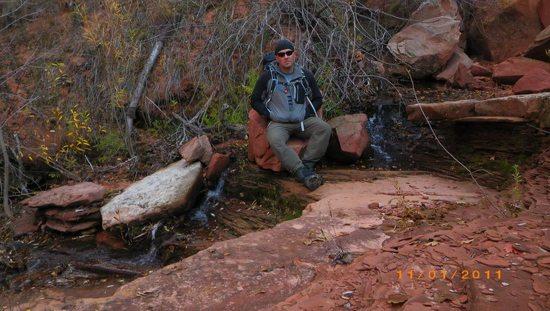
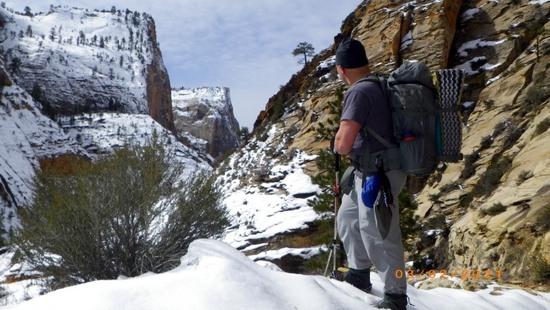
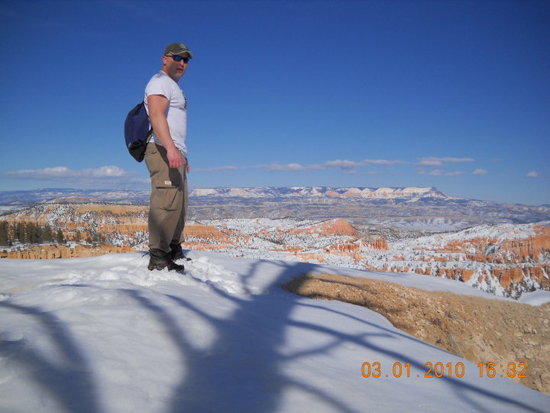
Here's an example. Both in UT, both in the 30s, both with date stamps:
Fall 2011 before getting used to being out in the cold every day:
aaaa
Capilene 1 long sleeve, OR Ferrosi hoody, and I've got my hands in my pockets.

Spring 2011 after being out in it all winter:
bbbbb

Here's another from Spring 2010, also in the 30s:
ccccc

Btw, it doesn't seem to matter what I eat, how much muscle or body fat I'm carrying, or how much exercise I'm getting, it's the same way every year.

Ian BPL Member
PostedOct 19, 2014 at 8:19 pm

"Anyone have any experience acclimitization to cold to reduce the amount of insulation required to stay warm?"

Yes absolutely. We'd have temps well below zero for weeks at a time in NY so when it would get as warm as 32*F, you'd see people running their errands in short sleeved shirts and no jacket. I never really saw any weight loss when I'd go to the field in Panama but I always lost several lbs after returning from a winter FTX at Ft. Drum, NY. I think the body knows when to turn on the furnace and start burning calories.

Jim Colten BPL Member
PostedOct 19, 2014 at 8:37 pm

+1 everything that Owen said.

And I'd add that I'm convinced that purposefully under dressing a little for my day-to-day short exposures to the cold enhances that acclimatization.

But there is one factor that I've only recently realized. The sun is lower in the sky on those first cold October days which seem so intolerable than it is on late March days when short sleeves are adequate. I doubt that is enough of a difference to explain such a radical different perception of the temperature but it will account for part of it.

PostedOct 20, 2014 at 8:44 pm

I was going to mention Wim Hof, but i see that Jack has already mentioned him. I just want to mention that according to Wim himself, there is more going on than just the physical acclimation–that it's also a consciousness/mind process too.

This might sound laughable or "woo woo" to those polarized to the linear logical side of things.
However, Wim essentially proved this by other unusual "feats", such as getting injected with a dead pathogen that causes severe immune reactions in people. During the test, Wim at first started to react a bit to it, but as he meditated more deeply, he completely overcame the adverse reactions. The medical team supervising the experiment seemed pretty impressed.

He also has used the same meditative techniques to overcome extreme desert and high temp conditions, with very little or no water (running long distances in these conditions). He doesn't seem to spend much time acclimatizing to high heat and desert conditions as he likes and prefers the cold. However, he has proved that those same techniques can be used for other extreme conditions.

How does it really work? I don't know for certain. I have some theories, but that's it.

Anyways, apparently he has taught some others these techniques with some relative success, but he seems particularly adept at these processes. Mainstream medical science can not adequately explain how he is able to survive, usually in relatively good health (minus a couple occasions of minor frostbite), some of the extreme feats he has done. Some of them would kill or at least severely injure most people.

If some of the resident skeptics disagree, i challenge them to do similar feats with just physical acclimation.

David Thomas BPL Member
PostedOct 20, 2014 at 10:02 pm

As Owen notes, the last freezing day of Spring does't feel nearly as cold as the first freezing day of Fall. We're not just showing off in our shorts and t-shirts, it really is comfortable to dress like that. Many people living in snow country note this phenomena.

We were faced with a difficult decision after our first was born – stay in Alaska for "Break up" in April or take maternity leave during Springtime in Paris. Mud or Paris? Slush or the Louvre? Hash browns or Crepes? Okay, maybe not so difficult.

We were walking down a market street in Paris at about 40F and windy and I counted locals who had one or two more layers than we did. 200 did. No one was as lightly dressed as we were coming out of an Alaskan winter. So, yeah, acclimatization to cold is real.

How can that be? It's not like we have that much more fat under our skin in Spring. My theory is that the muscles that constrict our peripheral blood flow, like other muscles, atrophy from non-use and get more developed with use. Blood flows to the extremities and to the skin can vary 100-fold between hot weather and cold. It is a big part of how we furless mammals adjust to our environment. Before a cold-weather trip and sometimes before winter in general, I'll make a point of wearing a little less clothing around the house, in the yard and on short hikes. I think it makes the early winter trips a little more comfortable to intentionally acclimatize when I can.

When traveling from cool climates to hot & humid ones, it takes me several days to adjust. After a few trips that had brutal first days, now I schedule the drives, museums and sightseeing in the first days and THEN the hiking in the tropics. Even New England Summers – conditions that would seem appalling to me if I just stepped off the plane (90F, 90% RH) were not so bad when I lived there.

Jerry Adams BPL Member
PostedOct 20, 2014 at 10:23 pm

It provided a link to a NASA research paper http://ntrs.nasa.gov/archive/nasa/casi.ntrs.nasa.gov/19890013690.pdf

It talked about how to better tolerate cold you can increase your metabolism – create more heat, increase the thermal resistance between your core and the outside of the skin – for example by reducing blood flow to the skin, or be able to tolerate a lower core temperature without your heart shutting down or your mind becoming so confused you'll accidentally kill yourself.

There are physiological processes for regulating this. Normally, they're automatic and outside concious control but not ridiculous that Wim Hof has figured out how to consciously control. Consistent with equations of heat flow, amount of insulation, and resultant temperature change.

There are free divers that slow down their metabolism, using conscious control, so they can hold their breath longer,

Lots of examples of people that acclimitize to cold by subjecting themselves to cold beforehand. Then the physiology is still controlled automatically, but they just changed how it works. Like Korean divers into cold water or people living in arctic regions. Maybe they just increase their base metabolism, but it's not well understood.

I think if someone wanted to go on a cold trip and be less sensitive to the cold (or take less insulation) they could sleep in a cold bedroom with few blankets or outside in the cold, for a few weeks before a trip. Or take a bath in water that's 60 to 68 degree F, but that is pretty unpleasant.

But there are people that argue this is all fiction – people are just imagining it.

Seems weird there wouldn't be scientific research that verifies this or not. Seems pretty straightforward.

PostedOct 21, 2014 at 12:16 am

People who spend more time cold grow more brown fat. White fat cells are cells that store fat. Brown fat cells are cells that burn fat. They're like the gas flares in oil fields, they don't do any productive work with the energy from fat, they just burn the fat off, generating heat in the process (conservation of energy). We're born with some moderate-sized depots of brown fat, but they go away with age. But cold exposure triggers stem cells to create more brown fat. So, more cold exposure = more brown fat = higher metabolic rate = better ability to maintain core temperature in the cold.

Gene

Jerry Adams BPL Member
PostedOct 21, 2014 at 8:27 am

Interesting Dave – you're saying what happens is you decrease the amount of blood to extremities rather than increasing metabolism. Seems like they would have scientifically studied this and there'de be no question about it. It seems like it would be easy to figure out if it was decreased conductance or increased metabolism.

Those articles talk about brown fat.

This all has a lot in common with losing weight for obese people. If you acclimitize to cold, you can lose weight. Increased metabolism and brown fat help you lose weight.

David Thomas BPL Member
PostedOct 21, 2014 at 10:12 am

Certainly when I hike more through the Alaskan winter, I weigh less come Spring. More brown fat, or just more exercise burning calories? Rather than type on the computer about it, the dog thinks we should go walk on our 37F beach.

PostedOct 21, 2014 at 5:59 pm

Jerry, you made some good points, but none of them account for the other unusual feats that Wim has done under observed and/or controlled conditions–such as being injected with a pathogenic organism that causes severe immune reactions in people.

Unless you're saying that acclimating to cold temperatures is the same or akin to consciously controlling one's immune system response?

Also, there is the extreme heat/desert feats he has done. He has spent much of his life acclimating to severe cold, which physically might explain some or even all of it possibly, but he doesn't spend time acclimating to severe heat, and yet used those same meditative techniques for very opposite climate conditions. He specifically did that, to show that it's not just about physical acclimation.

Also, no amount of acclimation to cold, really can get the body to be ready to spend significant amounts of time in water below certain temps, close to freezing. The human body is physically not designed to be able to take those kind of conditions period. It would, and has quickly killed, most people. Yet, this guy does it regularly without severe consequence.

Maybe we should take him and his explanations at face value, maybe he knows more about himself and this process than those theorizing about him?

Again, i challenge any skeptic to accomplish the same feats just by and through physical acclimation. We're not talking about walking around in shorts and a t-shirt when there is snow on the ground in late winter/early spring. I do that myself–not a big deal.

Jerry Adams BPL Member
PostedOct 21, 2014 at 6:24 pm

I think anything he does is consistent with the equations of heat produced, temperature difference for a particular insulation, and the effect on the heart, brain, and rest of the body at a particular core temperature.

And maybe he can consciously effect his immune system also. Or maybe he has an especially good immune system.

And there are some magic tricks that no one else understands how they were done, but if you did, you'de laugh how the magician tricked you.

I don't think you can really cut a rope, or a lady in half and then re-assemble : )

Jerry Adams BPL Member
PostedOct 21, 2014 at 6:26 pm

Actually, I'm more interested in the idea of sleeping in the cold with little insulation (or immersing in cold water but that is just too unpleasant) in order to be more comfortable in cold weather when I'm camping.

There will always be unexplained mysteries.

Bob Shaver BPL Member
PostedOct 22, 2014 at 12:25 pm

My uncle deliberately acclimatized himself to cold when he was working as a driller on highways in Washington. When it got chilly he didn't start wearing long underwear when all of his co-workers did. He was a little chillier than they were. Then when it got real cold in deep winter he started wearing long underwear and was toasty warm, while his co-workers were freezing. I believe it happens very predictably and automatically.

Jerry Adams BPL Member
PostedOct 22, 2014 at 2:39 pm

I wonder if acclimitizing can increase risk of frostbite.

If you're restricting flow of blood to skin, then it might.

Or would make your fingers less dextrous so you could get injured.

PostedOct 22, 2014 at 6:23 pm

Yes, you're at more risk, especially early on, because you're body still quickly directs blood away from your extremities to your core since it's not used to the cold. With time, the body learns not to send the blood to the core for longer periods of time and you can last much longer. One must be careful though, because if this is overdone then frostbite is quite easy to come across. Wim details in his book (and maybe on his website?) the technique and feelings you should note when doing "cold exercises."

I can't say it enough, cold showers are the easiest way to start acclimating to the cold. Yes, the first 3-4 weeks will suck but after that its no big deal. I have been doing them for almost 2 years now and If I practice cold exposure more regularly, its even more. My relation to the temperature is probably 10* or more warmer than anyone I know (so 40* is like 50* etc) I'm not trying to boast or anything, just stating that these things are possible with practice/exposure, like others have stated.

PostedOct 24, 2014 at 3:46 pm

On the flip-side, I went to Florida in February once and the news had pictures of people bundled up in down jackets because the temperature had dropped to a frigid 55 degrees. Oh the horror! Being from Southern California where it's frigid just a wee bit colder than 55, I enjoyed being the one who got to laugh at these wimps for a change.

PostedOct 24, 2014 at 4:31 pm

I was in Hawaii once when it dropped below 60 one night. Everyone else was talking about finding extra blankets for the bed. It was the first night I slept without the A/C on. ;^)

PostedOct 25, 2014 at 8:09 am

To be fair to those Floridian wimps vs the south CA wimps, humid/wet cool/cold is worse than dry cold, just as humid heat is worse than dry heat at or near the same temps.

Viewing 25 posts - 1 through 25 (of 25 total)
Loading...