Topic

Sheltered Camp

  • This topic is empty.
Viewing 10 posts - 1 through 10 (of 10 total)
PostedOct 6, 2014 at 11:38 am

What should I look for if I need to find a sheltered camp?
Steep, deep valleys? Shallow valleys? Gulleys? Mounds/hillocks/big boulders?
I've heard that valleys can funnel the wind, making it stronger and that low barriers can deflect the wind causing it to whip around from different directions.
Is it sometimes better to pitch on an exposed area where the wind is more stable/predictable?

Bob Gross BPL Member
PostedOct 6, 2014 at 12:25 pm

There are some things that you want to avoid, now that we are getting toward snow season.

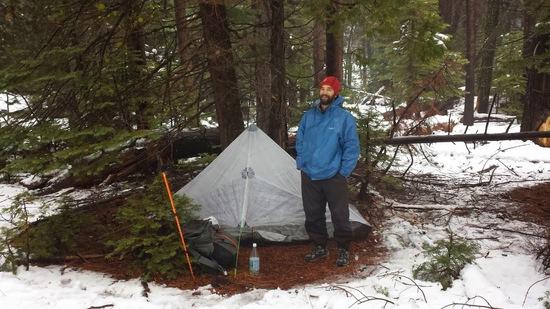
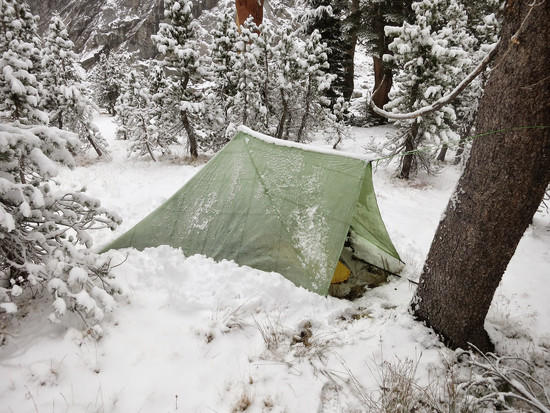
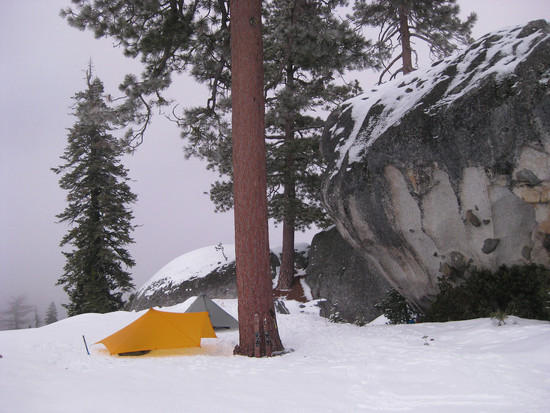
Too many snow campers like to pitch their shelters underneath a tree, and they feel that this gives them protection from something. Actually, snow can pile up on the tree branches, and then dump off suddenly. That can collapse your shelter. Also, sometimes the snow piles up on the tree branches and then breaks the branches. That can suddenly penetrate your shelter.

If possible in winter, it works best to pitch your shelter in a small clearing that has trees all around it, but no trees directly above it.

–B.G.–

PostedOct 6, 2014 at 12:40 pm

Bob's right about snow in the winter. When a giant clump falls off a tree and hammers your shelter, you'll know about it.

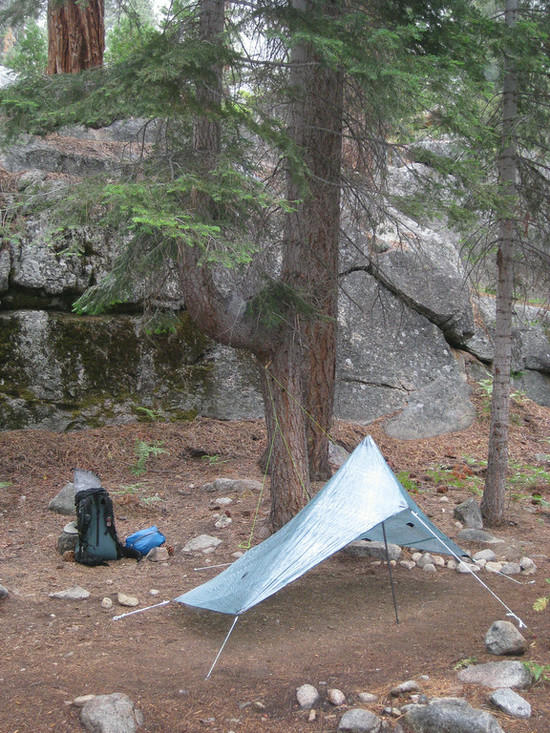
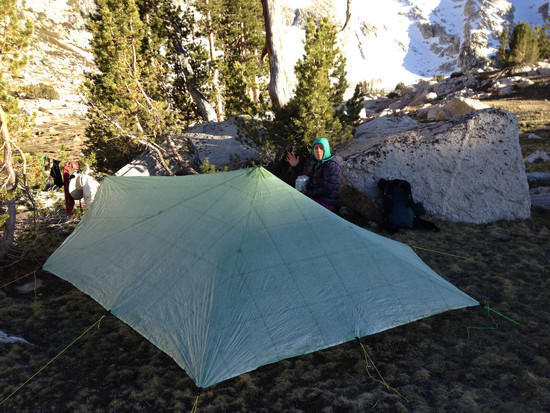
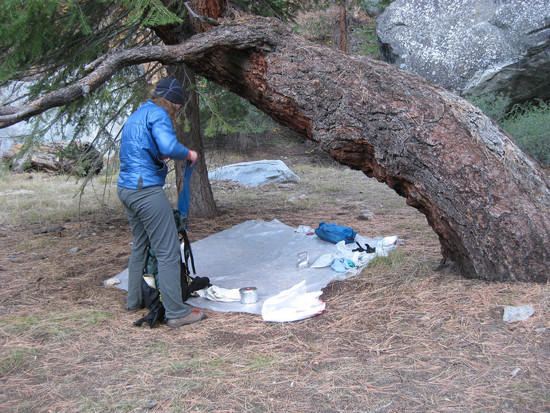
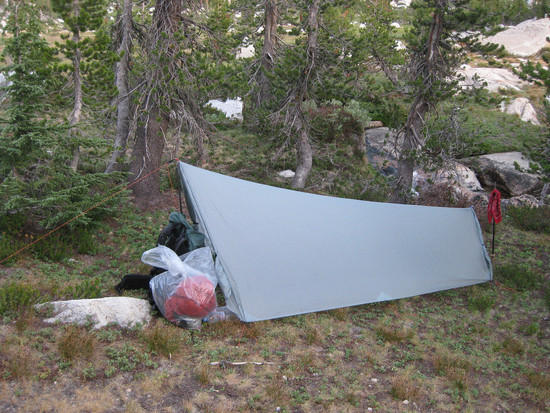
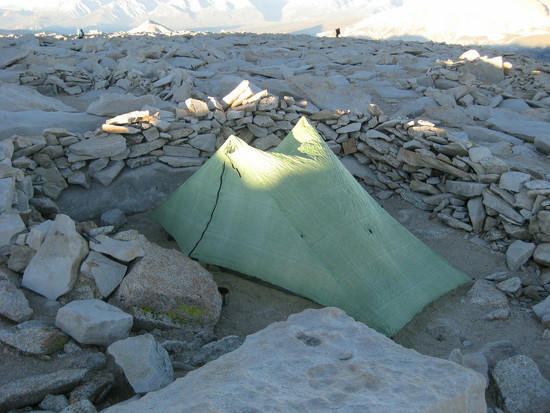
That being said, trees offer great protection from wind and rain. I've been totally dry under a nice big tree when everyone else is hiding out in their tents in a rainstorm. Big boulders can provide great wind breaks too. It pays to explore when the weather is bad, often a small copse of trees or even just a small 10-foot-diameter area on the lee side of a depression can be nearly wind-free when it's blowing hard out in the open.

1

2

3

4

5

6

7

8

9

PostedOct 7, 2014 at 11:39 am

If snow isn't a factor…

Gulleys and valleys can be where katabatic air is found. Meadows and lakes too will collect cold, sinking air. It can be warmer mid-way up a slope.

On my many hikes on the PCT I have endured a lot of wind in So Cal. On Apache Peak one time, the wind was blowing hard so we piled heavy rocks on our stakes. The rocks had sharp edges. The wind whipped so hard in the night that by about 3AM the rocks had severed the stake lines and the whole tent fell down. We packed up and got the hell out of there. Went out for breakfast in Idyllwild.

One night near the Mojave Dam it was so windy I couldn't set my tent up at all. I decided I would just sleep out. But it started to rain. So I slept in my tent like a bag and let it beat me to death all night. I didn't get much sleep that night.

One night in the San Jacinto mountains it was raining and super windy. We took shelter under a huge boulder. Only one of us could fit under the boulder so I created a windbreak with my tarp and tied it to a bunch of small trees. I worked well enough. We both stayed dry, but in the middle of the night when my boyfriend went to pee, the wind blew his bed out from under the boulder.

One time near Tehachapi we struggled to find shelter from the wind. We ended up in a copse of trees. It was a really cool place to camp, but our tent still blew down a couple times in the night. Better than being in the open.

On Fobes saddle near San Jacinto we had so much wind our tarp blew down several times in the night. So did everybody else's. We had made camp slightly down from the ridgeline. It was less windy, but still incredibly windy.

One time in the Jawbone Canyon desert area I built a shelter with my poncho and camped in a jumble of boulders. Kept the wind and rain out even if it was a pretty weird little shelter I built. Fortunately it didn't rain a lot otherwise for sure it wasn't a good enough shelter to keep me dry in a deluge.

On all my hikes, camping in meadows seems to be really cold and wet. I will pass up camping near meadows and find a flat spot half-way up the next climb. I usually have a much more comfortable night. Even just a few feet above the meadow can be significantly warmer and dryer.

Roger Caffin BPL Member
PostedOct 7, 2014 at 2:14 pm

> If snow isn't a factor…
> Gulleys and valleys can be where katabatic air is found. Meadows and lakes too will
> collect cold, sinking air. It can be warmer mid-way up a slope.
We call the low points 'frost hollows' here in Oz. And yes, it does apply in the snow as well! Yep, get out of the bottom of the hollow.

Cheers

Justin Baker BPL Member
PostedOct 7, 2014 at 2:40 pm

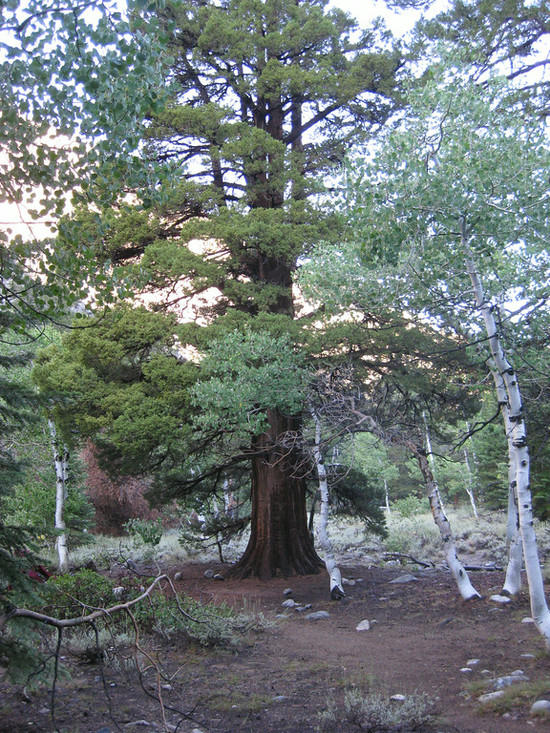
Yes, trees are good. They break the wind considerably.

I've camped under some large redwood trees in big sur during a heavy downpour. The area around our camp was pretty much dry.

Jerry Adams BPL Member
PostedOct 7, 2014 at 2:59 pm

Cold air will often flow down a valley like a stream of cold air. Better to be at least 20 feet (?) above the low point.

Sometimes it's good to be under tree when it's raining. Tree will offer protection. It can be dry.

Sometimes when you're under a tree when it's raining, after the rain stops, water will keep dripping from the tree for hours. Better to be at a place where there's no branches directly above you.

Depends on the tree and the rain.

If it's not cloudy, it can be much colder in a meadow. Under trees it can be 20 degree F warmer. I've been where it was 40 F and somewhat warm, but frozen solid in near-by meadow. Plus, if you have clear sky above you, it can feel another 10 degree F colder due to radiative heat loss. The effect is proportional to the percent of sky blocked by trees or cliffs or whatever – if 50% of the sky is covered it's only half as bad.

PostedOct 7, 2014 at 3:11 pm

When and where can make a big difference. A gully may be snug when it's just wind in the mountains and maybe a little rain; but will be a drift collector in the snow and a death trap in the desert in a flash flood. Trees can give good shelter but also drop things on your head and tent. So the answer is different every day and every place. If snow isn't an issue I'll just wander around the area I want to camp in and see how it feels – if you can't feel a difference in the strength of the wind then it's not much of a difference. But it I think it may snow then I stay away from the lee of ridges and bidg rocks because I know they are drift spots. Gnarled and twisted trees up high are less likely to drop stuff on you in my experience than the big boys at lower elevations, the more so because often you aren't under them, just down wind. and they don't cause as much of a drift problem because the wind goes through them to some extent, dropping it's load in the trees rather than behind them.
When there's not much wind in the mountains cold air will usually flow down the mountain during the night – not so much as to cause issues with the tent but it's enough air movement to make you colder. So a spot a ways up from the valley bottom is almost always better, even in a valley that has no low spots for cold air to collect in.

PostedOct 12, 2014 at 9:32 pm

A boulder or three can provide wind protection BUT try to pitch near one with a top that slopes a w a y from your shelter so snow doesn't build up and slide down on or beside your tent/tarp.

OR… if there is more than 2 ft.of snow cover tramp down the snow or dig a pit if you have an avy shovel and put your tent down in inside it.

Viewing 10 posts - 1 through 10 (of 10 total)
Loading...