Topic

Layering questions for winter hiking at altitudes above 9,500ft

  • This topic is empty.
Viewing 25 posts - 1 through 25 (of 26 total)
HeathP BPL Member
PostedOct 5, 2014 at 7:46 pm

I am taking a backpacking trip in one month to a local mountain here in Arizona (Kendrick Peak 10,423ft) with two friends. The temperature for the nearest town (Flagstaff 7,000ft) is usually 51 degrees during the day this time of year and 12-26 degrees at night. We are planning on camping in an old one room forest service cabin at about 9,500 ft. I know that with every 1,000 ft of elevation gain you lose 5 degrees in temperature (on average) so my day time temps will probably be 38-40 degrees and the evenings will probably hover around 0-12 degrees and it is difficult to gauge the exact temperatures to be expected even with a current local forecast as the mountain slope creates micro climates that can be quite varied. So my question is what are peoples recommendations for layering during the day/evening and then at night. Will my midweight wool base layers suffice with a 0 degree bag at night or should I wear heavy weight/expedition weight layers at night. Snow is unlikely but possible. I hiked Mt. Baldy (11,421ft) here in Arizona Memorial day weekend and it was supposed to be 70 degrees and sunny and instead it was 38 degrees and spit snow all weekend so I want to be prepared for the worst.
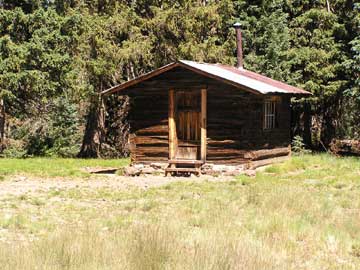
Kendrick

Justin Baker BPL Member
PostedOct 5, 2014 at 8:02 pm

Heath,
I think that sleeping in a fleece sweater or down jacket instead of wearing thicker wool baselayers is a more weight efficient way of adding warmth.
Carry a light midlayer for more warmth while hiking and put on a down jacket at night. In my experience (as a cold hiker) a light mid layer means the difference between being tolerable and being hypothermic when it gets cold and wet.

I have no experience with Arizona (or temps that cold), but I think your prediction of 0-12 degrees at night is a miscalculation.

Luke Schmidt BPL Member
PostedOct 5, 2014 at 8:08 pm

If I recall you lose more like 3.5 degrees for every 1000 feet so it will be a bit warmer then that.

HeathP BPL Member
PostedOct 5, 2014 at 8:27 pm

Justin, historical weather data for Flagstaff Arizona at 7,000ft says that the average temperature is 51 degrees during the day and 26 degrees at night. Last year it was 51 degrees during the day and 12 degrees at night. I spoke with the National Weather Service Office in Flagstaff Arizona and they informed me that for every 1,000 ft of elevation gain the temperature goes down 5 degrees. So if the cabin is at 9,500 ft you are looking at a day time temp of 38 degrees and an evening temp of 13.5 degrees if it isn't colder due to micro climate conditions and if the weather holds at average temps. If temps are like they were last year at this same time I am looking at what I said above 38 degrees for a high and probably 0 for a low. Northern Arizona can get to 30-40 degrees below zero during the middle of the winter at night.

HeathP BPL Member
PostedOct 5, 2014 at 8:40 pm

Jerry,
Thanks I actually talked to them about this and they said this was not accurate and not to trust the information provided by it. I've been caught in some seriously bad weather here in Arizona in the last two years and am realizing its a difficult place for even NOAA to forecast the weather.

Even weatherbase.com shows the average for November being 41 degrees for the high and 26 being the average for the low. So that is 10 degrees lower than what NOAA is saying for the average high and this is for Flagstaff which is 2,500ft lower than where we plan on camping. http://www.weatherbase.com/weather/weather.php3?s=557327&cityname=Flagstaff-Arizona-United-States-of-America

I appreciate the concern on the weather forecast everyone but my main concern is with sleeping overnight in this weather as I have very little experience in it and this is where I need some advice.

Justin Baker BPL Member
PostedOct 5, 2014 at 9:29 pm

Heath, in my experience driving from sea level up the sierras for backpacking, that 5 degrees per 1,000 feet rule is completely wrong. If the night time low at sea level in the central valley is 70 degrees duly July (warmer than normal), that means that at 10,000 feet of elevation would would be 20 degrees. It is rarely 20 degrees at 10,000 feet of elevation in the summer. The top of mount whitney would be 0 degrees. If it's 70 degrees at night in the valley it's probably in the 40's at 10,000 feet.

Even at a more conservative 3 degrees per 1,000 feet, that means that a comfortably cool summer night in the valley at 50 degrees would make it 20 degrees at 10,000 feet or 8 degrees at the top of mt whitney.

Has anyone seen 8 degree temps on top of whitney is the summer?

It's possible that the 3 and 5 degrees per 1k feet rule is more about the lowest possible low that one could encounter at a certain elevation during a certain time.

Jerry Adams BPL Member
PostedOct 5, 2014 at 9:39 pm

Yeah, not totally accurate. I usually allow it'll be 10 degrees colder.

Sometimes you get inversions where it actually gets warmer with altitude, so the 3.5 or 5 degree per 1000 foot is just an average. NOAA forecast is better than such a rule.

If you're sleeping in a cabin it makes a big difference. No wind. No radiative heat loss. Probably a little warmer inside.

As far as layering goes, I don't think it makes much difference what your base layer is. If you want the most warmth for the minimum weight, add more down. Or if you choose synthetic over down, then add more synthetic insulation.

HeathP BPL Member
PostedOct 5, 2014 at 9:52 pm

Justin,
You are comparing Apples to oranges.I spoke directly with the National weather service office in Flagstaff. I trust they know the local weather. If you do not wish to believe me then here is an article from last winter. It was 10 degrees below zero in Flagstaff at 7,000ft in December. So it was probably closer to -20 at 9500 ft. It was colder in Flagstaff this winter than it was in Alaska.

http://azdailysun.com/news/local/december-in-flagstaff-colder-than-normal/article_2331dc28-7420-11e3-b86e-001a4bcf887a.html

The average night time temperature in December for the North Rim of the Grand Canyon is 12 degrees and its only at 8,000ft of elevation. Trust me when I say it gets really cold here.

I am looking for advice on attire for around camp and sleeping not what the weather will be like.

Bob Gross BPL Member
PostedOct 5, 2014 at 10:04 pm

Heath, you are getting your signals all mixed up. You are asking all of the wrong questions. Then, when you get mixed answers you don't know who to believe.

You started off saying that you are going to be camping inside a one-room cabin. That is not exactly outside weather. The cabin would be cold when you arrive, but it keeps most of the wind off, so you won't have outside temperatures for long inside the cabin.

–B.G.–

HeathP BPL Member
PostedOct 5, 2014 at 10:06 pm

Bob,
I thought I made that pretty clear in my post that my concern was for layers for around camp/sleeping and that we would be in a cabin. Here is my question from my original post

"So my question is what are peoples recommendations for layering during the day/evening and then at night?"

I don't know why everyone is fixating on what the temperature is/isn't when I have already determined that by speaking with the local NOAA office.

Jerry Adams BPL Member
PostedOct 5, 2014 at 10:09 pm

ahhh…

you said minimum temp is 0 to 12 – so assume 0?

0 degree bag may be good to 0 wearing a base layer. A base layer is going to provide very little warmth regardless of what type, so it doesn't matter much.

is your 0 degree bag really good to 0? Like, have you used it at that temp? or is it EN rated? Or is that an optimistic claim from a U.S. manufacturer?

For around camp, you need a pretty warm down jacket.

If you wear the jacket inside the bag you can probably extend the temperature rating by 10 or 20 degrees colder

Being inside a cabin significantly reduces the warmth required

HeathP BPL Member
PostedOct 5, 2014 at 10:17 pm

I have yet to have it down to zero degrees but its an American bag so you know that's a subjective zero degrees. I have a 900 fill goose down parka that I used for day trip mountaineering excursions last winter that kept me warm in some abysmal temps. I have soft shells, hard shells and everything under the sun. I just don't want to haul to much gear up this mountain that's not needed. The cabin is 100+ years old so I don't know how much of a difference in temperature it will make. It will at least keep the wind off of us if it offers us respite from the temperature outside.

Justin Baker BPL Member
PostedOct 5, 2014 at 10:28 pm

Heath, I have no idea what the weather will be like there at that time.

I am telling you that the 5 degrees or 3 degrees rule per 1,000 feet makes no sense at all in my part of the country. It's something that I have seen used universally to describe temperature differences by elevation regardless of location. It's possible that it's accurate where you are going but the rule is not at all specific to northern Arizona.

I'm not questioning that it can get subzero up there. I'm questioning that 2,000 feet of elevation gain means 10 degrees of temperature decrease at all times of the year.

Jerry Adams BPL Member
PostedOct 5, 2014 at 10:28 pm

down parka would be good

a jacket outside of it to give wind protection?

if the bag wasn't warm enough at night maybe you could wear the down parka inside? Probably be over warm but you could start unzipping the bag?

Even a drafty cabin will provide a lot of warmth

Walking to and from you probably need a little warmth, like a fleece jacket or vest. You could wear that inside your sleeping bag if you were cold.

HeathP BPL Member
PostedOct 5, 2014 at 10:35 pm

Jerry,
Thanks for the input. I am hoping this is true about the cabin. It'll be warmer than our tents that's for sure.

Lori P BPL Member
PostedOct 6, 2014 at 7:26 am

At subfreezing temps, I would take a white gas stove, a heavy base layer, a couple of midlayers, a nice puffy, down booties to sleep in/overbooties to walk around in, a couple pairs of clean socks, a balaclava to avoid the "snowy breath" effect (your breathing results in a bib of frost on the front of your sleeping bag as it goes up and the moisture freezes in the air), and my down pants with full zip. And an extra beanie hat to go over the balaclava. The beanie is good for walking around during the day in freezing temps. I'd also have a good hardshell to deal with precip and rain pants with full zip, and if it's snowy I'd be wearing those rain pants over a midweight base layer instead of nylon hiking pants. If in snow or mud consistently, multiple pairs of clean socks would go in, as the boots (not shoes) would be waterproof, and my feet would sweat, so I'd want a complete changeover into DRY clothing before bed. Neglecting one sweaty item leads to a chill even in a good bag.

You don't say what you're sleeping on in the cabin. A really good down bag and a sleeping pad combo with a R rating higher than 5 would be on the list. Me, I have a Downmat 9 – 3 lbs of warm heaven that kept me comfy on concrete at 10F.

Winter is not ultralight, if it's a subzero winter.

PostedOct 6, 2014 at 8:29 am

I am fairly familiar with the country you describe-lived in and near Flag for years and climbed Humphreys numerous times. Bivvied outside on a couple of occasions, once when it was -30F in our snow cave.

You could see any kind of weather by mid-November, including bitter cold. Pay attention to the local forecast – you will be out in immediate conditions, not some sort of "average." When in doubt, carry additional clothing.

Your cabin should increase ambient temps by at least 10 degrees or so, probably even more with a fire for cooking. I have spent many snug nights in cabins of that vintage (Manning Camp in the Rincons) and I'll wager that on average they are warmer than more recent construction The important question – What is your plan B if for whatever reason, you can't use/access the cabin?

In any event, if your calculations are awry, cold nights make for early starts, which is always a good thing. Builds character and all that.

The insulation beneath you is critical for warmth, as is your diet and amount of activity. Remember,early starts build character!

I enjoyed the fascinating discussion on altitude/temperature relationships, even if of dubious relevance. Do keep accurate records and share your data with us.

I have often carried extra clothing in cold conditions. I don't recall ever having regretted doing so.

HeathP BPL Member
PostedOct 6, 2014 at 8:45 am

All,
We all have X therm sleeping pads (r value 5.7) and I am supplementing mine with a z lite sol to add an extra r value of 2.6. I have a whisperlite stove for cooking, I have hardshell, softshell, 900 fill down parka, montbell fleece, A zero degree down bag, wool base layers, heavy wool socks, wool beanie, rain pants, rain jacket. I did some mountaineering last winter (day trips) and have all the appropriate winter gear. I just haven't slept in the cold like this yet. There is nowhere to build a fire in this cabin as the stove was removed. If the cabin is not available our plan is to descend back down the mountain and camp at 7,000 ft where the temps will be much more doable (I hope).

PostedOct 6, 2014 at 9:27 am

If the cabin, assuming that you can in fact get into it, is reasonably windproof then
a couple of Candle Lanterns will help with light and heat. A candle will put off a
good amount of heat if the wind doesn't blow it away.

Larry

HeathP BPL Member
PostedOct 6, 2014 at 9:35 am

Larry,
The cabin is never locked and is always available to people to camp in. Good call on the candle lanterns. I will have everyone pick one up. I was at the trail head yesterday as I was camping nearby with my family spoke with an elderly couple who hikes the trail a few times a month and they said the cabin is solid and well cared for. If the cabin isn't available we are going back down the mountain and camping near the trail head.

Valerie E BPL Member
PostedOct 6, 2014 at 10:43 am

I used to backpack in the White Mountains of New Hampshire every February, in an old unheated cabin.

The item I valued the most (besides a toasty-warm sleeping bag) were my insulated pants (I had primaloft, but down pants would be lighter).

When I was out hiking, my normal layers were enough, but for dinner/breakfast, I would get really cold on my legs. The insulated pants made time in the cabin much more pleasant, and would also be a back-up warm layer if my sleeping bag didn't feel warm enough.

BTW, if you're using the X-Therm, I don't think you'll need the foam pad (unless you're planning to sleep directly on some snow).

HeathP BPL Member
PostedOct 6, 2014 at 10:45 am

Valerie,
I have 2-3 pairs of primaloft insulated pants. I'll bring those if the conditions look like they are going to be less than favorable. I hope it'll be a nice clear weekend but with Flagstaff you never know. The weather is nuts up there.

PostedOct 7, 2014 at 6:52 am

If I can make the trip happen, I should be about 200 miles NW of you in UT when you're doing this hike, and given past experience, will be expecting teens and prepared for a little lower at 7-8k', regardless of the actual forecast.
I won't recommend clothing, because I run so hot that most people would be miserable hiking or sleeping in what I use.

Since I live in the South, anything lower than upper teens is a rarity. When I set out into temps hitting single digits to a couple below 0 this past winter with a new quilt in tow, I carried extra layers-more than I thought I needed, or ended up using at any one time. Being able to swap things up over several nights was a good way to get to know my new sleep system, though, and the additional clothing also provided an extra margin of safety.
Given that you're uncomfortable enough with the conditions to ask about it here, I say take an extra layer, top and bottom, beyond what you think you'll need. Another pound or so won't kill you, and it'll give you a chance to gain familiarity with your gear. Better safe than sorry…

Viewing 25 posts - 1 through 25 (of 26 total)
Loading...