


All they had to do was ask BPL’ers. lol
Topic
Become a member to post in the forums.
All they had to do was ask BPL’ers. lol
Here's an interesting (and surprising) quote from the discussion section in the study:
"Wool, on the other hand, promoted the growth of almost all bacteria. This is in correlation with earlier findings, where the highest bacterial growth was noted for wool, as compared to other tested clothing textiles. Although high bacterial counts, the odor intensity ratings were the lowest for wool."

Cotton kills, but synthetic can be just as deadly too!
I just plain stink no matter what I wear after a given amount of time.
Might be a personal thing though.
>"Wool, on the other hand, promoted the growth of almost all bacteria. This is in correlation with earlier findings, where the highest bacterial growth was noted for wool, as compared to other tested clothing textiles. Although high bacterial counts, the odor intensity ratings were the lowest for wool."
What the hell? How does that work!?
Competition.
The "sweet ones" keep the "stinky ones" in check.
Balance is the name of the game.
My own personal studies conclude that in cool, dry conditions Capilene 1 circa 2010 stores my body odors for 3+ days, then releases them simultaneously, nauseatingly, and without warning at a given time on the 4th. Dangerous stuff if you don't at least rinse it out before time is up. OMG, is that…ME?!?
Testing 2014 polygiene-treated Capilene 2 for 7 days starting early next week, but will have a backup shirt and some peppermint Dr. Bronners…
"What the hell? How does that work!?"
Well, wool promotes all bacteria growth. Synthetic mostly favours the stinky kind. Wool still smells, but it is more of a wet dog type of funk. One bacteria or another is using/sharing the same food supply. With less of a food supply, less stink…or, multiple stinks but no high intensity ones like with synthetics.
On a related note: has anybody found a way to prevent shoes/socks from going stinky on day 3 or 4 of having been wet?
Do wool socks help?
These days I just throw trail running shoes into washer and sometimes add bleach, which helps for a while (but ruins shoes somewhat).
Not sure about what you can do to prevent stink, but you should treat it with Mirazyme afterwards, instead of bleach. Just get the shoes clean, then soak them in Mirazyme according to their directions and that should take care of all the toe cheese.
They do sell polygeine that you can treat clothes at home with, but I can only find it at online stores from Australia or UK.
I find that baking soda pretty much takes the stink out of my shoes. I pour a bunch into the toe box and heel areas, shake it up to contact all moist surfaces, and let it go to work overnight.

Something I've found with older, well used synthetic pieces is that you wash them and they smell fine… but then you put them on and your sweat reactivates them or something and they get stinky again ultra fast. I have a pair of vivobarefoot shoes that I soaked in soapy water for 24 hours and let them sit in the sun for 2 days and that seemed to do the trick, but when I wore them the next time they got stinky again within a few hours of wearing (not hiking, wearing them around town).
"Do wool socks help?"
Wool socks help a lot with that. I like my darn tough ultralight non cushioned socks.
I always hear about this "synthetic stink" but have not experienced it myself. (And, yes, my farts DO stink! I can't even stand 'em.)
Maybe it's my body chemistry but my synthetic base layers smell like my cotton ones – stinky but the same. And my synthecis, like cotton, come out of the wash smelling fine.
I'm not gonna try it, but a fun read that speaks to the bacteria balance…
I wash my synthetics in diluted Hibiclens (chlorhexidine). It leaves an antibacterial film on the fibers and my subjective assessment is that it helps to control odor until the next wash. I'm reluctant to endorse it because I know some people have severe allergies to it. So, be cautious with it unless you already know that you have no adverse reaction to Hibiclens or Nolvasan.
Also, if you wash something with chlorhexidine, don't add bleach next time you wash it. It can cause the garment to turn beige.
I have a suspicion that stink issue is not just about using enzymes to destroy odorous chemicals. There needs to be something to kill the bacteria and mold spores.
Being a canyoneer, I have a few synthetic pieces that were soaked and not dried in time afterwards. No matter how many times they are washed, as soon as any moisture gets on them they produce very objectionable odors, mostly "sour" but sometimes worse.
Bleach is the only thing that helps for a while.
I am going to experiment with merino socks. I now wear merino base layer (which is way to hot in desert!) and it does miracles.
for synthetic climbing shoes we use lysol or something else thats anti bacterial …
which is what climbing gyms use as well
that combined with washing should do the trick
personally ive never had much of a problem with synthetics stinking … in a warmer environment you can wash em every day as they dry so fast
also the new anti-bacterial treatments such as polygiene silver should mitigate it quite a bit
;)
I have a bunch of synthetic shirts that have been washed and washed and washed and washed and soaked and treated – and absolutely nothing gets the stench out. They smell good right up until they go on my body, and within minutes with body heat they smell like I have been on the trail for a month.
Vinegar, mirazyme, you name it. I'd started throwing them out instead of washing.
Someone suggested ammonia on the last trip – I may give it a try, heck, if it doesn't work I'll just toss that one out too.
I have started getting merino wool in summer weight – what a huge difference it makes. Washing it with regular detergent works! Next time I put it on, the clean shirt smells clean until a few days on the trail.
I would love to switch over to merino from synthetics. I tried it. I got a 150wt merino shirt and used it several times for hiking and running. I have never in my life been so overheated with so little clothing on. I would speculate that my 150wt merino T-shirt is as warm as 2-3 lightweight polyester T-shirts layered together. In California in the summer, I can't wear it.
Eric and Anton mentioned antibacterial treatments. That's what chlorhexidine is. In tests on cotton and cotton/polyester hospital gowns it left an effective antibacterial residue on the fibers that eliminated the bacteria that cause many infections in hospitals (Staph). You can buy it as "Hibiclens" at any drug store. Just add a small squirt to the washing machine instead of laundry soap. It's used for washing skin before surgery, and very few people have a reaction to it.
Might have to try that on my gym clothes. I have a bunch of synthetic t-shirts that see regular use for working out and mountain biking, and typically go through about five per week, along with a few pairs of shorts.
Perhaps a matter of body chemistry, but even my cheap ones don't retain odor after being washed. They'll sure make you know it if you forget one in the trunk in a WalMart bag for a few days, though.
folks …
consider that dead bird and patagucci mostly sell synthetic base layers
consider that their target market is very "stink" adverse
if the stink with synthetics with those two brands were so awful … those folks would abandon them no matter how shiny the logo
;)
Most of pagucci and dead birds market don't go backpacking… even highly performance based clothing mostly gets used for fashion.
Or they are running or hitting the gym a few hours a day.
So most aren't using their synthetic clothes for days and days without a washing machine/detergent in hot or consistently damp environments.
I think that patagonias base layers have polygiene… is that correct?
For those of you complaining that merino wool is too hot there is a very simple solution.
Cotton.
Not as odor resistant as wool but won't get nasty like synthetics.
And it's hydrophilic which means it washes very well. The nastyness doesn't get reactivated 30 minutes on the trail after a wash like it does with synthetics.
So most aren't using their synthetic clothes for days and days without a washing machine/detergent in hot or consistently damp environments.
while its true most folks of those dead birders and patagucci lovahs are walking their dogs at the park
up here a significant amount of folks use dead bird for days in the rain or other damp environments …
one of the reasons why dead bird never used down or merino until lately is our damp PNW environment, before they got bought out and became the new north face that is
;)
Become a member to post in the forums.
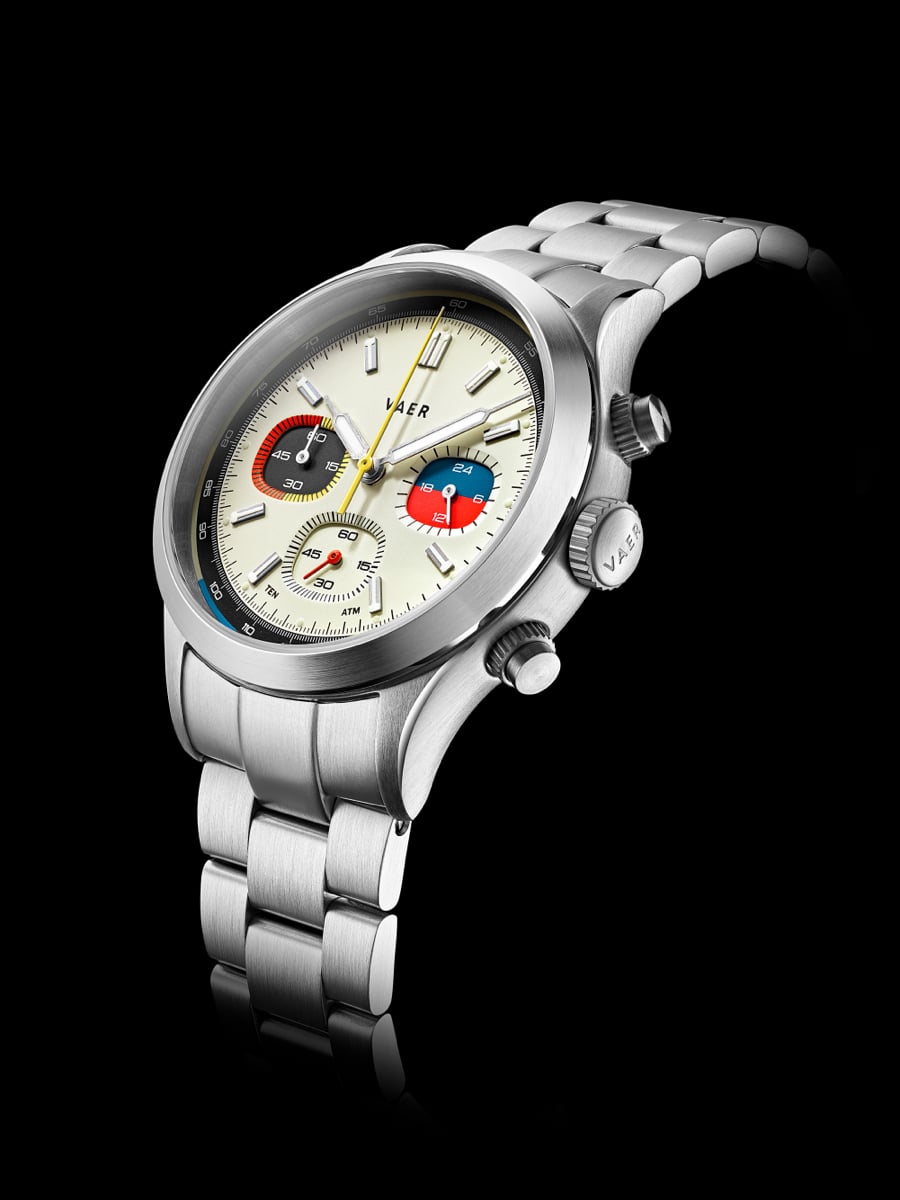 Retro Racing Character, Built for Everyday WearDrawing on the colorful racing chronographs of the 1960s and '70s, the RS1 Rally pairs vintage motorsport style with the durability expected from a Vaer. Its 40mm case houses a Japanese VK63 meca-quartz chronograph movement, complete with stopwatch functionality and an integrated tachymeter scale, while contrasting subdials give the watch its distinctive retro character. Sapphire crystal, 100 meters of water resistance, a screwdown crown, and strong BGW9 lume make it far more than a style piece. At under $300, it's an easy pick for the car enthusiast or chronograph fan.
 © Beartooth Media Group Inc.
 Loading...