Topic

Dipping from the spring box

  • This topic is empty.
Viewing 10 posts - 1 through 10 (of 10 total)
PostedAug 31, 2014 at 9:24 am

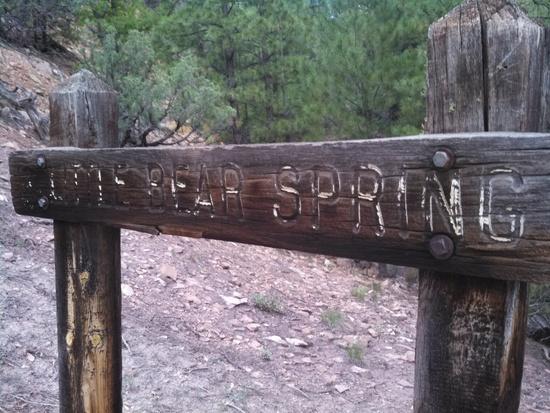
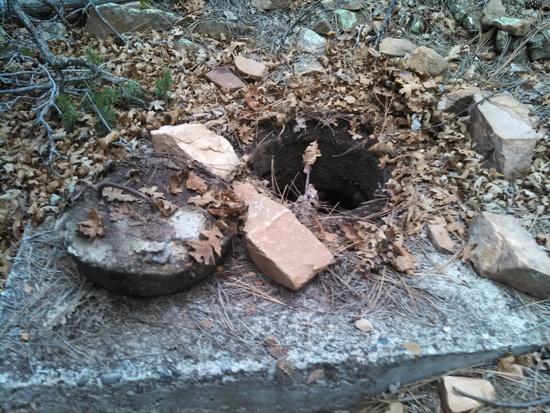
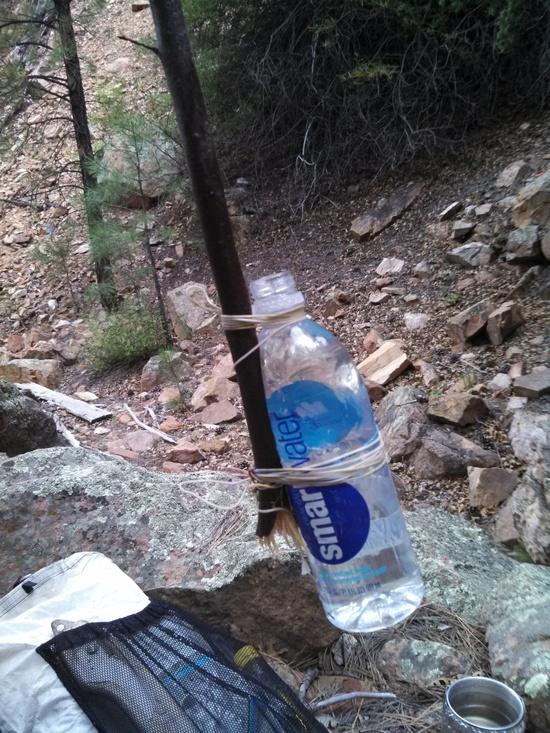
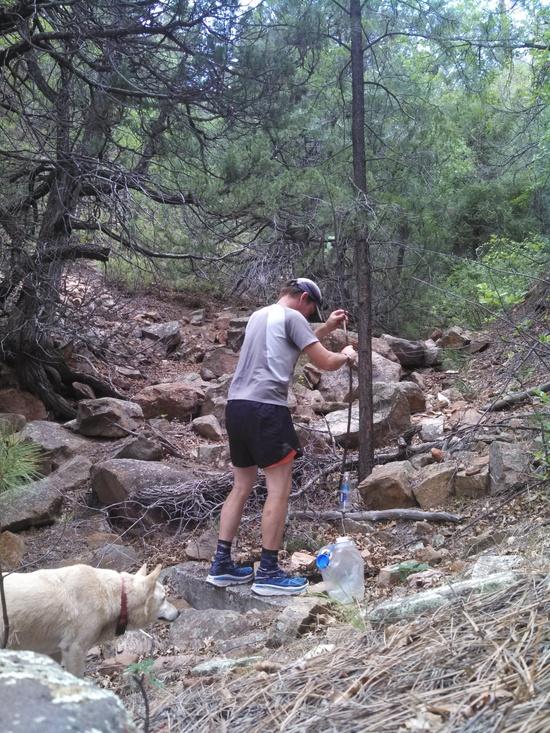
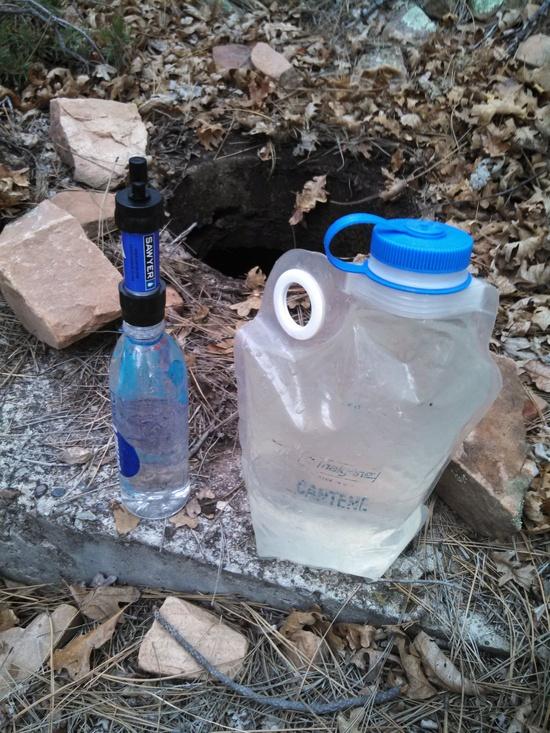
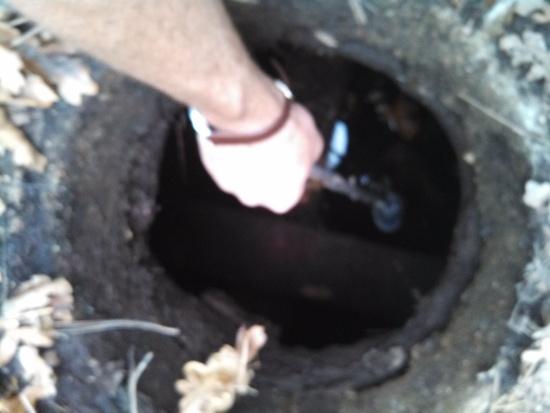
Arriving at what appeared to be a dry spring, I looked a little harder and found the spring box. It had great water but I had to reach 4' down into the 12" opening to reach it. Forcing a buoyant bottle underwater from the end of a long stick is not as easy as it may seem.

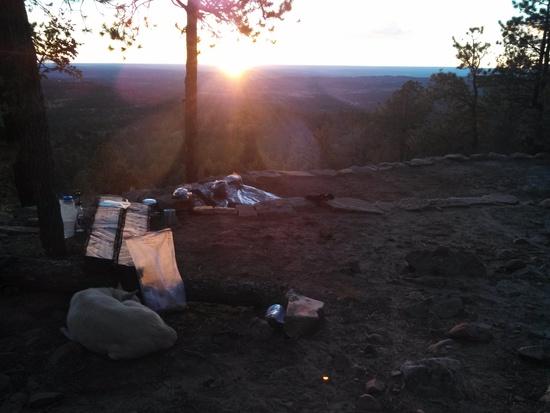
The dipping technique saved us from a dry 7 mile hike south to the nearest proven water in the western Zuni mountains. Loaded down we got a few more miles in before a dry camp with a view.

s

b

d

m

w

l

PostedSep 2, 2014 at 4:22 pm

My biggest worry was losing the bottle into the box and out of reach if the string came loose. It was my only vessel that could thread to the mini-sawyer.

r

Also tried to muddy the spring water as little a possible as the bottle wavered back and forth almost disturbing the loose dirt on the walls of the box.

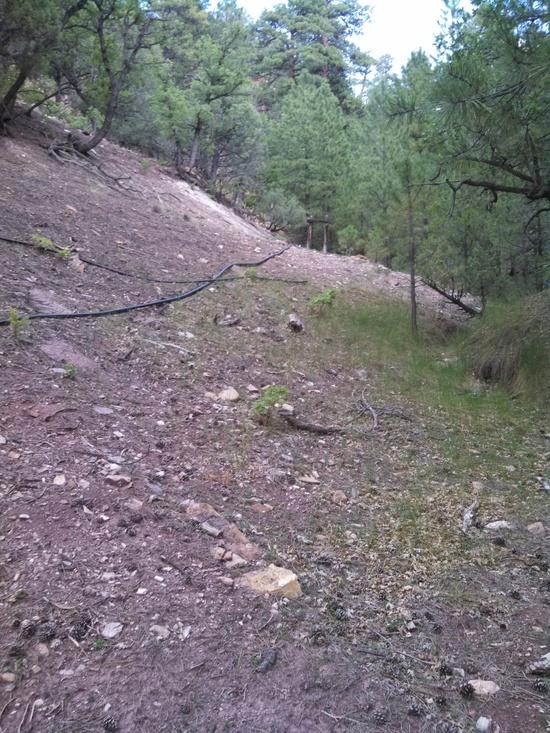
This springs water level is actually steady (130cm down) at the point of a 2" pipe intake. I saw this pipe has I hiked up canyon toward the springs location on usgs quads.

pi

I had fuzzy beta before the trip that the pipe led to an open water tank (not on the quads) that did hold water, but I've also seen these pipes run for miles and miles. So,I decided to go check the spring box first….. following the pipe would have negated the technique above, but it was hot, getting late, and Rio and I were thirsty.

Maybe others have similar experience as the sw and western U.S. get drier and drier?

PostedSep 2, 2014 at 6:01 pm

Then again, I live in the north east US, but I am thinking a few extra ziplock baggies and some duct tape or elastics just in case I need to access water that is hard to get. Luckily you were able to get at it…

Edit: or maybe put some small stones in the bottom of the bottle to make it not so buoyant? Still would rather use something that wasn't essential to my water purification. Scary!

PostedSep 2, 2014 at 6:33 pm

Good point, Kate. Rather than the Sawyer's bottlemate, I could have used my imusa mug(bottom covered with esbit rez) or just dunk a stuff sack or xs zero backpack to pull up a bunch of water. Honestly my biggest relief is that there was water at all; some of the springs/ponds in this area have been drying up in the past decade.
Shoelaces or tape were options, and I had iodine tabs along just in case.

In hindsight the relatively small 591 ml. Smart bottle I had along was easier to submerge than my normal 1L bottles would have been (assuming tied vertically).

HkNewman BPL Member
PostedSep 2, 2014 at 7:10 pm

Many old-time desert backpackers bring a plastic jug with a handle, cutting a hole in the top for water to rush in (they use gallon size but no reason a quart wouldn't work). Finally tried it at McKnight cabin east of Silver City (Aldo Leopold south of the CDT if that helps) while car-camped after a backpack but the water was pretty putrid; a chunk was broken off the concrete cover and there were chemicals that even a strong dose of Aqua Mira couldn't treat.

Granted this was just before the rainy season in a drought but scary.

PostedOct 24, 2014 at 9:00 am

How about a stick with a Y in it, so you could rubber band the bottle at an angle?

Or bear bagging rope tied around your pot? A second string, say from a guyline, around the handle could be used to orient the pot the right way to fill.

David Thomas BPL Member
PostedOct 24, 2014 at 9:26 am

This is something I have to do professionally at times, when I'm sampling water from a well, sometimes as small as 2-inch diameter, sometimes as deep as 150 feet, when the purpose-built bailers didn't make it to the site (like when I land in the Aleutian Islands, but my luggage doesn't).

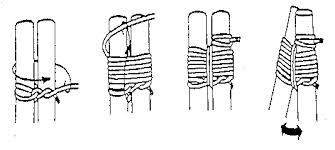
Kevin's stick and bottle is very direct and effective. A future tweak – use a shear lashing – those wraps between the bottle and stick REALLY snug it up to the stick:

shear lashing

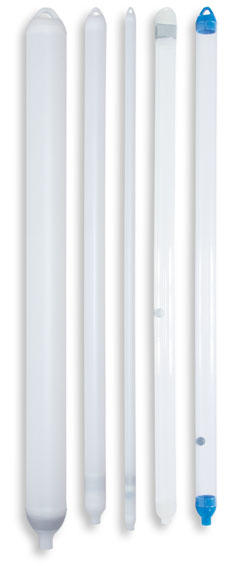
If you KNEW* you'd be getting water from far below, here's the real deal:Disposable bailers

Those bailers have a check valve (a ball check) at the bottom, so they fill, but don't empty through the bottom. Those 3 mid-sized ones in the photo hold just over a liter each (so one can fill a one-liter sample jar with each bailer-full). I've made mini-bailer by cutting off the bottom, business-end of it and poking a new holes for the string.

Gotta get the eldest child from school. More later. . . .
Just got roped into assisting a PE teacher in running an orienteering course for 60 5th graders.
Back now. Anyway, options, continued:

With any plastic bottle, you can tie a rock, that weighs more than the full water bottle will, to the bottom of the bottle. Lower it, wait till the bubbling stops, and then retrieve it.

Yet another approach is to poke a small hole in a bottle, add a weight, and give it a long time hanging on the string to fill. Then retrieve it quickly, before much water drains from the hole.

And, for those of us who travel with tubing and check valves (UL of course): put the check valve at the bottom of the tubing, lower it beneath the water surface, then jerk the tubing up and down quickly. The inertia of the water will cause it to stay up while the tubing is pushed down and the check valve will cause the whole column of water to be lifted up when you lift the tubing. This is good to over 25 feet and can be done through well as small as 1" diameter.

When it gets really ugly, you lower your hankerchief into the water, bringing it up, and wring it out repeatedly. (Kayak bailing sponges work much better).

*I've kayak-camped on a Mexican beach that had a well that had to be bailed to get the water to the surface.

PostedOct 24, 2014 at 11:26 am

"a shear lashing"

The eagle scout in me hangs his head low….. rightly busted.

Viewing 10 posts - 1 through 10 (of 10 total)
Loading...