Topic

Peru: Cordillera Blanca and Huayhuash Planning

  • This topic is empty.
Viewing 7 posts - 1 through 7 (of 7 total)
Matt F BPL Member
PostedMay 22, 2014 at 9:52 am

Hi –

My wife and I are in the process of planning 2-2.5 weeks of backpacking this summer based out of Huaraz, Peru followed by some time spent around Iquitos. I've had this trip in mind for a couple of years, and I've tried to keep tabs on most of the Peru-related BPL content published in recent years (Kristin and Danny's global gear test articles, Rick DeLong's BPL article about the Cordillera Blanca, etc). Anyway, I'm looking for any additional information the BPL community can conjure up. Specifically:

1) Any recommendations for specific treks/trails? We'll likely acclimate around Huaraz for 2-3 days, and would be open to ideas for day trips/hikes for those days. Also, we're debating just doing one big trip through the Cordillera Huayhuash vs splitting time between the two ranges. We're not looking for technical routes. Are good maps available for order in the US?

2) We're open to either independent/self-supported lightweight-style trips or just doing what a lot of travelers to the area seem to do and hire a guide with pack animals. We'd like to avoid big groups and have some element of solitude, however, so I figure we'd have to plan carefully in that case. An added benefit of hiring a guide would be not needing to pack a shelter/stakes/stove during our travels as well as avoid checked bags on flights.

3) Does anyone have any recent information on hiking independently through the Cordillera Huayhuash? I remember reading on multiple sites that you'd better have cash ready to essentially pay to pass through villages along the way. Any recent safety concerns?

4) Any hostel or gear/supply recommendations in Huaraz? If we bring a stove will canister fuel be easy to come by?

5) We're planning on having gear that can handle night-time lows in the 20F range. Will this be adequate?

Thanks in advance,

Matt

d k BPL Member
PostedMay 22, 2014 at 12:45 pm

Hi, Matt –

It's been a long time since we went (2000, I think!) but I think we stayed at Albergue Churup in Huaraz. I just looked it up on the web and it looks like the remodeling they were doing when we stayed there was a great improvement (we got in at 5 am, were awoken at 7 am by hammering, sawing, etc.!!!). The owners Juan and Nelly were very sweet and helpful, and put us (we were a group of 5) in touch with a couple of young guys who met with us at the Albergue the day after we arrived. They brought mules and equipment on the trek and acted as guides (we bought all the food and fuel at the big central market with them, the day before we left Huaraz). It was useful having the guides, as the maps available were not at all accurate (trails had been re-routed in many places) but the guides were familiar with the routes. We may have purchased white gas stoves at the market and ended up giving them to the guides at the end of the trip; I have a fuzzy recollection of that.

20F gear sounds right; I think that's about what we had.

Since I wasn't in on the planning of the trip, I can't give specific recommendations for where to go. We did part of the circuit, I believe – about a 5 or 6 day trip.

Have a wonderful time!

PostedMay 22, 2014 at 4:07 pm

It's been a long time (1988), but some of my info is still relevant.

I loved Huaraz and the Cordillera Blanca. Huaraz is fun and the local people are friendly and patient with my poor Spanish. The Cordillera Blanca is the most beautiful place I've ever been. Huaraz is a great place for a base.

Do you have experience at high altitude? Huaraz is at 3000m, on some of the treks in the C. Blanca you'll be sleeping at 4000m and hiking up toward 5000m, so altitude acclimation if important. I had headaches in Huaraz. We started a trek (I think the Llanguco loop) taking a tour bus to 4000m and sleeping at 4000m. I felt awful, headachy and nauseous and my friend was fine. We had to go back down. We hitched a ride and by the time we descended 1000' I was completely fine and we walked 15 miles back to town. Back then, it was fine to trek on your own without a guide, but it's very helpful to know Spanish.

After a few more days in Huaraz, we took a tour bus to the Pastoruri glacier and spent time at 5000m. I was completely fine and my friend had altitude sickness there. From the pictures I've seen recently, it's shocking how far the glacier has retreated due to climate change. You might want to do this trip while you're acclimatizing (day trip).

Chavin de Huantar, pre Incan ancient site, is another interesting day trip while you're acclimating.

Hilary Bradt has a new book on treks in Peru; her old book was what we used.
http://hilarybradt.com/peru-updates/ It's on Amazon.

Iquitos: My girlfriend was finishing two years studying monkeys on Padre Isla, an island in the Amazon river near Iquitos. So, I got to stay there for a week. I don't think it's a good idea to trek on your own in the jungle (la selva) without experience, so there I'd get a guide. Iquitos is kind of interesting, especially Belen. The jungle was amazing, but very hot, unbelievably humid, with snakes and bugs. Get immunizations and malaria medicine.

Icecream: Peru has the best icecream I have ever had, especially in Iquitos. They have all these tropical fruits we've never had and they make icecream from them. The absolute best is aguaje icecream (aguaje is bright orange with a hard brown shell and very bitter). If it's still there, the best place in Iquitos was 'Cohen and daughter'.

Food: A lot of the food was really good. Apparently Lima has become a center of haute cuisine (check out Anthony Bourdain on Lima).

Language: Everything is easier if you know Spanish. If you don't know Spanish it might make sense to hire guides. When I was there, you would run into people in the smaller villages around Huaraz who spoke only Quechua. My girlfriend learned Spanish in Peru and people could tell from the idioms she used. She also knew how things were done which makes life easier. Peruvians, especially in the rural areas, speak slowly which makes it easier. Most people in Huaraz spoke no English, though I would guess that more tourist places have English speakers now.

Diarrhea: Yes, you will get diarrhea, even if you treat all your water (which you must do). Bring medicine for it; I used peptobismol, taking the max daily dose prophylactically.

Cordillera Huayhash: I didn't go there, supposed to be beautiful and more remote. Be careful not to use up too much of your time traveling between places.

PostedMay 22, 2014 at 5:24 pm

I can't speak for the Cordillera Blanca but I can for much of the rest of your Peru experience. I lived in Cuzco for 8 months and I've been in and around Lima and Arequipa frequently. Unfortunately, no jungle/Iquitos experience either. So, I suppose I'm just adding my O2.

Contact South America Explorers Club (SAE), they have an office in Lima. They're the best local/unbiased resource in South America, or at least in Peru. They're known for having the best and often only useful maps, even TOPOs. I feel like maybe the Lima club house has been less active of late, management can change often. But the Cuzco and Quito, EC clubs are very active and definitely responsive. Contact Lima first and then fall back to Cuzco. You can inquire about guide recommendations, TOPO's, etc. English is always spoken.

Iquitos is not a good place for unguided travel. It's also quite busy, colourful, and, dare I say, edgy. It's the place you'll want to watch your gear and pocket books closely. And it's hot and humid.

WATER PURIFICATION: During all my travel and time spent in Peru, a Steripen worked great.

FUEL: Canisters and White Gas are available in Lima. My Primus MultiFuel was spitting at 15000ft but cooked fine. So, be wary of a canister stove working at your anticipated ALT and temps.

POWER: You do not need adapters for the 120v if you are only charging devices and a laptop. The outlet type is compatible with the US.

HOT SHOWERS: haha, just don't be afraid of electric shower heads, it's hottest at barely a trickle. My trick was to turn the lights on and then turn the tap, then, as soon as the light dimmed, that's when the water was hottest… There's a breaker next to the shower. I'm not kidding.

BANKING: it's only 2.5 weeks, but you can also look into opening an account with an International Bank or Schwab. Because Schwab has no ATM/Offices, they refund all ATM fees and International fees when you use your Debit card. It continues to be a $$$ saver for me even in the States. Free to setup Checking online.

Don't ever buy the Oxyshots (Oxygen cans) it's a snake oil for tourists.

BUSES: the Full Cama (reclining seat/bed) is worth it on the more reputable/expensive bus lines like Cruz del Sur for overnight trip security. Make sure you don't arrive at destinations too early or the taxis aren't out.

This was THE best thing I bought special for international travel. Protects the pack straps, looks mundane and black,
http://www.rei.com/product/804454/sea-to-summit-pack-converter-duffle-bag

Well, I guess something had to drag a post out of me on BPL after 3 years of silence. PING me if you want anything more, even just a rec to stay in Lima. I was just in Lima/Cuzco/Arequipa for 6 weeks last summer.

-michael

M G BPL Member
PostedMay 22, 2014 at 8:32 pm

Matt,

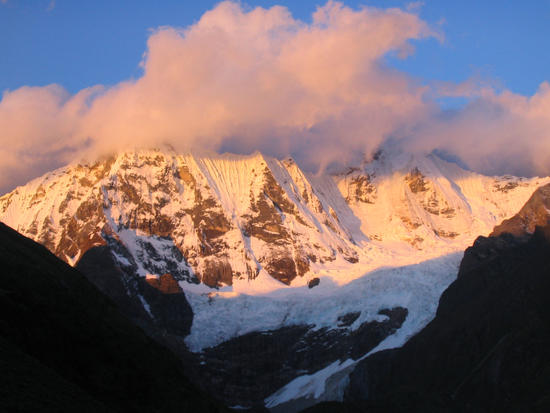
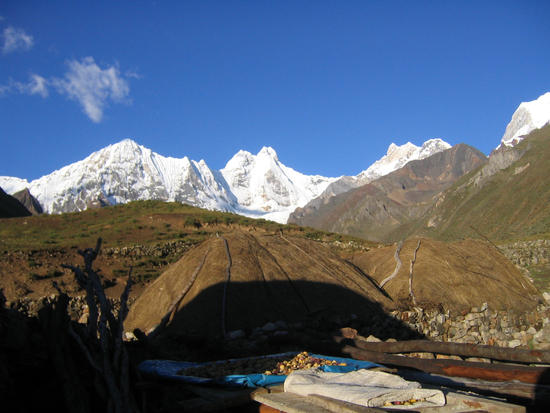
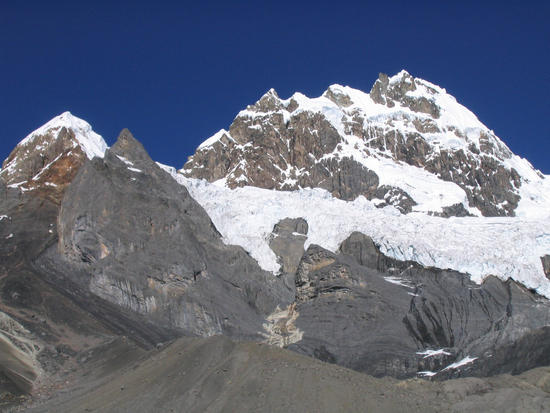
I used to live and work in Huaraz. I've been to the most valleys in the Blanca on the West Side and a few on the East side and I've done 6 trips to the Huayhuash.

First off you will have a fantastic trip, but it will be even better if you can budget 3 weeks. That will allow an extra margin of error for sickness or travel delays. I would also concentrate on only one area of Peru at a time. Focus on the Blanca/Huayhuash region this trip. Do a Cuzco/Machu Pichu trip another time, a jungle/Iquitios/ another year, a beach surfing trip during their summer one year. Peru is a big and vary varied country. Trying to do too much in one trip will just lead to frustration.

Plan at least a day or two in Lima on the way out to enjoy the fabulous food to be had there. Ceviche for lunch is tradition and excellent, not to be missed. The Peruvian Japanese community is very unique and because of the great sources of seafood, some excellent Japanese food can be had in Lima.

Best breakfast, coffee and views in Huaraz: Cafe Andino

The owner can help set up some logistics (Transport, Gear, Arrieros, Guide, cooks ect…) He also sells maps to both the Blanca and Huayhuash. Best to contact them ahead of time as they get busy this time of year. The Benways are some of the most reliable logistic suppliers in town and can hook you up with other reliable operators if they are too busy. There are many fly by night scammers in Huaraz. You can easily waste time and money if not careful.

I published a 1:50,000 trekking map to the Huahuash in the early 2000's it might still be available in Huaraz. The DOAV maps ( 2 sheets for the Blanca and 1 sheet for Huayhuash) are newer and better IMHO as a mountain cartographer. Plan to get those before leaving, they can be hard to find in Peru. Sometimes the SAEC stocks them. Other locally made maps are also available. Standfords (http://travel.stanfords.co.uk/maps/Cordillera%20Huayhuash%20Map)can ship to the US, Omni maps also might have stock. They may have more recently updated roads and trails for the Huayhuash. Mining and road building has changed the length of the circuit a lot in the last 10 years. Each year seems to be different.

Gaz canisters are readily available. So is White Gaz (Bencina Blanca)

A good acclimatization scenario is like this:

Day 1. Hike up to the cross above Huaraz. Go as a group and take no valuables;
Day 2. If feeling well, hike up to Laguna Churup. You can arrange a cab to take you part of the way up to the end of the road and wait for you to hike down.
Then think about starting to plan a longer trip. Take at least 3 days to acclimatize in Huaraz before heading out on a long trek and only leave if feeling 100%. If you leave for a trek sick, you will get worst at altitude, almost guaranteed.

If you are fit and strong and acclimatized well, you can do Rurec to Chavin in one day and see the spectacular ruins at Chavin.

If you have more time to trek in the Blanca, the Los Cedros trek is less crowded than the Santa Cruz trek which can be a zoo in July and August. You can also do a quick overnight to Laguna 69 if time is more limited. A spectacular place to camp for a night.

If going with pack animals bring the warmest sleeping bag and comfiest sleeping pad you own. Bring a big tent and a pyramid shelter to eat , cook and hangout in. You will appreciate it. The burros will carry it. The Huayhuash can be rainier than the Blanca, plan for rain even in the dry season. If you are self supported go as light and warm as you can tolerate, but nights can be cold, kind of like late Sept in the mountains of the lower 48. All above treeline in the alpine and cold air coming off the glaciers, so can be cold at night, plan for at least low 20's. Hard to find sheltered camping spots at times. The Huayhuash has big passes to cross each and everyday. It's like the JMT in that way, but at higher elevation.

Be prepared to pay community fees. These have apparently been standardized. I'm out of the loop now but check in town with the Benways at Cafe Andino.

Huayhuash

h

hh

PostedMay 23, 2014 at 9:47 am

Wow!

Well, Matt, you've got all you could need and a great resource now!

That's awesome MG. My first foray into Peru skipped from the EC border by plane to Lima/Cusco/Arequipa. I started a business so every subsequent trip has been focused. I'll be looking you up when I make my way back into Peru with a schedule of exploration and fun in Huayhuash. Exciting!

So, besides the fantastic recommendations regarding the region. The really true advice MG has highlighted would be a consideration to focus/refine your travel plans. 2.5 weeks isn't really all that long when you consider the logistics of travel and acclimation for somewhere as large as Peru. And there's a lot of disorienting downtime when you first land in a new spot. Even if it's just a new city, let alone a completely new region e.g. Cuzco, Iquitos, Huayhuash, etc. Money and time just fly by when you are figuring things out for the first couple days.

And as Walter warned with the diarrhea comment, the acclimation process includes pathogens, which are equally different from coast to mountains to Andes to jungle.

Just advice… you WILL have a great trip no matter the route.

buen viaje
-michael

Matt F BPL Member
PostedMay 23, 2014 at 10:50 am

Many thanks for taking the time to write such comprehensive and helpful posts…gotta love the folks here on BPL. I'll report back at some point after my trip and try to add to the fund of knowledge/information here.

Michael and MG: I may take you up on your offers and drop you guys a message or two as we iron out some of the details. I'm getting excited for this!

We've got closer to four weeks for the trip, and 17-18 days of that will be focused on the Huaraz area. I'm thinking we'll use one day on either end for travel from- and to Lima, three to four on the front end for acclimating and then still have 10-12 days for hiking. The cafe Andino/Benways tip is exactly the sort of stuff I was hoping to find out about. Thanks for the advice re: the maps, as well (from a cartographer, no less). i need to decide how much of my own gear I want to bring, and what I'm willing to rent or just do without. Good problems to have.

We've already got 8 days/7 nights in the Iquitos region squared away, so we'll realistically have a day or two around Lima at the end of our trip. I'm kind of considering those days to be insurance for delays etc, so frankly I'm not planning on doing too much just yet (though I have heard the cuisine is worth investing some time in).

We are totally foregoing the Cuzco/Machu Pichu stuff this trip…that'll have to wait for another time.

Thanks again,

Matt

Viewing 7 posts - 1 through 7 (of 7 total)
Loading...