Over the years I’ve spent backpacking through the nearby Uwharries and Appalachian Mountains I’ve used a number of methods to insure the purity of my drinking water. A couple of things I have decided. First I don’t like chemicals. Sure they are lightweight but I don’t like the taste. Why in this world would anyone hike to a clear running mountain stream and add chlorine to it? It just ruins the taste. And have you read the wait times on the label? I’m just too impatient to wait thirty minutes to kill what may (or may not) be lurking in my next thirst quenching drink. By the way that does not include the four hours for cryptosporidia.
As for water filters I have problems with them as well. After a long hike who wants to spend time hand pumping water? Certainly not me. All I want to do is drink the water. As for weight the lighter the pump the more pumping is required. Until recently I carried a Kaytadyn Hiker. It delivers about 1 liter a minute. Their new lighter weight model only supplies a ½ liter a minute to safe a whole 3 ounces. That’s a lot of pumping when you are hot and tired and just need to relax.
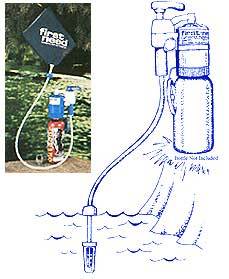
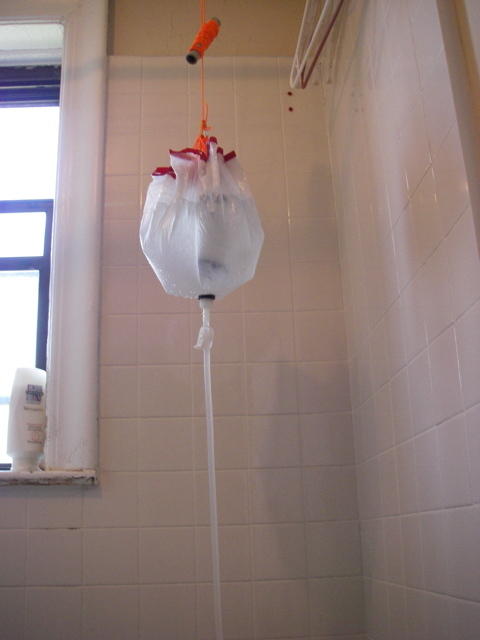
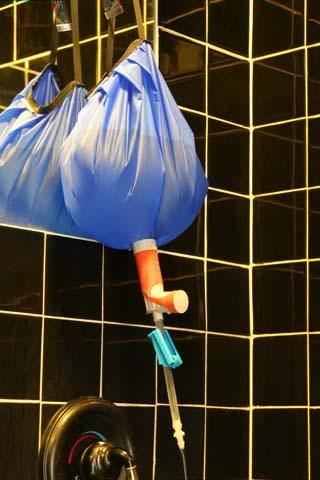
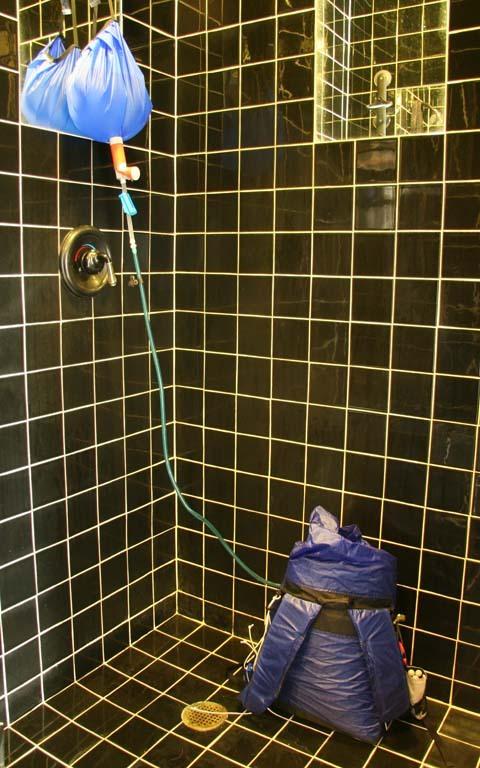
A few weeks ago I came across a possible solution. Kaytadyn markets a gravity filter. A Hiker filter cartridge is mounted in a dry sack. Water is collected in the sack and filtered water is deliverer by a tube for drinking. However just as I was about to order one to try on my next trip I spotted a drawback. It weighs 15.5 ounces. But I did like the concept. I started playing around with some materials and came up with a homemade version that weighs about 8 ounces. While it is still heavier than chemicals it is as light as their lightest filter. I decided to try it out on a week-long trip in the Smokies. Not only did it perform well, it supplied three hikers with all the water we wanted the entire week. The best part is while others were pumping or adding chemicals we were setting back enjoying the scenery and cool mountain water. We were also the object of a lot of attention with questions about our water filter system.
So here is how to make a gravity filter from readily available parts. First the materials.
8 liter waterproof stuff sack* WalMart $ 9.98
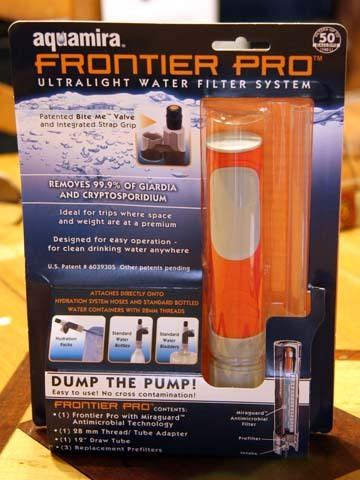
Hiker Pro filter cartridge REI 34.95
32 ounce Nalgene bottle** REI 5.95
48” of ¼” tubing Lowes .89
Total materials $51.77
*three bags in the package
**high-density polyethylene bottle
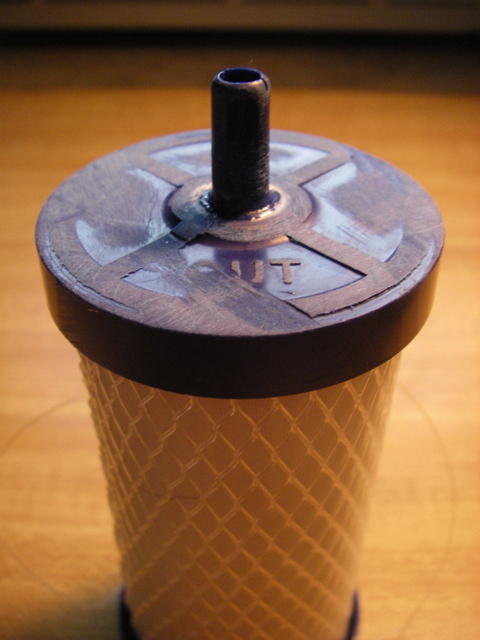
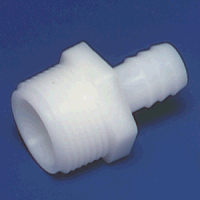
The mouth of the Nalgene bottle is a perfect fit for the filter cartridge. I also added a quick connect adapter to the tubing to attach to my hydration bladder. CamelBak markets a set for $7.00.
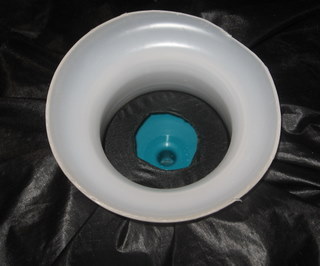
Putting this together is really easy. If you can handle a utility knife without cutting yourself you have all the skills you need. Start by cutting the water bottle below the plastic ring at the screw threads. Make the cuts as smooth as possible to avoid damaging the bag over time. You can smooth this even more with a piece of sandpaper I’ll refer to this part as the bottle neck.

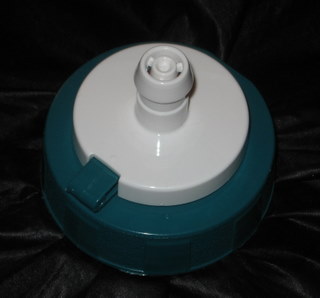
The next step is to cut the water bottle cap to allow the filter to fit through. All that is really needed are the screw threads so don’t be afraid to cut. Use medium grit sandpaper to smooth the inside of the cap ring and to insure the filter cartridge will pass through the cap.
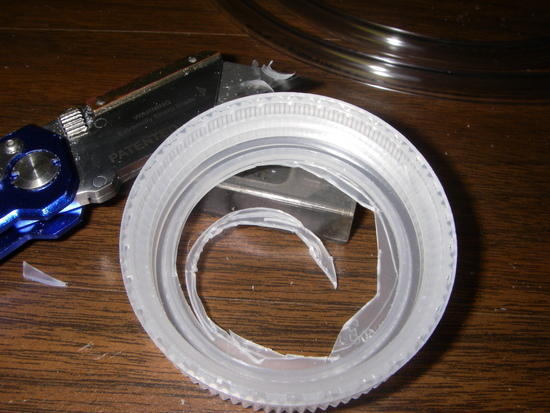
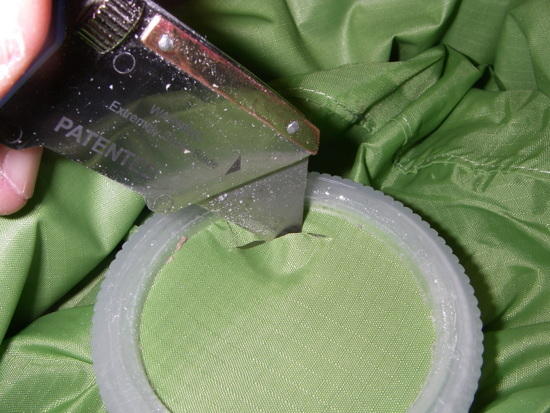
Screw the cap ring onto the water bottle neck and check if the filter cartridge will slide in. The fit should be tight. Once you have the hole the correct size, place the bottle neck inside the water bag with the threads centered on the bottom of the sack. The position is not critical. Now screw the cap ring on the bottle neck over the bag from the outside.

Cut away the cloth inside the ring. Some cloth around the edge may be left.
Now spread a small amount of the lubricant that came with the filter around the black O-ring. Slide the filter through the bottom of the bag so that the discharge is on the outside of the bag. Attach the tubing to the filter and fill the bag with water. You will have to prime the filter the first time you use it. Be careful not to suck the carbon into you mouth. It will not hurt you but it’s not a pleasant experience. Allow at least a liter of water to pass through the filter prior to the first use.
As I mentioned earlier I connect the filter to my water bladder to refill it. The higher the filter is above the bladder the faster it will fill. The time to fill the 70 ounce bladder varies but usually it is full in 2-3 minutes. Of course since I’m not pumping I really don’t care if it fills at a rate of less than one liter a minute.

Maintenance on the filter is easy. If the filter clogs in the field, Kaytadyn has a pre-filter sleeve on the cartridge that can be removed and cleaned. Since this is on the pre-filtered side it can be cleaned in untreated water. The filter cartridge itself can be rinsed in untreated water to help clean it. Just keep the discharge opening covered to prevent contamination. Kaytadyn claims about 200 gallons from one filter depending on the water. I never got that much from a pump but without the pressure of the pump I am hoping to come close.
After a trip I remove the cartridge from the bag and wash the bag with clean water. The tubing and cartridge are washed in a 10% bleach solution and allowed to sit in the mixture about 30 minutes. I figure that should kill most anything trapped in the filter. I then allow it to dry over-night prior to storage. Before I use the filter on the next trip I run about a liter of water through the unit to flush out the taste of bleach. This is the same procedure I used for several years with the Hiker pump.
While hiking I keep the hose in a snack size zip lock bag. This helps avoid any contamination. I use the smallest stuff sack that came in the set of three to hold the filter/bag, cleaning sponge and baggy with tubing. It is stored in the top of my pack so I can get to it easily.
After I built mine I discovered you can buy a similar filter from ULA. It’s called the Amigo Pro. With shipping it cost about the same, but if you have an old Nalgene laying around and a spare silnylon sack, build your own.