


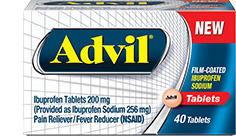
"Advil (version I take) = acetaminophen"
Well, maybe yours comes from china….
… but down at WalMart it looks like this –
Topic
Become a member to post in the forums.
"Advil (version I take) = acetaminophen"
Well, maybe yours comes from china….
… but down at WalMart it looks like this –

The tape and PLB suggestion was half joke, half serious. If you're back in remote terrain, the probability of something between minor booboo (tape your ankle and walk on out) and call in the troops (appendicitis) isn't all that high.
Sorry, I have Tylenol-Advil dyslexia. Thia is actually an old issue for me. I can't get the brand names straigth to save my life so I always have to read the ingredients. I meant Tylenol.
Advil (version I take) = acetaminophen, so not an NSAID
Maybe it's like how people in the South use "coke" as a generic term for any type of soda?
Interesting….
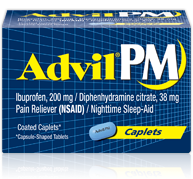
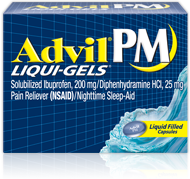
(Tylenol is acetaminophen)
Yeah, Tylenol. Can't keep em straight, even when there is a bottle of Tylenol/acetaminophen sitting om my desk as I speak. LOL
Many many years ago when I took my initial first aid class, it was taught by a guy who was a backpacking trip leader as well as EMT. We covered the first aid kit ingredients pretty good, and then he went on to explain what else to have along. These are the items that aren't really classified as first aid items, but they could be very useful in some first aid situations. A lot of them are items that you may have along for other purposes.
1. Plastic garbage bag, as a waterproof cover to any bandaging
2. Trekking poles or tent poles, for fracture splinting material
3. Foam sleeping pad, for fracture splinting material
4. Small tree branches, shaved down, for fracture splinting material
5. Bandana, for bandaging or for a fractured arm sling
6. Good rubber bands, for a constricting band for snakebite
7. A heavy frame backpack, for a litter for carrying an injured person
8. Sewing kit, for suturing up a deep laceration
etc.
I suppose that we could get into weird stuff, like using a platypus water container as an IV bag, but that wouldn't be smart.
–B.G.–
"Can't keep em straight"
Many of us who are over 40 have been advised by our physicians to take a half of a standard 325mg aspirin daily. I asked my physician about which OTC pain medicine I should take for routine backpacker's pains. He advised me not to take Ibuprofen along with the aspirin, because there might be some conflicting effects. Tylenol works by a different mechanism. So, he suggested that I just stick with aspirin for everything, but for me to monitor my dosage. If aspirin dosage gets too high, there can be some side effects like excess bleeding, and that is not recommended.
Personally, I don't get much effect out of Tylenol.
Prescription painkillers fall into a completely different discussion.
–B.G.–
OP– I can't answer your title question directly since I wouldn't carry such a small kit, but I will say that super glue is probably my second most used FA item. Wouldn't go without sterile dressings.
Now, reaching into the multi-purpose bag I grab…water purification tablets. I don't treat my drinking water much here, but do sometimes, and always have them. A while ago I got a great tip. The current wound drill, as I understand it, is forget the antibiotic ointment, and wash and…SCRUB. Fresh out of WFR class, a friend said, in the likely event you're not carrying betadine or nolvosan, use your iodine treatment tablets. And absent a scrub brush, use a high-pressure water jet. And…having no pump, put your treated water in a plastic bag with a pinhole and squeeze. Extremely low volume; very high pressure. OK, I carry Pur tabs, not iodine, but if it kills bugs in drinking water it will leave only clean drinking water on the wound after the washing is done.
Just a tip. No experience yet

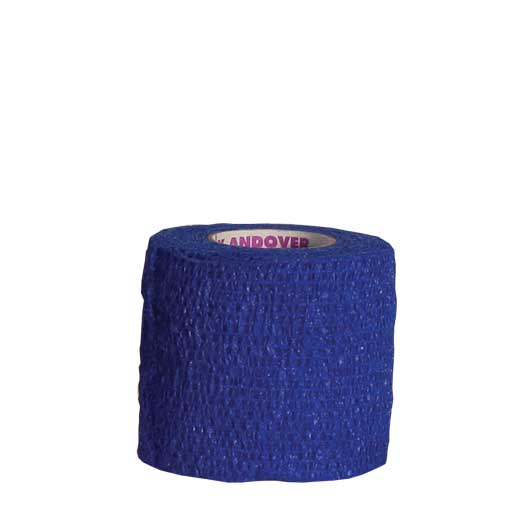
What I do take is a Adventure Medical .3 kit with bigger compresses, added medications and better tape. CoFlex tape has become our favorite for wrapping wounds with a compress. It sticks to itself but not to your skin. Lueko tape is the other standard as mentioned. Scissors and pair of Uncle Bill's Sliver Gripper tweezers are my first aid tools.
CoFlex tape:
Learning to improvise for splints and other first aid devices is a core part of backcountry first aid. Belts, straps, rope, bandanas, clothing, tree branches, tent and trekking poles all come into the mix. Having a core kit with sterile dressings, tape meds, antiseptic creams, blister, splinter and insect bite aids is important to me. If you are prone to knee or ankle problems, adding a Ace bandage is probably a good idea. As with all survival gear, you want to equip yourself with enough gear to improvise, as you will never know the exact situation.
I have a lot of first aid training and have used it a few times for broken arms collarbones and head wounds, as well as all the typical stuff like splinters, blisters, minor cuts, and insect bites. My wife is an RN and my father was an EMT and first aid instructor; with that and Boy Scouts, it's second nature for me to have an effective kit. I do cringe at calling a few bandaids and a chunk of moleskin a first kit– that is a delusion!
BUT, apply the same principles to your first aid kit as you might to any UL gear: take small amounts appropriate to the trip or intended use, seek out the lightest, highest performance versions and look for multiple use opportunities. Knowledge is light, so make that first on your list :)
I usually take most of the same 0.3 AMK kit
I add climbing tape, some gauze, a stetchy wrap, a bit of antibotic ointment
And if im carrying a light pack i use a SAM splint as a backpanel … You cant always find tree branches on the rock wall, nor do you always have trekking poles … Not to mention ankle/knee injuries are the most common ones in climbing
A lot of people dont bring much first aid and honestly you wont need it 99.9% of the time
But the times ive seen others need it, many of them were lucky enough to have others close by with their kits
It all depends what you are doing, how far away from help you are, and what risk level you want to take
And the best thing other than the basics that you can have on you is a cellphone or SPOT/PLB
No joke
;)
My main two items are athletic(coaches/climbers) tape, and an ACE bandage or two. Throw in some gauze, pads or roll, and I can, and have, handle a wide variety of injuries.
I'm a couple of decades past Combat Lifesaver training, and have only had brushups on mostly basic first aid since, but one thing that's been retained is a direct, unhesitating approach when an injury occurs.
I'm a big fan of ACE bandages, and am never without them. They give the ability to compress, stabilize, and support, so can be used for breaks, sprains, and bleeding.
Some of the pared down first aid kits I see are only suitable for minor cuts, scrapes, burns, etc. that don't really(in my opinion) require treatment to begin with.
Eric Chan wrote, "A lot of people dont bring much first aid and honestly you wont need it 99.9% of the time."
That's the crux of the problem. There are all those pesky "10 essentials" that can keep you alive, from getting lost, to help you signal to get found, etc, etc. They can add up and carrying them is a head butt to UL techniques, because we all hope and pray that we will never need to use that stuff, but you will pray that you have it when you do need it. Choose carefully and wisely!
1) Lots of training, teaching, and reading on First Aid and experience in wilderness settings with numerous situations.
2) Creativity, honed by taking and administering FA practice sessions with make-up, coached actors, etc using one's backpack as normally packed as the source of supplies / materials.
But I think you mean:
1) short lengths of Leuko tape and/or vapor-barrier tape (stickier and more waterproof than duct tape) around a water bottle.
2) a bandana.
Often I don't bring any drugs. When I do on longer trips, they are selected for the area, season and individuals. They could include tiny professional samples of antibiotic creams, anti-fungal ointment, broad-spectrum antibiotics, benadryl, epi-pen, asthma rescue inhaler, anti-dirreheal, anti-spasmotic, quik-clot trauma dressing, aspirin, ibuprofen/alleve.
The two most extensive FAKs we've brought were for a private rafting trip on the Colorado and in Zimbabwe. They included much more than the above (plus two physicians).
I consider this idea (only two items) to fall into the "stupid light" category. I think the only thing that separates the light weight FAK risk takers from the robust FAK carriers is one bad experience.
I always carry a good supply of bandages, gauze pads and tape. If a trip is more than a couple of days, I add a broad-spectrum antibiotic. Why?, because many years ago I had the unfortunate experience of a small cut on my shin turning bad (really bad!). I barely noticed the cut until it became infected and then it was too late for topical treatment. Within a day and a half the cut was so infected that I could hardly get my shoe on (ankle had swelled from the infection), and I couldn't lace up my shoe. Fortunately, I was able to walk out and get to a doctor quickly but one more day and I would have been in big trouble.
Badly infected blisters can ruin a trip (done that one as well) and when you consider that the 28 (anti-biotic) pills I carry in my FAK weigh .7 oz., it's pretty cheap/light insurance. Keeping an injury clean and covered is the best preventative medicine (best to avoid having to take the anti-biotic), so I like to have enough gauze, polysporin and tape for routine bandage changes.
As far as duct tape goes it's great for covering hot spots, wrapping a wrist or ankle or even closing a slice but grind off a significant chunk of flesh and you will be wishing for a piece of sterile gauze. SH*T happens.
I consider this idea (only two items) to fall into the "stupid light" category.
+1

nm
My youngest son has a 2 item first aid kit:
Double epi-pen
Bottle of Benadryl
Never go anywhere without it.
I carry a backup double set of the Epi-Pen……

Double epi-pen
Bottle of Benadryl
+1. I need to carry one when I'm out with my nephew. We had them in our combat lifesaver bag in the Army where it was a single syringe that had two doses (administer dose two by turning plunger 1/4 turn) but his is an auto injector. I'm guessing that's how they all are now?
Speaking as a Ski Patroller…
1. TRAINING
2. ADVANCED TRAINING
Most of the materials can be improvised.
>"Bottle of Benadryl"
I've pondered the adsorption rate of Benadryl if it were snorted. Say, someone known to be allergic to bees gets stung, and you don't have an epi-pen, so the sooner you get the Benadryl on-board, the better. Open up a capsule or finely crush a pill and do what the illicit drug users do for the same reason – so it is in your bloodstream as soon as possible.
My wife knew another doc who was on a plane with a convulsing child. (1) all planes are flying pharmacies, if you think to ask the other passengers, (2) there's no shortage of anti-anxiety drugs on a plane, and (3) consider alternative administration routes. He had the flight attendant ask for it, got an overwhelming response, crushed it, mixed it in a pat of butter and administered it as a suppository. It worked.
>> mixed it in a pat of butter and administered it as a suppository <<
OK, add latex gloves back into my top two…
Roughly as Eric said:
1. TRAINING
2. Thinking
I find Band-Aids and 3M Micropore tape can handle most injuries, WITH a bit of improvisation.
Cheers
Dale…
I love that coflex tape, but be really careful about checking it before every trip. I bought some to use in my dogs FAK (it's excellent for hairy limbs and all…), but the one time I did need it for him (he ripped a pad on a riverbed) I pulled it out of the ziploc and the roll was one single lump of goo. It was not even a season old. But the compression and the heat and whatnot just mooshed it together into a single glob and it was useless.
So I stopped carrying it and moved on to other wraps for him. And for me.
A podcast from a few years ago listed the top 5 choices. A NOLS instructor listed these.
1. gloves
2. tape
3. pain reliever
4. irrigation syringe (10 cc needle nose)
5. wound cover to keep wound moist (tegaderm or antibiotic ointment/cover)
Become a member to post in the forums.
 New Gear with Aluula FabricsLighter, stronger, more abrasion-resistant, and highly water-resistant - explore ultralight backpacking gear made with ALUULA Graflyte fabrics. Engineered for exceptional strength, durability, and lightweight performance, ALUULA Graflyte helps reduce pack weight without sacrificing reliability, making it ideal for demanding backcountry adventures.
 © Beartooth Media Group Inc.
 Loading...