Topic

Knife features, uses

Viewing 25 posts - 1 through 25 (of 34 total)
Thomas Rayl BPL Member
PostedFeb 18, 2014 at 8:33 am

I am considering attempting to design a knife targeted at campers/backpackers and would like some opinion feedback, please. My question is "How do you / might you use a knife?" I know many of the most common answers, namely cutting food, cutting rope/cord/line, cutting repair patches, whittling (including stuff like tinder, fuzz sticks, etc), trimming fingernails, batoning wood, fighting grizzlies, etc. I am interested in feedback on everyone's actual and desired potential uses (including those "what if" cases) and various feature likes/dislikes. Thanks in advance to all.

Dale Wambaugh BPL Member
PostedFeb 18, 2014 at 9:16 am

Many small and light knife designs suffer from handles that are too small. Most of the survival desings are too short and fat to be useful for food prep or cleaning a fish. Just about any sharp knife will make fuzz sticks.

Take a Victorinox paring knife, give it a slightly fatter handle with a rounded pommel and a thicker full tang flat ground plain edged stainless steel blade. Pair it with a well made Kydex sheath that has a belt loop (rather than a Tek-Lok). It may end up looking like a Wusthof paring knife. Add a lanyard hole.

Wusthof paring knife

What I really want is a lock blade folder with a saw and scissors, period. Like a Victorinox one handed Trekker with saw and scissors minus all the screwdrivers and bottle openers. An awl would be permissible.

PostedFeb 18, 2014 at 10:00 am

Well, they're great for getting splinters out, since you mentioned turning logs into toothpicks (aka whittling).

I'm with Dale, larger (thicker) grips. Most knives other than hunting knives and mora-style stuff has too skinny handles.

PostedFeb 18, 2014 at 11:14 am

I like a blade I can control, and almost never cut anything with a diameter greater than a centimeter. Sticks, paracord, loose threads, clothing, and occasionally peeling fruit.

So, a 1-inch blade, nice and stout, with a great handle like Dale said might be useful and there aren't a lot of them out there to choose from.

Justin Baker BPL Member
PostedFeb 18, 2014 at 11:22 am

i use my knife for:
cleaning fish
cutting food
cutting edible wild plants
splitting branches down to get dry kindling (when it's wet out)
cutting cord
making tent stakes
carving things like spoons for fun and to pass the time
cleaning game if i'm out hunting
in an emergency situation, i would also baton my knife to cut down small saplings for a shelter and baton branches for ground insulation

for summer hiking i use the blind horse knives tiger knapp at 2.1 oz w/ sheath and in winter I use the becker necker knife at 4 oz w/ sheath. Add a folding saw for wet weather fire making.

Brian Johns BPL Member
PostedFeb 18, 2014 at 11:56 am

Like Dale's choice – a paring knife – I have an AG Russell Woods Walker (I think that's what it's called), it's pretty great for everything I use a SAK or other pocket knife for. I'd shoot for a full tang, paring-sized knife with a thicker blade. Probably some sort of laminate/delrin/micarta handles would be best too. Here's the two sheath/non-folding knives I take out on the rare occasion I don't just bring a folder of some sort.

The AG Russell:

agrww

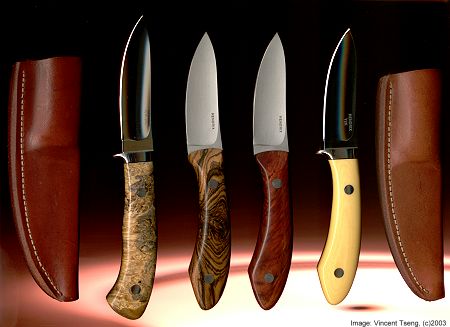
And a custom Wayne Hendrix (I've had this knife for more than 25 years; but they still look the same, it's the third from left, a simple small skinner):

WHKskinner

Dean F. BPL Member
PostedFeb 18, 2014 at 12:18 pm

I want a multi-tool with:

1. small knife, ideally with a lock
2. tweezers
3. pliers
4. nail file
5. robust scissors

Mind you I mean REAL scissors like on the Leatherman Micra, not the tiny fold-out ones on most multi-tools and pocketknives. These scissors need to be able to trim my great toenails without flinching. I'd take a fold-out pliers rather than fold-out scissors given the choice, since I'd use the pliers much less frequently.

So, essentially, the Leatherman Style CS but with pliers, too, and a lock on the knife blade. (I could live with something more Skeletool-sized, but I'd prefer smaller like the Style.)

That's it- nothing else (but you can put a mini-screwdriver on the end of the nail file if you like). This covers all of my first aid and foot and nail care needs, plus the pliers which are handy for gear repairs. I acknowledge that #3 and #5 are probably mutually exclusive, but if you're going to dream…

If you specifically are just asking about fixed-blade knives I'd say a drop-point or preferably normal-point blade between 4" and 5" in length, NO serrations (which are a stone b#$%h to sharpen), flat- or preferably saber-ground (because I want to be able to sharpen it easily myself so for God's sake not convex- or hollow-ground), full-length grip with a full tang, with a lanyard hole. The rightmost Wayne Hendrix above looks good, less the lanyard hole.

I have used camping knives for cutting cordage, straps, etc., and for whittling tinder, and opening packaging, and gross food cutting (though never anything so delicate as fileting fish). I've never HAD to baton wood, but have done it with my Mora for self-educational purposes.

Dale Wambaugh BPL Member
PostedFeb 18, 2014 at 1:02 pm

The Woods Walker is much like a paring knife with a better handle. It is inexpensive and there is a Kydex neck sheath option. The rosewood handled Forschner paring knife is very close to the Woods Walker.

Forschner paring knife

The cook's trimming knife is another small sharp "claw" that can be used for general trail chores. They tend to have stiffer blade that is 2-3/4" or so. I still prefer the paring knife blade profile, especially for food prep.

Wüsthof Classic trimming knife

The trick in the design is to trump the cheap production knives and justify the cost. With a handmade knife, that usually means high quality steels and more aesthetic features. That typically means more weight.

Ian BPL Member
PostedFeb 18, 2014 at 1:03 pm

Most of my hiking is on a well-defined trail so I never need anything more than my Swiss Army Classic. I tend to use the scissors more than anything else. I’ve owned several Swiss Army knives over the years and I do miss the larger blade and saw from time to time.

A more perfect knife for me would be the Swiss Army Camper for the blade and saw. I’d like to see the smaller blade, can opener, cork screw, and bottle opener removed. The tweezers suck so I’d like to see them improved upon. I don’t have 1/4″ gaps in my teeth so I’ve never found the toothpick to be of much use. Add a pair of scissors and it’d be close to perfect for me.

No serrated blades for me.

Edit: Oops, linked the hiker instead of the camper. Basically the same knife except it has a Phillips screw driver instead of a bottle opener.

Jerry Adams BPL Member
PostedFeb 18, 2014 at 1:35 pm

"I want a multi-tool with:…"

Why do the different tools all have to be attached?

Then there are zillions of possible combinations that particular people might want.

I use a Leatherman Micra which I think is pretty good. I suppose the handle of the scissors is also the handle of the knife and screwdriver so you save some weight. But maybe there are some extra tools that I don't use so total weight savings is small?

I have a seperate tweezer. The tweezer on the Micra isn't very good. And a seperate tick removal tool that is so tiny the weight doesn't matter.

Maybe there's a seperate pliers that would work.

Dale Wambaugh BPL Member
PostedFeb 18, 2014 at 2:02 pm

There certainly are strategies for using separate tools rather than a multi-tool. A small multi-tool is easier to keep track of and ends up being just one bit of gear on a keyring or lanyard. They are typically less expensive and lighter than separate tools, but only the tiny ones are really appropriate for a UL gear list.

And those tiny tools rarely work as well as separates. A paring knife, Wescott scissors, Uncle Bill's tweezers, and a pair of small hemostats will trump the stuff found on small Swiss Army knives or Leatherman tools. You do need to find a way to store them safely without loss and some decent level of access, which adds to the weight, complexity, and cost. Whatever floats thy boat :)

PostedFeb 18, 2014 at 7:08 pm

I'd like a Silky Pocketboy 130 saw blade on one side, and a fillet knife on the other. Locking open, as well as closed would be a bonus. Make it with an ultralight skeletal nylon frame too please. I already have a Leatherman Squirt for everything else.

PostedFeb 18, 2014 at 8:55 pm

A beefed-up paring knife with these features:

– Flat ground blade with moderate spine
(neither "survival knife thick" nor "cheap kitchen knife thin")
Definitely not a saber-grind knife. Not even hollow ground.
– Quality Stainless Steel around 60 Rc hardness (VG-10, S30V, even a semi like D2 could work)
– 3.5 inch blade length, either leaf-shape or wharncliffe
– Finger Guard !!! You don't want your finger sliding forward onto the blade
when you're in the middle of nowhere…
– Lightweight fiber-reinforced nylon handle or similar, of medium size
(neither Mora thick nor skeletonized thin) — customizable handles a plus
– Non-serrated, for ease of sharpening.

– And a realization by the maker that everyone will want something different.

PostedFeb 19, 2014 at 2:08 am

OP asked: "How do you / might you use a knife?"

I primarily use 3 knives for outdoor activities: Swiss Army Knife Nomad model (100g), Mora basic model (105g w/sheath), and Mora Bushcraft Forest model (143g w/sheath).

The SAK I have as my EDC and is used on day hikes. I use it for food prep, open packages, first aid (removal of splinters, for instance), cut fishing line, gut fish, occasionally make chop sticks or grill sticks, and on occasion the beer and wine opener.

The Mora basic is used for about 75% of my section hikes backpacking during roughly spring, summer, and fall. I use it for everything I use my SAK for aside from the obvious beer and wine opening. I also use it on occasion for minor wood processing for a small fire, and sometimes to cut string and trim nails.

The Mora BF is used for the other 25% of the time during winter. It is used for everything I use the other two knives above are used for, but it is a bit bigger and more robust for to baton bigger pieces of wood for larger fires. Also on occasion it is used to aid in setting up a tarp shelter, like making a simple frame for a lean-to or A-frame out of sticks.

I like all 3 of these knives very much and have no intentions of replacing them. For a while I was drooling over a few fancy knives a few years ago, but my simple knife collection does everything I need them to do, and are good quality. They keep a sharp edge well enough, and I always try and keep them clean, oiled, and nearly razor sharp. With my Moras I can shave hair off the back of my hand, which is how I determine if they are sharp enough when sharpening them.

PostedFeb 19, 2014 at 4:21 am

Features:

1) Full tang
2) Quality steel
3) Jimping (upward curving if possible)
4) Choil that fits my forefinger
5) 3"-4" blade

I also carry an ESEE neck knife (IZULA) which I never hike without.

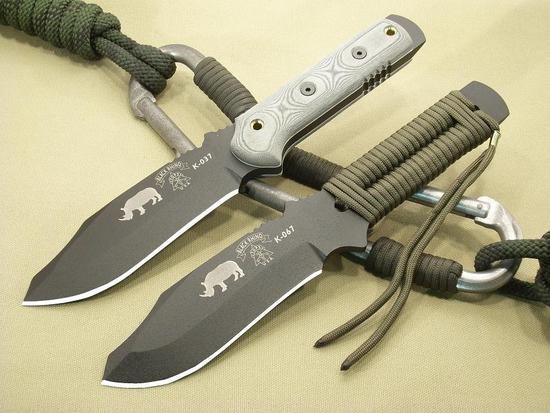
I find the jimping and choil just about perfect with the TOPS Black Rhino model but would want it a much smaller and less beefy knife.

Jimping and choil

Dean F. BPL Member
PostedFeb 19, 2014 at 11:54 am

>>> Why do the different tools all have to be attached?

Why not?

Plus, of course, the reasons that others have already mentioned.

In fact I currently do carry a Leatherman Micra, and I just plan to use my fly fishing hemostat as pliers if I need it (if I have it with me).

Jeffs Eleven BPL Member
PostedFeb 19, 2014 at 2:05 pm

Dear santa. After you bring me a knife that can do it all can i get an electric aventador 4×4?
Thanks
Your homey
Jeff

Ian BPL Member
PostedFeb 19, 2014 at 2:07 pm

Dear Jeffs11,

No. You'll poke your eye out.

Santa

Stephen Barber BPL Member
PostedFeb 19, 2014 at 2:47 pm

@ Delmar

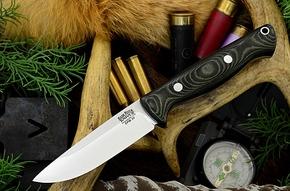
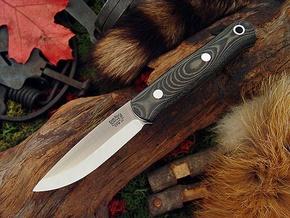
Have you heard of Bark River Knives? Two of their knives might be close to what you want – the Gunny Hunter and the UL Bushcrafter.

I think they meet all your qualifications except flat ground – but you can send either back to the manufacturer and they will re-grind it to your specs.

I'm including pics and websites below – the website is a knife store in Oregon owned by an old friend of mine – tell him you know me, and he'll probably make you pay an extra 15%!

Gunny Hunter
Gunny Hunter

http://www.knivesshipfree.com/gunny-hunter/?sort=alphaasc

UltraLight Bushcrafter
ULBushcrafter

http://www.knivesshipfree.com/ultra-lite-bushcrafter/?sort=alphaasc

I have no official or commercial connection with KnivesShipFree, just a friend of the owner. I get nothing from him except friendship.

Derek M. BPL Member
PostedMar 2, 2014 at 5:59 pm

Thomas,
My uses for a backpacking knife break down as follows:

85% – food processing and food package opening
10% – small wood processing (think marshmallow sticks) and thin cord cutting
5% – minor first aid related tasks

I suggest that you make a knife that others companies haven't quite nailed yet. The good news, IMO, is that I don't think anybody has quite hit the sweet spot with a lightweight backpacking knife yet.

Just to cut to the chase, I think the ideal backpacking knife is basically a sub 2.25 ounce folding paring knife with a 3.25 to 3.5 inch long x 1.75 mm thick x 0.6 inch wide, drop point, full flat (or scandi) ground blade. The handle of the knife absolutely needs to be waterproof, and the whole package needs to be easy to clean, because 80-90% of the knife's duties will be cutting food and food packaging– tasks which can get messy. The blade needs to be able to be secured in the open and the closed positions for safety purposes.

The knife should have a very comfortable handle and should be able to easily cut thin cord and also process small amounts of wood (the ability to baton sapling size wood would be a bonus, but not required).

In essence, the knife would be very similar to an Opinel No 8 but would be impervious to water (the achilles heel of the Opinels).

As I see it now, backpackers have currently settled (not necessarily happily) on using one or more of four different categories of knives:

1. Multitools / Swiss Army type knives (problems: heavier than need be, oftentimes non-locking blades, more features/tools than backpackers need)

2. Bushcraft type knives (problems: too heavy due to being way too big, thick, and robust, oftentimes also difficult to pack because of their non-folding nature and the need for a sheath just adds weight and headaches)

3. "Everyday Carry" folding knives (problems: almost always too thick of a blade for efficient food slicing, handle is often too thin to be comfortable for extended food prep, blade is often also too wide)

4. Repurposed paring knives (problems: never folding, which then adds the complexity of needing a sheath and storing a relatively long package when sheathed), sometimes slightly too thin of a blade for wood processing and not enough tang for anything more than very light duty cutting.

In short, I would buy the following knife if you made it:

1. An Opinel No 8 type knife with a synthetic handle and a drop point blade.

2. A Svord Peasant type friction locking knife with a 3.25 to 3.5 inch Opinel style blade (but with a drop point and of course the peasant style extended tang) and a drastically pared down handle that wasn't so unnecessarily oversized liked the current Svord offerings are.

I feel like there is a lot of opportunity here for a decent folding paring knife…

PostedMar 2, 2014 at 7:41 pm

@ Stephen B

Yes, Bark River, familiar with them. The first knife you posted is really close, isn't it. Almost a full flat ground. Interesting they use CPM 3V steel, which generally is used for high-toughness applications like shears and tool blanks. I don't think it qualifies as a stainless steel, but should be reasonably resistant.

Jeff Jeff BPL Member
PostedMar 2, 2014 at 8:00 pm

I don't think I have ever used my knife in 12 years of backpacking but I have carried it everywhere. So, I guess the one thing I want is something compact and light.

Scissors on the other hand are used on almost every trip.

PostedMar 3, 2014 at 5:12 pm

Guys/Gals, those Bark River knives are sweet and the quality and craftsmanship that goes into those is about as good as it gets in a semi-custom cutting tool. They are outdoor gear you can and will want to pass down to your grandkids.

There are a couple of things that probably need clarifying and should be important to you if you rely on your knife as a tool:

1)That blade on the gunny and almost every BRKT knife has a CONVEX grind, meaning the blade is ground from the top on a continuous slight curve until each side meets at the bottom to form the cutting edge. There is not secondary bevel and the knife should not be sharpened on a standard sharpening stone. All you need is a leather strop and some course stropping compound to keep the edge sharp in the field.

2)The bushcrafter knives (bushcrafter and ultra light bushcrafter) have what is called a scandi convex grind. The owner took the scandi grind (like you find on the Mora knives), and starting in the middle of the knife profile you see the convex grind begin to form, again meeting at the bottom to form the cutting edge.

The cutting power on these knives is shocking at first, and I don't use that term loosely. As good or better than the scandi grind, BUT the edge will stay sharp longer because technically it's got more material behind the edge on each side. This cutting power transfers into MUCH more efficient work, and I believe everyone here knows what that means in the outdoors.

Given the central theme of this website, you may want to take a look at the Ultra-lite Bushcrafter as the manufacturer list it's weight at 2.7oz's, as opposed to 6.625oz's for the regular Bushcrafter and 5.625oz for the Gunny.

http://www.knivesshipfree.com/ultra-lite-bushcrafter/?sort=alphaasc

There are several types of stainless and tool steels the company uses from run to run. Delmar mentioned 3V which is a newer, TOUGH tool steel and you will probably not have to sharpen a blade from that steel for years. Unless you use it every day for 4hrs straight. They make them in runs, so you may not be able to get a stainless blade in the style you want this year NIB, but there is probably a version of knife you want available somewhere from a dealer or on the secondary market.

Here's the stainless version of the Gunny with BRK's signature firesteel striker (most think it's a thumb ramp and hate it)
http://www.knivesshipfree.com/gunny-s35vn/?sort=alphaasc

And here's a stainless version of of the STS series weighing in at 7.7oz's, but with a 4 inch blade and 5 inch handle,
http://www.knivesshipfree.com/sts-4/?sort=alphaasc

Disclaimer: I don't work for Bark River Knives or a BRK dealer. I just like high quality outdoor gear and the technology used in these knives from the steel to the blade grind is very interesting to me.

Viewing 25 posts - 1 through 25 (of 34 total)
Loading...