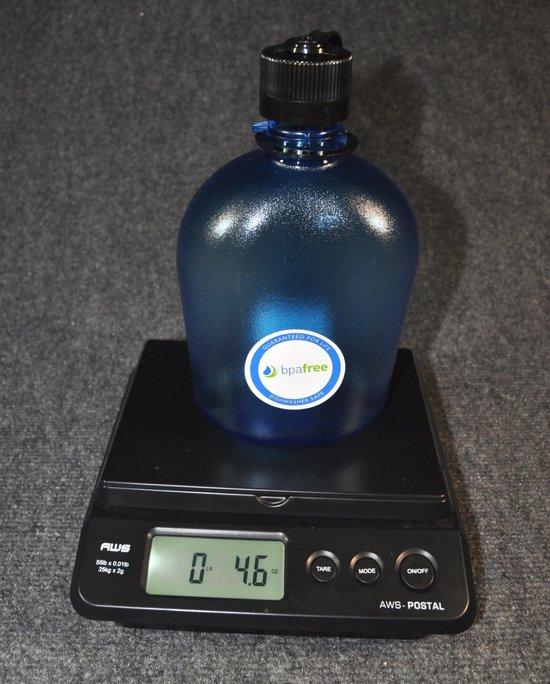
"it seems that once the water drops below 98.6*f, it will start to conduct heat away"
1) 98.6 F is core body temperature but extremities like feet are much cooler. The thermoneutral point would be maybe 80F if it's at your feet, depending on what your body is doing.
2) To get cooler than your body, a bottle would have to give off that heat. Heat would not be given off if the surroundings were warmer than the bottle – rather heat would be flowing in. So actually the bottle will cool and give off heat until it's at an equilibrium with the surrounding temperatures and then it'll be pretty much stable unless you've got half the bottle poking out of your bag and wicking away heat. So it reaches an equilibrium with your body and then its fairly irrelevant unless it has the ability to conduct its heat away somehow.
One downside is that if your feet were made cool somehow (ie. your body shuts of circulation for a bit) then the bottle could cool more. If your body then tried to warm up your feet it would be harder to do so because it would need to warm the bottle also in this case.
Somewhat on this topic is the oft repeated claim that peeing at night will keep you warmer because it takes energy to keep the pee warm. I see this everywhere including Backpacker magazine and it's totally wrong. I agree one should go pee – but only because it's tough to sleep with a full bladder. It does not take more energy to retain that pee.
The bladder is deep inside the torso – nicely tucked into the pelvic girdle. It can only gain heat from your body and similarly can only lose heat to your body (when you're not peeing). The bladder can't magically conduct your heat into the outdoors. Yes it takes heat to warm urine (assuming you aren't drinking hot water), but warming urine is unavoidable and it does not take heat to keep it warm.
Imagine a bladder filled with urine at core temperature (unavoidable). Heat would not flow into the bladder because it's at the same temperature as your guts. If somehow it did, then the bladder would be hotter than your guts so the heat would flow back out – thus it's a wash. Any heat the bladder is "losing" is being lost to you. Any heat the bladder is gaining is coming from you. It's entirely neutral and not a continual sink for energy.
If you really dive into the nitty gritty details of it, it's actually more heat efficient to have a full bladder. The added mass buffers swings in your body temperature (to an extremely small degree), which causes a slight reduction in heat loss because it's more efficient to be at a constant temperature than a fluctuating one.