EtaProof is exactly the same as Ventile – the fabric was invented in the UK, and originally produced in the UK but eventually production was shipped overseas to Switzerland and is now produced by EtaProof. The Ventile brand-name still exists, and actually I think the majority of EtaProof's sales is through the ventile brand name in the UK.
They offer a variety of weights, and each has its advantages. Strangely, you tend to find that the thinner the fabric the more water-resistant it is (which is great for you gram counters). Unlike most fabrics, it is completely breathable when dry, but when wet the cotton fibres swell to fill the tiny voids between the warp and weft to make it waterproof – essentially, it reacts to the natural environment.
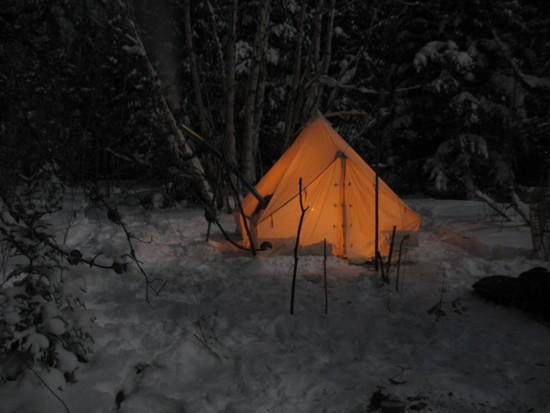
It's used today for all sorts of applications. The British Antarctic Survey use it for Antarctic tents (it performs incredibly well in snow/cold environments, but it's used by NATO fighter pilots for their flight suits (to protect against cold water if they crash, but the breathability also allows the pressure inside the suit to stabilise during fast ascents / descents). Surgeons use it for their gowns, as the dense weave prevents dirt and bacteria etc passing through. It's has a pretty interesting array of features!
I read a book recently called 'Invisible on Everest' about the history of outdoor gear, and in there climbers in the early 1900's are using similar cottons for UL tents in the alps. Basic, single skin tents, but travelling pretty light considering the time.
I have used it myself to make backpacks, and they perform well. Although ventile does seep water after continuous downpours, I have found it's great for changeable weather and actually dries pretty quickly. While exploring a waterfall, I've dunked a ventile pack fully underwater and it hasn't let any water in at all, but I wouldn't like to have held it down!
One of the downsides of using it is working with the seams. You need pretty specific needles with a very fine point, and it's advisable to use cotton thread (which will expand to fill the puncture holes when wet). Also best to use lap-fell seams, or french seams to cover the edges as obviously it would fray otherwise as its not synthetic.
Also, I know that the Ventile brand will sell certain weights from stock by the meter (I think) – L24 is a good weight to use, so perhaps give them a call?
Sorry for the rant! I'm kinda in love with this fabric and have been researching it a lot recently, having used it to make a backpack and even a yurt cover! I don't mean for this to be advertising – I simply want to share some knowledge with you guys – but if you are interested the backpack is here: http://www.trakke.co.uk/product/og (using L28 ventile)
and the yurt can be seen here: http://www.trakke.co.uk/article/august-19-2013–many-hands-exhibition
Hope that helps! Let me know if you want any more info about the fabric and if I'll help if I can!