


Has anyone used bamboo charcoal stuff? I just heard about it.
http://www.aerostich.com/sundry/fun-folly/gifts/under-25/bamboo-charcoal-socks.html
Topic
Become a member to post in the forums.
Has anyone used bamboo charcoal stuff? I just heard about it.
http://www.aerostich.com/sundry/fun-folly/gifts/under-25/bamboo-charcoal-socks.html

P T Barnum
Cheers
Cellulose from bamboo is suitable for processing into viscose rayon.
I had a pair of dress socks. They were very soft and did not last long.
Not sure about the charcoal….
I remember reading that bamboo charcoal is used in the production of a type Rayon.
It supposedly isn't as stinky as other synthetics, but I have my suspicions.
Other than that, I agree with Roger.
It is synthetic, not a natural fiber.
I suppose you could say bamboo rayon is a synthetic fiber manufactured from a natural, renewable source, cellulose.
See
http://www.wisegeek.org/what-is-rayon.htm
As I said above, my bamboo rayon business dress socks from Macy's were very soft and comfy but wore out quickly.
I wonder if it is the same as carbonized bamboo, a spinning fiber sold to fiber hobbyists. It is supposed to have anti-odor properties, and be resistant to UV light. It has a hand like silk and is a joy to spin, very soft to the hand. Where they get that "healthy ion" faff I have no idea, sounds like marketing spin to me.
Fun interesting facts from a spinning web-site that sells the fiber:
"According to the American Chemical Society, in 1879 Thomas Edison invented the first incandescent light bulb. It used electricity to heat a thin strip of material, called a filament, until it glowed. Edison may also have created the first commercial carbon fiber. Early filaments, were made from bamboo slivers which were formed into the proper size and shape then baked them at high temperatures. Since bamboo consists mostly of cellulose, a natural linear polymer made of repeating units of glucose, the filament was “carbonized,” when heated. It became a true carbon copy of the starting material — an all-carbon fiber with the same exact shape. Tungsten wire soon displaced these carbon filaments, but they were still used on U.S. Navy ships as late as 1960 because they withstood ship vibrations better than tungsten."
Become a member to post in the forums.
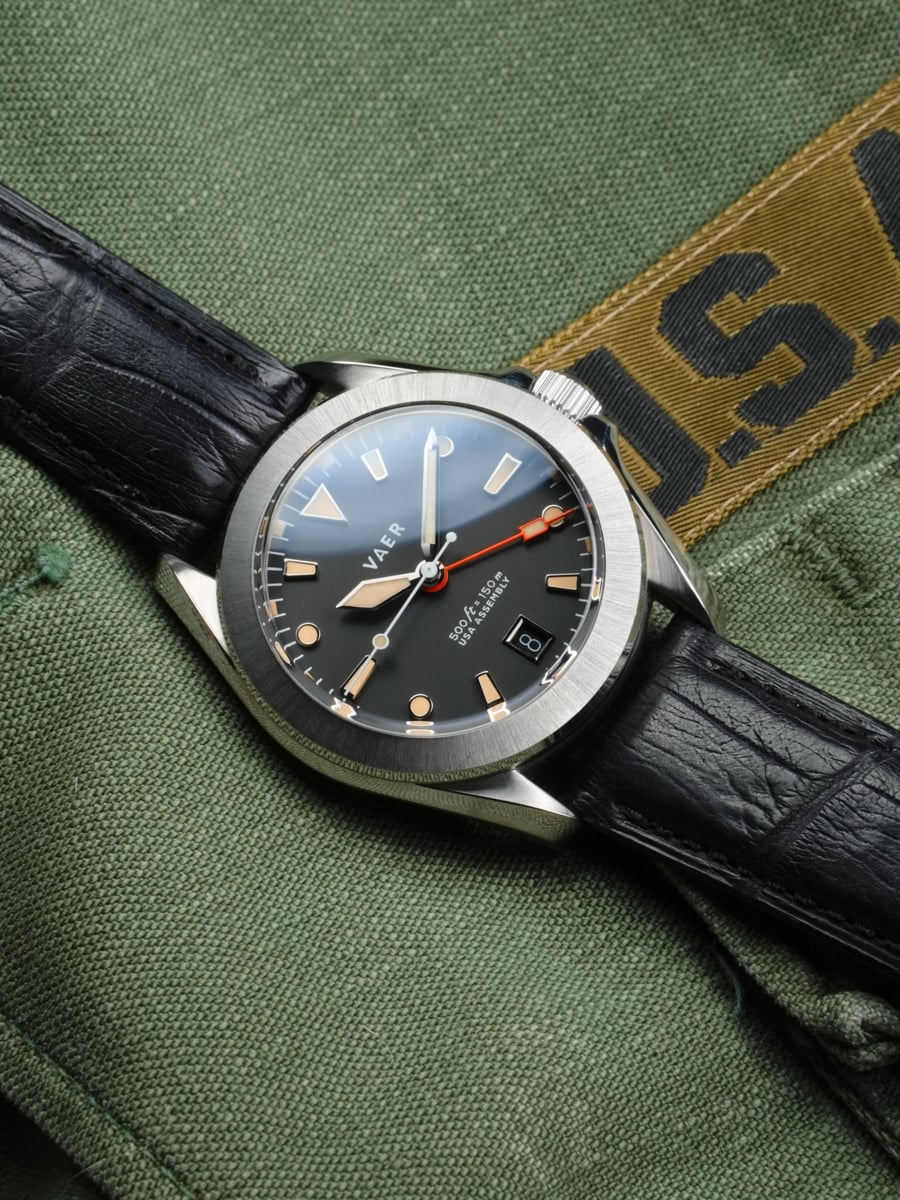 A Cult-Classic GMT Reimagined for Everyday WearInspired by the famously bezel-stripped Rolex GMT-Master worn by Marlon Brando in Apocalypse Now, the G2 Apocalypse turns a piece of 1970s film and watch history into a practical everyday GMT. Its restrained 39mm design pairs a Swiss Ronda quartz GMT movement with sapphire crystal, 150 meters of water resistance, strong BGW9 lume, and USA assembly. The result is an accurate, low-maintenance travel watch with a story collectors will immediately recognize.
 © Beartooth Media Group Inc.
 Loading...