Topic

Alternatives to traditional baffles?

  • This topic is empty.
Viewing 17 posts - 1 through 17 (of 17 total)
PostedDec 1, 2013 at 10:28 am

As my sewing skills slowly but surely improve, I may tackle making a down quilt. Seems like sewn through baffles or chambers aren't that recommended because of cold spots, and perhaps I don't understand it well enough but baffle boxes strike me as difficult (haven't actually seen what it looks like inside).

So was thinking of alternatives. Was thinking of doing sew through, leaving a side open and before putting down in, putting thinnish strips of Apex over the seams and light weight fabric on top of that, sew to the side, and then down the rest of the seam-Apex/fabric strips heat bond it on, stopping at the open side, which after the down is put in will be sewed through.

The idea is to maximize warmth at lowish weight, while still being relatively easy to do. The strips of Apex and extra fabric don't have to be that wide.

Inefficient idea? Is it just easier to do traditional internal baffles with mesh etc?

Jerry Adams BPL Member
PostedDec 1, 2013 at 12:57 pm

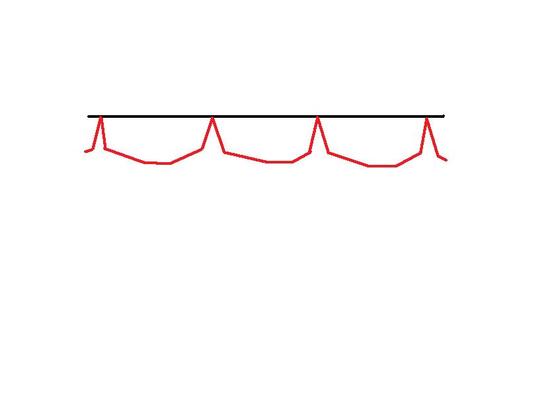
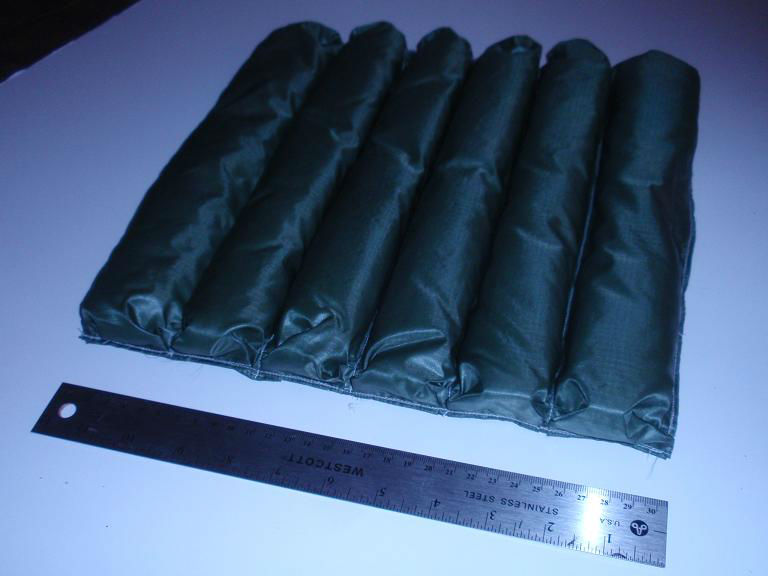
Another way to do baffles is sewn through, but make the inner fabric wider than the outer fabric. Then the down forms baffles with no thin spot between.

Maybe this picture shows it:

baffles

Like for 4 inch baffles, make the inner fabric 6.25 inches wide. Make the ends 2.25 inches longer, and fold on the seams near the corners.

I made a quilt using this and it's worked pretty good.

Maybe this picture is good:

baffles

Another picture:

 - 5

Ryan Smith BPL Member
PostedDec 1, 2013 at 5:27 pm

"Inefficient idea? Is it just easier to do traditional baffle boxes with mesh etc?"

It will be easier & lighter to do traditional baffles I think. It really isn't very difficult, only a bit more work. Ask questions here if you need design help….What temp range are you looking at? What about a sewn-thru Karo quilt? It will have less sewn through portions so less cold spots.

Ryan

PostedDec 2, 2013 at 9:45 am

Hi Jerry,

Interesting, and relatively simple, thank you for the cool idea. Looks like it will lessen the issue, but not entirely solve it?

PostedDec 2, 2013 at 10:05 am

Hi Ryan,

Thank you for the feedback. I think i need to really look into the internal mesh baffle design before thinking of alternatives. Can you or anyone refer me to a good source that outlines steps with pics?

Yeah, Karo seems to be fairly good–i do like my EE quilt (could use it as a template of sorts).

The quilt i'm thinking of making will be a very cold weather quilt (0*F or so), which is why i'm looking to reduce as much heat loss as possible in the seam areas. (it will also have a M50 fabric sleeve sewn on to the bottom, more narrow than the quilt itself, to help reduce convective heat loss).

PostedDec 2, 2013 at 11:51 am

Thinking more about it, with the price of down rising (does that nullify each other out?), it's probably just cheaper to buy a used quilt.

Seems like good but affordable down is slim pickings lately at DIY places also.

PostedDec 2, 2013 at 9:01 pm

Thank you for the links Ryan. Went to check it out, apparently you have to be a member to see the pics. In any case, when i recently went to wilderness logics to see down pricing, was bummed out that they don't have any in stock. Lot's of the other places are a bit pricey i think.

So, did an impulse buy at EE for one of the Rev. X's 0 degree quilts. I figured if i made it myself, i might be able to make it a bit cheaper than the above with the 20% off, but not near the quality most likely.

Jerry Adams BPL Member
PostedDec 2, 2013 at 9:28 pm

thru-hiker.com – 900 fill down $40/3 ounces
questoutfitters.com – 800 fill $10.25/ounce
wildernesslogics.com – 850 fill $7/ounce – should be available this week they say

Tim Marshall BPL Member
PostedDec 2, 2013 at 10:05 pm

The old make gear site and they hiker have directions for Jeremy's quilt. Probably a first read for most of us here years ago ;)

Don't skimp on quality baffle design for a 0*. Jerry's method may be ok to freezing but I'd never try it for 0*. Sewing mesh to both sides is easier and has less head scratching involved. KARO or tubes will work fine, vertical tubes are a great options, tubes should be under 6" wide in my opinion. Make the baffles 3" tall for 0* and put 3.5-4" of down in there.

Or just buy one of my in the sale, oh just ended ;(

-Tim

PostedDec 2, 2013 at 10:24 pm

Didn't know that about wilderness logics Jerry, sooner than i thought.

PostedDec 3, 2013 at 4:36 pm

Don't get why so much effort is directed to avoiding baffles. If something must be sewn to the shell, it might as well be baffles. So they must be sewn to the inner also. When carefully planned, that is no more work than was the sewing to the outer shell, and think of the weight saved.

Extrem Textil sells a 17 gram (around .5 osy) flexible net, but the sheerest panty-hose is just as light and way more stretchy if you have the nerve to try it. And if you choose to go that route, using synthetic batts instead of down, will require less baffles to stabilize the insulation.

The gear nazi says, 'No baffles, no toasty for you!'

PostedDec 3, 2013 at 7:56 pm

Howdy Samuel Sunshine,

Probably only because i didn't have a good understanding how internal mesh baffles were constructed. Never really researched it in-depth before, and for some reason assumed it was harder than it apparently is.

Jerry Adams BPL Member
PostedDec 3, 2013 at 8:04 pm

There is a lot of sewing required for baffles.

And you have to cut all those strips.

And then you have to carefully weigh and stuff the down.

Synthetic much easier.

PostedDec 29, 2013 at 10:18 am

justin,
One advantage of baffles is you can bury the thread to protect it from abrasion. The simple picture for making a baffled quilt is to chalk lines for the baffles, fold one side of the shell back along the first line and stitch 1/4 inch from the folded edge. Repeat for each baffle line and on both shells. I space baffles so I can get my big fist with a handful of down inside the tube. As Tim says, 3 inches height is about right for 0 degrees, so the width depend on you. Cut the baffles 1/2 to 3/4 inch wider than your target height, fold one shell back along the first stitched baffle line and stitch the baffle material to it. I use nanoseeum net from Thruhiker. It doesn't fray and weighs .8 oz. Stitch all the baffles to the first shell. Fold the second shell along its first baffle line and stitch the matching baffle to it. Repeat as needed. Simple. Close one side, stuff in the down, seal the raw side as you go. Done.

PostedDec 29, 2013 at 5:23 pm

Thank you for the advice Vick. Ha, you make it sound easy.

I ended up going the lazy, but slightly more expensive route. I bought a 0 degree, wide regular quilt from Enlightened Equipment. Added 3 oz extra down.

He was having 20% off pre made quilts sale. Honestly, if i had made it myself, with the price of down as is, etc, i wouldn't have saved that much money making it myself.

I like making stuff, but if someone can make something for me for around the same price it would cost me to make it, i would rather just go with the more likely better quality–especially on an expensive item like this.

Viewing 17 posts - 1 through 17 (of 17 total)
Loading...