


Just saw an ad for this on TV. Might not help severe sufferers, but might do for a few nights in the woods:
Topic
Become a member to post in the forums.
Just saw an ad for this on TV. Might not help severe sufferers, but might do for a few nights in the woods:
Look how small they have gotten over the years:
http://www.cpap.com/DisplayNewsletter/WORLDS-SMALLEST-CPAP-TRANSCEND
Dianne, this looks like a new iteration of the since discontinued Provent. I tried and tried Provent while backpacking with no success. And I really wanted it to work. My main problem was getting the 'bandages' to stick through the night. The other problem was that, at altitude, it was hard to get enough oxygen while nose breathing. Mouth breathing wrecks the effectiveness of these devices.
However if these devices have better adhesiveness than Provent, I might try them.
Meanwhile, the best thing that I've been able to come up with are those little plastic inserts which hold open your nostrils while sleeping. They seem to provide some help, if not much.
p.s. it seems to me that if you took the technology of Provent and put it into regular nasal pillows that are worn with headgear–very lightweight–you might have something. At least for lower altitudes. Any future entrepreneurs can send me a check at a later date.

My doctor said if I just sleep on my side it reduces apnea frequency. I just use CPAP when 110 VAC is available. Between the two, my risk is much reduced.
I have heard that exercises can strengthen muscles which reduces apneas. Like blowing up balloon, saying "oooo" and "ahhh" over and over, or playing Digideroo. My doctor says CPAP is the only proven effective method. Too bad they don't work on exercises and see if there is something that works. Since there's no money in it, there's no money for such research.

I'd love to get the Transcend II battery-powered CPAP machine, but $450! Yikes! Maybe when my present machine wears out I can get my medical insurer to pay for the Transcend II as a replacement. I hope.
>"Too bad they don't work on exercises and see if there is something that works. Since there's no money in it, there's no money for such research."
Or just lose weight. It wouldn't solve everyone's sleep apnea, but it would help most and solve many people's issues. My wife whacks me and tells me to roll on my side a lot more in winter when I often carry an extra 15 pounds than in the summer. Alas, I can't even claim spousal abuse as she is a board-certified in sleep medicine so it is free medical care. I've also learned to sleep with my chin up. She reads several sleep studies each week (they go for $600 PLUS hospital fees for the 8-hour session) partly because the patient needs a diagnosis to get a prescription for a CPAP machine. But, geez, if the patient is 80 pounds overweight, always tired, his wife says he snores, and stops breathing at times, couldn't that be enough to make a diagnosis and fund the machine?!?
Really cheap fix without any dieting? Duct tape a tennis ball between their shoulder blades. (Forces them to sleep on their side). Multi-purposing that for UL BPing: stitch a pocket in the BACK of sleep shirt. Tuck your hiking shoe in that pocket. You WON'T sleep on your back.
DavidG: You might not have to wait for the old one to die. A friend figured out he's allowed a new one every 2 years. 2 years out, his was still working, but he got another so it could live at his remote 24/7 work site and he wouldn't have to travel in between. YMMV.
Also, if you specify that you have these issues while traveling and while backpacking, maybe the new prescription could (1) come sooner and/or (2) specify a battery-powered unit.

"Meanwhile, the best thing that I've been able to come up with are those little plastic inserts which hold open your nostrils while sleeping. They seem to provide some help, if not much."
Was diagnosed with mild to moderate sleep apnea. But it was AFTER I lost the weight that I tried the stick-on Breathe strips over the nose. No longer have that dream where I am under water and trying to get to the surface for air. Also, a hiking partner told me that the snoring is greatly reduced, hardly noticeable.
But have not used the strips while backpacking alone. This summer had some issues which the Doctor felt were due to hypoxia, lack of oxygen taken in. Will be using the strips from now on while backpacking. Guess it depends on where the apnea is originating from. If keeping the upper nasal passages more open helps, then I think the strips help. I always sleep on a side and breathe through the nose. It is interesting that if my head is kept warm enough, the nose clears before sleep, but the head must be kept that way, or the nose stuffs up, and I start breathing through the mouth and usually wake up.
Not sleeping on ones back does not always solve snoring and sleep apnea. My wife snores while sleeping on her side, and still has sleep apnea while sleeping on her side. She was diagnosed with sever sleep apnea. Loosing weight does/did help.
David T: Thanks for the tip. I will check my insurance, since I've been using this machine more than 6 years. I asked for a battery operated one when I got it, but was told there was no such thing (at the time).
This is so new that it hasn't even been released yet. cpap machine that weighs 10 ounces (!)–no humidifier though. You get one night with the battery. But they say that you can bring along more battery packs and swap them out for more nights. I don't know how much a battery pack weighs.
hdmusa.com the z1.
Pretty cool. But there's no way I'll be able to afford it…
edit: the batteries weigh another 9 ounces…ooof. So now it's a bit heavy. I could see using this for a first night at elevation to get you over the hump of acclimation, perhaps. Or, spend a night at Tuolumne meadows using this machine, for example, then leave it in your car. Or, if there's a way to recharge the battery with solar.
Become a member to post in the forums.
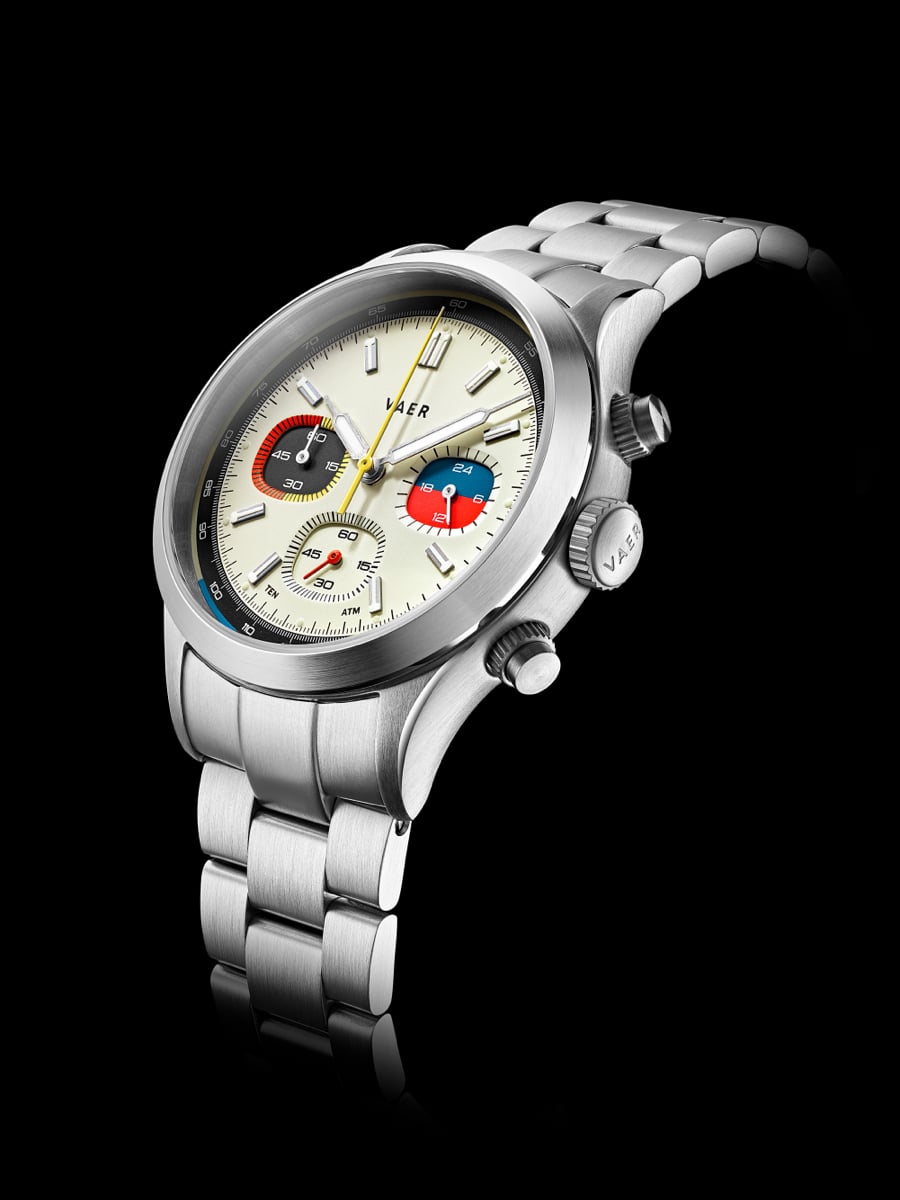 Retro Racing Character, Built for Everyday WearDrawing on the colorful racing chronographs of the 1960s and '70s, the RS1 Rally pairs vintage motorsport style with the durability expected from a Vaer. Its 40mm case houses a Japanese VK63 meca-quartz chronograph movement, complete with stopwatch functionality and an integrated tachymeter scale, while contrasting subdials give the watch its distinctive retro character. Sapphire crystal, 100 meters of water resistance, a screwdown crown, and strong BGW9 lume make it far more than a style piece. At under $300, it's an easy pick for the car enthusiast or chronograph fan.
 © Beartooth Media Group Inc.
 Loading...