"In this case the location was off by 1.5 km. Perhaps as a result of echo/bounce/or?? And I assume that had they left the device on S&R would had gotten their correct location from another of the satellites overhead (doppler?)"
I don't think that we have all of the facts, and rushing to conclusions from a brief nontechnical news article is problematic.
I kind of got the impression from the story was that one fix was transmitted successfully down below. Then, when they got into trouble, they tried to send the SOS message. However, if the view of the sky was semi-blocked, the device could not get it fully sent. Sometimes those gadgets have to send the SOS repeatedly for a few minutes before it finally gets to the bird. Then, they almost need to keep it running. Most of the time, the device needs to send that SOS and then stay in roughly the same location until help arrives. As soon as the rescue dispatcher gets the initial call, they can continuously track the device. If they see that it is moving away at a normal speed, then they often abort the rescue. If the device is powered down, then they don't know what to think.
"So I am curious how often this happens, and if it is more prevalent with SPOT versus other EPLBs. I would think that coordinate acquisition from the GPS constellation and the secondary satellite's "doppler" fix would be very similar, regardless of device."
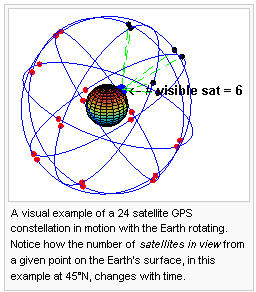
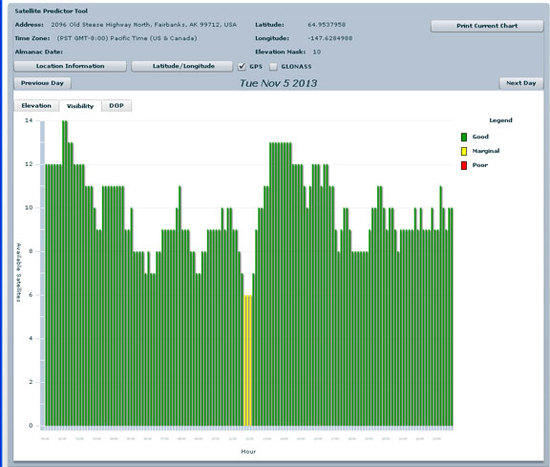
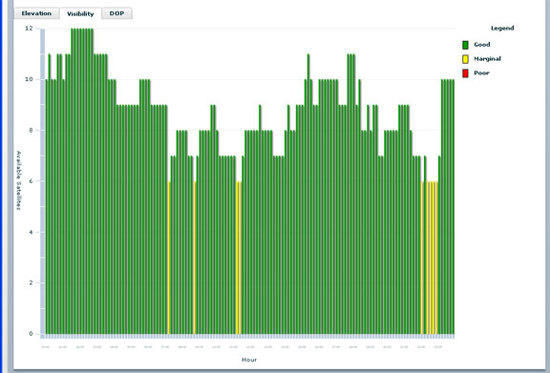
Well, again, the user needs to have a firm grasp on what satellites are doing what, and where they are in the sky, and where you might need to move to for improving the chance of the message getting out. That's the problem with a one-way message. The user never knows whether it got out intact. Now, if you are in an emergency and you are stuck in a wind storm up on the side of a mountain, you probably do not want to have to think about where satellites are in the sky. You probably can't even tell directions up there.
The other thing is a simple GPS weakness, and it can affect virtually all GPS receivers at some time or another. That is a GPS Blunder. It can spontaneously come up with a position fix for you that is totally bogus. It might show you as being a hundred miles away, traveling at 400 miles per hour, and you are at 25,000 feet elevation. This doesn't happen very often, and it happens less and less with some extra intelligence that some of the newest receivers often have. The human user sees a totally bogus fix, thinks about it for a few seconds, and then says, "That's B.S. That must be a GPS Blunder." So, the user shuts down the receiver, counts to ten, and then starts it back up. When the new fix comes up, it is unlikely to have the problem still showing. I think that Mil-Spec receivers have other features that can help eliminate the problem even more.
With two-way messages, the user can send an SOS and then wait. Ten minutes later the rescue dispatcher sends you something like, "What is the nature of your emergency?" Then when you send back, "Broke leg Can't walk Need help" the rescue dispatcher can make some good assumptions about what is really going on.
Last year, a person that I know had all of the standard symptoms of HAPE and HACE setting in when backpacking with a group at high elevation. Eventually, a stranger came by with a Spot device, and eventually the SOS call was sent. Then the stranger took his Spot device and left, once they _assumed_ that help would be on the way. Well, the dispatcher got the SOS coordinates, but then they saw the device's coordinates were moving away, so they _assumed_ that it was a false alarm. Eventually the person was rescued by helicopter, no thanks to the Spot call.
–B.G.–