Topic

.34 ounce Cuben over 10d nylon

  • This topic is empty.
Viewing 20 posts - 1 through 20 (of 20 total)
Aaron Sorensen BPL Member
PostedNov 2, 2013 at 1:02 pm

I am looking at making a "minimal fabric/weight" bivy/tarp.

A trekking pole supported tarp that you can sit up in that comes down to your waist area and wraps around you as a bivy on the bottom.

The front will have a standard split opening door that comes down a ridge

I will also run a cord as a ridge from the top back, past my feet and use a clip from the bivy area to the cord so I can have ridged sides (and staked out) for wind and rain protection as well as ventilation.

I am hard on my gear. I have a .75-ounce cuben tarp but do not use it because the tear and stretch resistance sucks.

This got me thinking.
What if you sew .34 ounce cuben to 10d nylon?
The 10d would just be 4" strips that go around the parameter of the cuben and have 3 other 4" pieces form an "X" with 2 of them and run the ridge with the 3rd.
The 3 strips would be sewn to the outer parameter of the 10d fabric.

This way all of the pressure from every angle there is tension from the stakes and ridge would be put on the 10d nylon.

When the cuben shrinks some, you would just need to sew a fold in the 10d to compensate.

PostedNov 2, 2013 at 1:42 pm

Aaron, I'm confused by several things in your post.

First, you say that you are so hard on your gear that a 0.75 oz cuben tarp is not tough enough. I'd note that the tear strength of 0.75 oz cuben is substantially higher than most other ultralight shelter materials (ie, silnylon). It sounds like you are saying that ultralight gear is not for you. Why are you considering using 0.34 oz cuben and 10d nylon if you are too hard on your gear to use 0.75 oz cuben? If 0.75 oz cuben is too weak and stretchy for you, maybe you should consider some kind of packcloth for your project.

Second, I am confused about the stretching and shrinkage of cuben that you describe. I have never seen this or heard about it. In your experience, 0.75 oz cuben stretches excessively and 0.34 oz cuben shrinks so that nylon sewn to it would need to have creases to compensate? I've made a few things from cuben, including shelters, and I have never seen or heard of this.

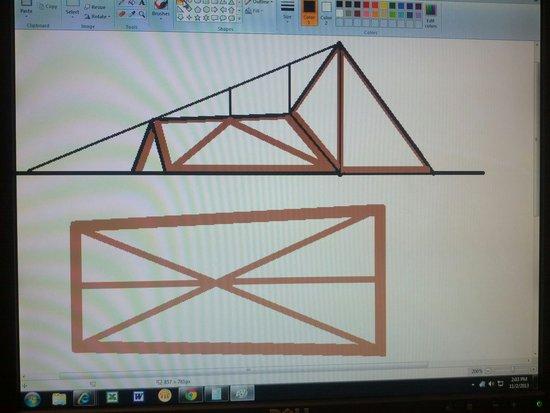
Third, your brief description of your shelter/bivy design is unclear. Could you post a diagram?

Aaron Sorensen BPL Member
PostedNov 2, 2013 at 2:16 pm

Cuben will shrink a little in sunlight.

If you pull cuben to tight (stretch) it pulls at the stitching and tears little holes in it.

If you have a 10d boarder, the pull and stretch would only come from the 10d.11

The 10d would be the brown color and the cuben the white.

PostedNov 2, 2013 at 3:18 pm

At a guess I would say that mixing nylon and Cuben isn't a good idea.
That is because you will end up with the problem of both and not the benefits of either.
basically making all those strips you will have lot of extra material (folded) and therefore extra weight (by a lot I mean in the UL sense..) creating many possible failure points and having uneven stretch/shrinkage all around.
just a guess though…

PostedNov 2, 2013 at 4:18 pm

Cuben has little or no stretch; nylon has significant stretch. So layering them together doesn't seem like a good idea, as the cuben will still take the load anyway because the nylon will never have a chance to stretch enough to take significant load. If you want to reinforce cuben, use more cuben. If you want to reinforce nylon, use more nylon.

PostedNov 2, 2013 at 5:27 pm

Sounds like you just need at least a 1 oz cuben or better. The weak link in cuben is the mylar film primarily, and the mylar in cuben .75 and below is pretty thin. 1 oz and higher, starts to get noticeably thicker which should help with some of those issues.

Speaking very theoretically, it would be really nice if a company decided to sandwich/bond the dyneema or spectra threads in not mylar, but something much tougher like UHMWPE film (or even polycryo). If they used the UHMWPE film, they also probably wouldn't have to plasma treat the dyneema/spectra threads first, but rather lightly/carefully calender it. They are both essentially the same material (but with different molecular orientation), and so they should bond easily with each other (with a little heat and a lot of pressure). You just have to be very careful with the degree of heat. In my tests with said film, if you over heat it, it loses some strength.

But again, the above is speaking very theoretically. Mylar is definitely cheaper than UHMWPE material, BUT plasma treatments make Cuben a lot more expensive.

But, personally speaking, i would pay a little more for a truly bombproof and still quite light material. I suspect many others here would too. Perhaps we should put together a giant petition and bring it to one of the cuben making companies involved with cottage companies like Zpacks and ask them en masse to look into such alternatives?

PostedNov 2, 2013 at 5:29 pm

"If you pull cuben to tight (stretch) it pulls at the stitching and tears little holes in it."

I recognize that innovation is born from new ideas but, considering your admitted rough hand with your gear, is there a particular reason you are putting stitches in your cuben as opposed to using full taped construction?

PostedNov 2, 2013 at 6:00 pm

Aaron, thanks for the diagram. Your design is unique, and I understand it better now that you provided an image. It is similar in some ways to some prototype Mountain Hardwear tent/bivys that were basically a 1/3 size dome tent over the head end (just large enough to sit up in), and a waterproof bivy extending out one side.

I still think you have a basic conflict that needs to be resolved: you say you are very hard on your gear and 0.75 oz cuben is not tough enough, but you want to use 0.34 oz cuben and 10d nylon. I think we must conclude that you have only two options: you should change the way you use your gear (baby it), or you should accept that you need heavier materials. If you reject both options and choose to use light materials and treat them roughly, your time-consuming project will be a waste. This seems obvious, but your post suggests that you haven't resolved this.

If you decide that you want to use light materials, I agree with others: sewing is a terrible way to seam 0.34 oz cuben (it will lead to failure of the seams), and a complex patchwork design of intermingled cuben and nylon panels is unwise.

After much use of cuben shelters and bivys, I have never observed shrinkage of cuben, and I'm not convinced that it happens to any measurable degree outdoors, even in direct sunlight. The component materials in the cuben laminate don't shrink until a bit above 100C, and even in direct sunlight, a cuben bivy or shelter should never reach that temperature. You don't need to account for cuben shrinkage in your design.

Tape or bond the cuben panels together, and minimize attachment of cuben to nylon. Where cuben and nylon must be attached, bond (or tape) extra layers of cuben over the cuben edge (don't just roll to make it thicker), then sew to the nylon.

Aaron Sorensen BPL Member
PostedNov 2, 2013 at 6:49 pm

The only other way I could imagine this may work is to use tensioners from the stake to the nylon web and tension them tight.

Then lay the separate cuben piece over it that just has a 10d perimeter and do a separate tension to it.

I would then have to have strait lines off the top of the poles so I could have a single piece of fabric and it could stretch and keep equal tension thoughout the tarp.

I don't like this.
I may just do a seperate 3/4 bivy bottom and something like this, but about half size.

http://www.zpacks.com/large_image.shtml?shelter/tarps/cuben_side_l.jpg

Dustin Short BPL Member
PostedNov 2, 2013 at 8:18 pm

Why 10d? Why not just reinforce with strips of cuben (ideally a higher weight than .34)? Bond with glue/tape and you maintain the strength where you need it along the hems and ridgeline while lightening the weight of the panels.

If you can only sew and not bond, you may be SOL though. It may make more sense run spectra type cord between your points (i'm assuming you've got beefy stakes and such to handle the tensions we're talking about) in the desired X shape, then somehow anchor that frame to your tarp. Clovehitching may work, and that creates a "frame" that you drape the tarp over.

I considered doing something similar using vectran "threads" bonded to the cuben between all the guyouts. I envisioned a mesh of vectran that would increase the tension strength. The plan was ultimately scrapped due to poor time, fiddle, cost, weight, and overall complexity issues. After all that, I'm still not sure it would have been any more useful than a regular tarp. It looked cool in development mockups though!

PostedNov 2, 2013 at 10:13 pm

"Cuben has little or no stretch; nylon has significant stretch. So layering them together doesn't seem like a good idea, as the cuben will still take the load anyway because the nylon will never have a chance to stretch enough to take significant load. If you want to reinforce cuben, use more cuben. If you want to reinforce nylon, use more nylon."

+1

Nylon also expands as the temp drops, adding to the above problem.
It is about differing 'coefficients of expansion,' and 'moduli of elasticity,' if I remember the terms correctly. Maybe the engineers will comment, but Paul stated it clearly above in plain English.

Sometimes the MYOG Cuben seam threads remind me a little of the old threads on Thru-Hiker about different synthetic insulating materials. The more you read, the more confused you get. Maybe the issue is just too complicated for an informal discussion.

Am thinking seriously about making a Cuben freestanding tent, but am held up by fear of putting in a lot of time and having the seams fail. Corresponded with Judy Gross of LHG at some length about this, as she has first hand experience with making Cuben tents and was kind enough to share; but questions remained.

Not sure if bonding a Cuben strip to Cuben where the seam will be will hold stitching that much better. Thought about bonding in a strip of spinnaker or paraglider nylon, treated to greatly reduce elasticity (and expansion, but not so much), in the Cuben sandwich. But concern remains about Paul's point. Maybe a polyester strip of sub one ounce spinnaker or paragliding fabric would be better due to the lack of expansion. Bottom line, the sandwich must be able to hold the stitches securely, and wonder if bonding in some kind of woven fabric is needed for this purpose.

Also do not like the foaming of urethane adhesives, even the Hysol 2-part. Am thinking about trying out West System G/flex epoxy, that does not foam/expand while curing, and therefore clamping the sandwich along the entire seam might be dispensed with in favor of just a good rubber roller – a lot less work. Will post if there are any good results testing the epoxy.

Also fear to leave the seams unstitched as shear strength is not enough for me. Don't want to seams to be vulnerable to peeling apart either.

These are all issues I'm still having trouble with, even after studying the threads posted over the last five years. Any helpful comments would be appreciated, and I think would be helpful to the OP as well.

Thanks.

P.S. Just bought some 2 oz Xpac material from Rockywoods that is described as 30 denier nylon fabric bonded to PET film. So apparently you can bond nylon to PET, or Mylar, but maybe not as a DIY project. (It is a somewhat stiff and crinkly sandwich, but am considering it for a pack due to the very high HH, claimed to be 10,000mm.) Sorry to confuse the matter even further.

PostedNov 2, 2013 at 11:04 pm

Samuel, have you followed Lawson's thread about his shelter material? I haven't followed it closely, but that material sounds similar to the 2 oz DP laminate you have. Somewhat heavy for a shelter, but might be easier than cuben to make secure seams, as you said.

I'd be interested in any experiments you do with cuben and flexible epoxy. Lawson remarked in the past that he found an alternative bonding agent(s) to hysol that gave a stronger bond, but he exercised his right to keep it a secret to protect his business (I'll refrain from sharing any opinion about that). Hysol can be a hassle to use, and it would be great to learn of an alternative.

PostedNov 3, 2013 at 3:14 pm

Collin,
I've been following Lawson's posts for years, but missed the comment about the undisclosed adhesive. Will definitely post, and soon, if I find something better than the Hysol.

William,
Kind of assumed that stick-ons would not bond as well as the best glue available. Did try a bunch of different sail tapes and they were all lacking. If a fabric tape could be solidly bonded to the Cuben, it should keep the stitch holes from opening, and disperse the force created when pressure is applied to the seam – key word being 'solidly,' or a strong bond. The Zpacks patches are too small to consider for a bunch of tent seams, and their tape is Cuben, not a woven fabric.

Hence my interest in whether two layers of bonded Cuben would hold a seam as well as a fabric like Dupont 6,6 30 denier nylon. Am kind of stuck until a strong bond of something, fabric or Cuben, is found. Then I can test which holds the stitches better, and look at weights also, of course. Will post if come up with anything that looks promising. Really want to do this tent that has been done on the drawing board since 2011, and don't see the 15-20 denier coated nylons coming on the MYOG market anytime soon, so putting in some more time experimenting with Cuben bonding seems like the only direction to go right now.

If I get the tent done, and one of the MYOG sites introduces a 15-20 denier coated nylon with a good HH + around one ounce/sq/yd, will shoot myself in the foot to make it official. But then again, with the Cuben there is no sagging, and no water absorption, so all good if I can get strong seams and a taut canopy. A big if, but making progress.

The folks in business are entitled to their secrets, but my business is in another area, so will share anything promising. And without remorse, as I don't see MYOG ever being a challenge to even the smallest cottage shops. We are too nuts for that to happen. If we can get some good ideas out there, thus making them unpatentable, we will have kept competition open and done our fellow trekkers a service, IMO.

Hiking Malto BPL Member
PostedNov 3, 2013 at 3:22 pm

I suspect you will find a mid design will weigh less, handle condensation better, will be quicker to setup and have less stress on the material. I played around with design like you are proposing and ended up with an offset mid design using .74 cuben. With a full net inner with cuben floor, the combo weighs in at 18 ounces. For winter I will use the outer with a bivy.

Aaron Sorensen BPL Member
PostedNov 3, 2013 at 8:57 pm

My only reasoning with using nylon is for the stretch.
Thinking if you make the tarp taunt from the nylon with the cuben over it, then the cuben can have a lot less stress on it.

PostedNov 4, 2013 at 1:19 pm

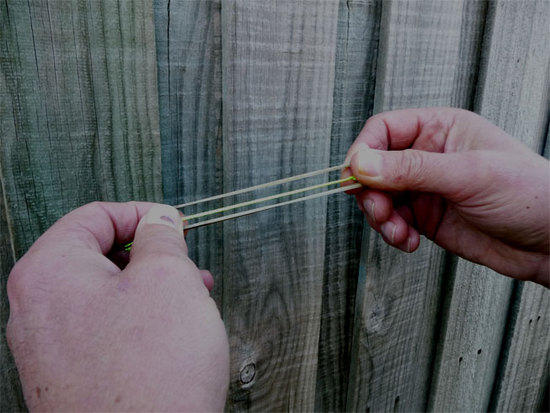
I think that what some are trying to explain is this :
If you stretch the nylon (needs to be cool and or wet) over Cuben , like this :
Nylon stretched

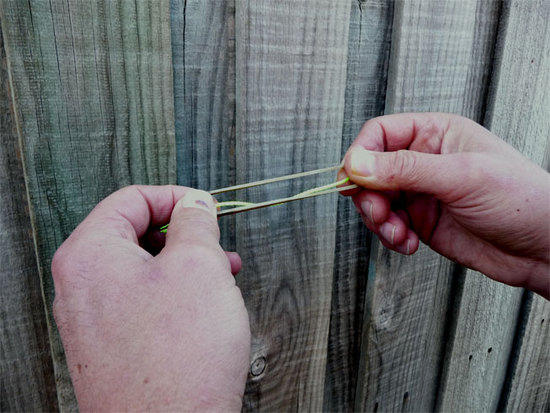
Cuben (the yellow string) will look like this when the nylon shrinks :
nylon shrunk

PostedNov 4, 2013 at 4:45 pm

Or you can start with the nylon at its least expanded mode. Then when force is applied, all of it will be on the Cuben. Think that was what Paul was saying.

Agree that either way, it doesn't work. So how does the nylon/PET laminate in Xpac fabrics work? One reason could be that in the lighter versions there may be Mylar film (PET), but no dyneema fibers to reduce stretch. Also, the lighter Xpacs appear 'all lacquered up,' for want of a better term, on the PET side. The nylon spinnaker and paragliding fabrics can come treated to have no greater elasticity than Cuben. Am sure there must be other reasons also.

Which makes me wonder if the lightest available nylon spinnaker could be mated with Mylar without creating problems related to different expansion and elasticity. Suppose you could try it with the lightest available space blanket material and the spinnaker. Come to think, that's what Jack Stephenson tried over 25 years ago in order to get low condensation on a single wall tent. The effort was abandoned, at least in part because the two could not be well bonded, and frequently came apart in use.

Since stitches will not hold in the very thin Mylar, adhesive is required, and that was Jack's problem. How much sense does it make to go to great lengths to try to get a stitchable and waterproof nylon/mylar laminate for tents when there exist good all nylon alternatives with PU and SIL coats that are much easier to work with. Note that nearly all of the tent companies going to lighter fabrics have turned to lower denier woven nylon and polyester rather than Cuben.

But have to admit I am impressed with the Xpac T2 that Rockywoods is selling.
Too heavy for a tent at 2 oz, but if the water resistance is anywhere near what is claimed, it might work well for a pack. Doubt if we will see a 'T1' (One oz nylon/mylar sandwich). What is the big deal with mylar anyway? Are there not high HH PU and SIL coatings that are better and more flexible for tents? Admit that I've always looked at Cuben more critically than many, but it's not been without trying to think of ways to use it effectively.

Viewing 20 posts - 1 through 20 (of 20 total)
Loading...