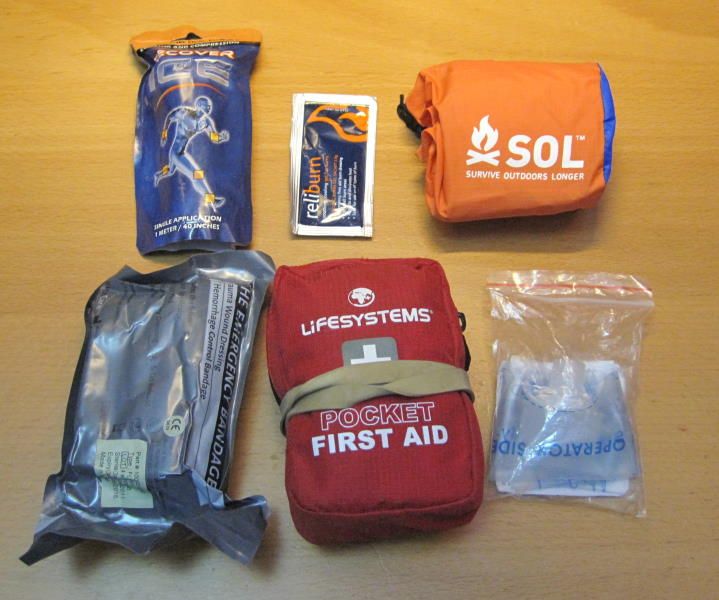
First, take a wilderness first aid class. The most important component of a first aid kit is what's between your ears (requires an investment for the class, but no extra weight). The class will teach you how to improvise a lot of stuff. Examples: splints from trekking poles, support for injured knee from CCF pad, etc. The difference between WFA and standard/advanced first aid is that WFA teaches you how to stabilize patients when there may be several days before rescue, while the normal first aid class assumes that 911 is just around the corner.
Second, do some risk assessment: Consider the statistical chances of encountering some of those fun mass disaster scenarios. Do you really need to be prepared for an event with a 1% chance of ever happening? If it should happen, can you improvise from your and others' normal gear? The chances of injury also vary with size of party. The larger the group, the greater the chances of something going wrong. However, everyone doesn't need to be prepared for all the people in the group; instead each person should take a few personal items (necessary medications, blister care, a few bandaids) and one person should carry a larger group kit. As mentioned, length of trip and distance from trailheads are also factors.
Third, because of your health issues, you obviously will need a larger kit than many. For instance, I do need quite a few bandaids and some antibiotic ointment because I'm prone to hangnails which invariably get infected. I also need to take hand cream to help prevent those hangnails. For me, that's generally a nuisance. For you, an infected hangnail is serious stuff!
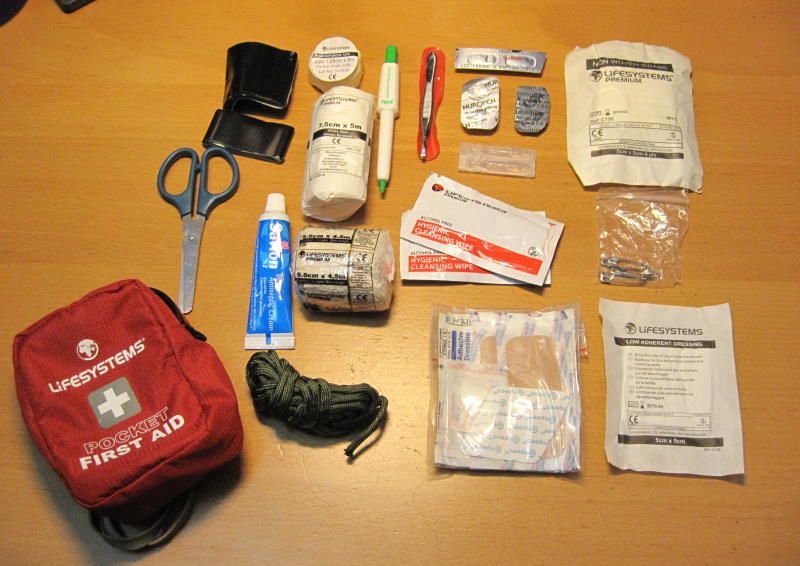
The same technique used to determine whether other gear is essential can be used for your first aid kit. Mark each item with a tiny piece of masking tape and remove the tape when you use the item. After a few trips, you'll have a better handle on what you need to take and what you can leave home, or at least take less of.
It's a good idea to go through the FAK at least once a year–remove expired meds, bandages whose wrappers are turning yellow, etc. I like to take foam veterinary wrap along instead of elastic bandage–with a little duct tape stiffening vet wrap works just as well and is a lot lighter than elastic bandage, and it also can be used for the dog. However, after a while, under heat and pressure the foam sticks together permanently, so I replace it every year. At that time you can also once again re-assess what you really need. If something has been sitting there unused for several years, you probably don't need it!
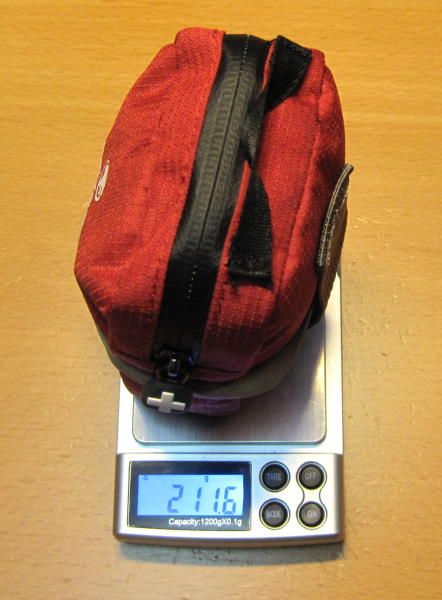
If your FAK includes the meds for your diabetes and RA, the weight might not be too far off.