Topic

Trail designs 12-10 stove question

  • This topic is empty.
Viewing 10 posts - 1 through 10 (of 10 total)
PostedAug 30, 2013 at 6:19 pm

Just got got the caldera cone & 12-10 stove from fellow BPL member.
New to the cone and stove so wondering what the typical fuel "charge" is for the 12-10

I just did a test boil with tap water no wind and got a boil in 5:38 with SP600 cup. Fire burned out at 6 1/2 minutes .Used 20ml of denatured lacy.

Is this normal burn boil time? How much fuel should I use for better burn time?

PostedAug 30, 2013 at 6:31 pm

Kevin,
There are at least two ways to simplify the use of a 12-10 stove.

The concept is to fill the stove to just below the holes you can see on the inside cup, boil your water, then collect the unused fuel. No measuring, no waste.

A “snuffer”, made from an aluminum muffin tin, shaped over the bottom of a soda can and trimmed square, is used to kill the flame.

Then, once cooled, you can pour the alcohol out of the stove into the snuffer, and then into the fuel bottle.

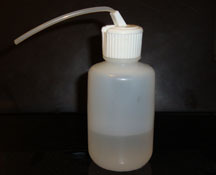
Or you can get a Nozzle Cap from PackaFeather , or make your own, and aspirate the fuel directly back into the fuel bottle.

Fuel Bottle

I find an o-ring that fits Inside the PackaFeather cap to get a tight fit to almost any bottle that accept the threads on the cap.

PostedAug 30, 2013 at 7:01 pm

This Thread has info on burn times and fuel used.

You have to take into consideration water quantity & temperatures, the type of alcohol, as well as ambient conditions if you want to compare apples to apples.

Adam G BPL Member
PostedAug 30, 2013 at 7:17 pm

I really like the packafeather cap. It definitely helps with conservation of fuel. I just use the lid of the stove for a snuffer.

I've used the stove with the Caldera cone on parts of the AT and the JMT. Like any stove, the stove varies quite a bit with ambient temperature and altitude, so it's hard to say how powerful it is. I managed to boil water with maybe 1 oz of fluid at 12,000 feet in about 10 minutes. At sea level, it takes closer to 5 to get to a very strong boil.

Bob Gross BPL Member
PostedAug 30, 2013 at 7:20 pm

"At sea level, it takes closer to 5 to get to a very strong boil."

Five ounces or five minutes?

–B.G.–

PostedAug 30, 2013 at 7:21 pm

"I managed to boil water with maybe 1 oz of fluid at 12,000 feet in about 10 minutes. At sea level, it takes closer to 5 to get to a very strong boil."

Water will boil faster (at a lower temperature) at elevation…less pressure and all that.

If there is a difference in boiling times it is most likely related to the temperature of the water you started with. Snowmelt in the mountains versus "bath water" in Kentucky.

James Marco BPL Member
PostedAug 30, 2013 at 7:52 pm

Over about 30 burns, averaged, I get 16oz of water(2 cups) at 40F to boil (210F) with just over a half ounce of SLX (50/50 methanol/ethanol) in ~6 minutes (5.42 avg. I seem to remember, but this varries a lot depending on air movement.) However this is fluid ounce, not weighed ounce. 1 fluid oz of alchol weighs about .8oz due to the fuel density. I was using a CC and a K-Mart grease pot with a heat exchanger pressed into the bottom.

With a vent closer/"simmer" attachment to the stove made from a piece of aluminum foil, it is just under 1/2oz of SLX and around 8min to 210F. The best usable stove I found was a slow burner at about 3/8oz fuel for 12min. Other stoves are more efficient in dead air (about 1/3oz to 210F in ~20 min), but fail to boil 2 cups in the field…

Note methanol burns a bit different. I would get about 5/8oz HEET and about 5:30 minutes.

Adam G BPL Member
PostedAug 30, 2013 at 8:07 pm

At sea level in the midwest, it took me about 5 mins to boil the same amount of water (~2 cups) with around 1 oz of denatured alcohol. It was a very unscientific test, with sea level being around 70 degree F and 12,000 feet probably being around 50-60F. I guess my point wasn't really made clearly. I was trying to convey that the stove performs very differently in different locations.

With the packafeather cap, I just poured quite a bit of fuel into the stove, let it burn, snuffed it, and then sucked up the rest. I'm not disciplined enough to carefully measure it out, especially since I found that boil times varied quite a bit based on outside conditions. I know some people claim to have figured out exactly how much fuel they need per boil, but my experience is that in the Sierras at least, that isn't reliable at all.

Viewing 10 posts - 1 through 10 (of 10 total)
Loading...