Topic

How do you photo guys do it?

  • This topic is empty.
Viewing 20 posts - 1 through 20 (of 20 total)
PostedJul 27, 2013 at 6:25 pm

Probably way off topic, but I expect some of the folks who post here may be helpful and I'm not part of any photo message boards.

Early yesterday morning, I arrived at the summit of Rainier feeling pretty good about myself. The sun was about to break the horizon and I had lugged my Nikon D7000 up to memorialize what for me was a significant accomplishment, and to try to capture the stupendous views.

I fished my camera out of my pack and it was dead on arrival. I've now dropped it off with the local camera store from whom I acquired the camera and it will get sent back to Nikon. Things do not bode well for warranty coverage. Sadly, the camera store guys noticed (correctly) condensation on the rear monitor. I had, a couple of times while on the mountain, noticed condensation on the filter, even though the camera lens cap had been on. I kept it in a waterproof stuff sack in my backpack. Some of my clothes or gloves certainly became damp at times during the trip.

So, here I am looking at the likely prospect that I will have to spend about $1000 replacing a DSLR that was billed as robust. So two questions: (a) what do the photo guys do to protect their equipment in the backcountry; and, (b) any helpful suggestions for carrying the camera in a way that it is accessible and protected while mountaineering?

Thanks so much in advance!

Bob Gross BPL Member
PostedJul 27, 2013 at 6:43 pm

First of all, let me state that I also lost a camera under similar conditions on Mount Rainier. However, that was in 1977, and it was a film camera. The lens lived. The body did not.

Different modern DSLR bodies have different degrees of waterproofness. If a DSLR is billed as robust, that means nothing at all in a court of law. Many modern DSLR bodies are billed as weatherproof, but that kind of makes the assumption that once you get it out of the weather, you will dry it out quickly. From your description, it sounds like your camera was invaded by water vapor, not necessarily liquid water. You can get desiccant packs to keep in your camera case.

Most serious outdoor photographers like the late Galen Rowell used cameras that were small enough that they could carry them inside the shirt or in a belly bag that could be tucked up underneath a parka, at least in a similar mountain situation.

Once I've gone much above 12,000 or 14,000 feet, I tend to try to leave the good camera in a safe place and go up with a smaller simpler compact camera.

Also, I guess you know that lots of camera bodies will survive, but the battery won't. So, store a spare in a warm shirt pocket and be prepared to swap it in at a moment's notice.

–B.G.–

PostedJul 27, 2013 at 6:53 pm

No experience with mountaineering but I've brought my DLSR with me all kinds of places and not had any problems. I've got a Lowepro case that has a rain cover that I carry my D300 in when I'm worried about the weather. I've used it hiking, on the beach, and in a duck blind and never really worried about my camera. The case is heavy but as expensive as the camera and lens are I deal with weight.

Adam

kevin campbell BPL Member
PostedJul 27, 2013 at 9:23 pm

I've lost plenty of cameras from water & other casulties over the decades. However, I've only had one Professional camera body bite the dust at a gig & it was a engineering mistake that was covered on warrenty & I was saved with having a backup body already around my shoulders. For professional gigs, I take the professional stuff, the best professional gear money can buy at any given moment, as you can't afford to mess up a paid gig due to equipment failure. I bring backup to everything also, and I mean everything. Some stuff, in triple. You pay more for pro level stuff, but it will likely survive and shoot what it is suppose to shoot. With that said, NO equipment is bullet proof, thus the backups & backups to backups. But, who wants to haul all the jazz around with you on a fun trip. NOT me! If you got the dough, you pay a photographer like me to take the photos on such gigs! I usually have 3 bodies on me at all times, one in hand & 2 hanging from my hip belt QUICK draw belt.

If it is that important to get the photos, pay for pro gear. Do some deep research on cameras and gear & how it applies to what you want to do with that gear. When ever I get new gear, I do weeks, if not months, of reading and research before I drop the ball. Read, read, read, and read some more. Then you'll be the authority on the subject & you'll have confidence in your new equipment. It amazes me how much you can learn on forums about anything on this planet, and camera equipment has some pretty sweet forums & review boards. There are loads of photographer out there willing to help you with direction on this very subject, I'm sure. It is all already out there to soak in.

In the end, get the best gear & have back up in hand IF you want the shot. It is that simple.

Eric Lundquist BPL Member
PostedJul 27, 2013 at 9:39 pm

When I got my first real camera, a NEX-5, we bought a Square Trade warranty for it as well. I can’t recall what we paid for the extra protection at the time, but they offered accidental damage protection and will repair the camera or give you the original purchase price of the camera. I’m not worried to take it out so long as I could retrieve it to send it in for the warranty and almost 3 years later, when the warranty is due to expire, I see that the same camera’s are quite cheap if I needed to fund the replacement myself.

Roger Caffin BPL Member
PostedJul 27, 2013 at 11:47 pm

Keep it warm – that helps.
Carry it in a waterproof pouch – that helps too.
Keep the pouch inside (under) my poncho if it is raining.
Assume that water is pervasive anyhow.

A lot of mid-range cameras (like my G15) are actually 'sealed' with a thin O-ring. Supposedly splash-proof. This is the final protection for my cameras. But I try to NOT rely on it.

Cheers

TJ Christopher BPL Member
PostedJul 28, 2013 at 1:25 am

In truly humid conditions an airtight (because water proof doesn't equal water vapor proof) container with desiccant packs would provide the most protection. You might get away with tupperware that has a tight seal for not too much of a weight penalty. Bulky of course.

Desiccant packs should be checked to verify they aren't already saturated before use, because they will absorb moisture just sitting there. Silica gel grains often used as desiccant can be refreshed by drying them out in an oven, and some will change color to reflect how wet they are.

Avoid changing lenses to prevent moist air from entering the camera body, especially when the camera is cold and the air is warmer.

PostedJul 28, 2013 at 5:26 am

Why do you think it got wet?

It got in with some wet/damp stuff and then this warmed in your pack to make water vapor?

I haven't really worried about keeping a camera warm. I try to minimize changes in temperature.

I do worry about the camera being wet/damp when put away. As pointed out water resistant isn't vapor proof. Drying the camera isn't too hard. Drying any camera bag or pouch is. So drying the camera before it is put away is a good practice. Water resistant camera or no.

If it all stays at about the same temperature as the air, I think this minimizes vapor. If the bag gets puts out in the sun or otherwise heated, I think this increases the chance of vapor.

As far as putting the camera under a warm coat, the plastic bag is a good idea and should work as well as using a plastic bag for the camera when you take it in from the cold to a warm house or etc.

I am with the fellow that mentioned he uses a bag for his camera. I suppose I could put the camera straight in the pack as it should be safe enough there. However, the pouch lets me wear the camera on my belt. It protects the camera from rapid temperature changes and I put other stuff in there as well.

Yeah, camera boards will have comments about things like this. Although it is a little different situation, consider adding 'aquarium' to your search.

Bob, what is the reason you don't take the nice camera above 12,000 feet? Because it is easier to work without the extra gear or is there something about 12k itself that affects camera operation?

Yes, and I am sorry you didn't have your camera when you reached the top. It is a significant accomplishment and even more so depending upon your acclimatization to altitude. It is too bad the camera died but I wouldn't worry too much about having taken it. Cameras can die just as well at 980 feet. They can die rolling off a car seat. You bought the camera to use it.

PostedJul 28, 2013 at 9:50 am

This has to do with weather sealing on both camera body and lens. I am not familiar with Nikon product line as I am a Canon user. I googled a bit and learnt that D7100 has better weather sealing than D7000. But if your lens does not have better sealing the moisture can still come in. I suggest you try Ziploc when you sense moisture or condensation could be a problem.

Bob Gross BPL Member
PostedJul 28, 2013 at 11:15 am

"Bob, what is the reason you don't take the nice camera above 12,000 feet? Because it is easier to work without the extra gear or is there something about 12k itself that affects camera operation?"

That is not exactly what I said.

I tend not to want to take a good DSLR camera much above 12,000 or 14,000 feet because I know the damage risks increase, either from water, dropping, or something else. Further, it gets tiresome to lug a heavy camera higher and higher, so the payoff becomes less and less. If there was much in the way of wildlife up high, then I would be more and more tempted to carry the good equipment with the good lens. However, I think that the summit of Mount Whitney is almost the highest elevation that I have ever photographed wildlife.

Also, as you go very high, you (the user) tend to become a bit stupid due to hypoxia. That leads to the inability to properly use the camera, and you tend to forget all sorts of standard camera controls. That can lead to very bad results.

On one high peak climb, I lugged my heavy camera rig up to a 14,000 foot basecamp, and then I realized that it was going to be tough to continue carrying it farther and farther upward. So, the heavy rig was left in a tent at basecamp. For a week, I carried only my backup camera upward, and all of the summit shots were made with this (a fairly cheap and light camera).

The good news is that as you get extremely high, like well over 20,000 feet, the risks change. Humidity is much less of a problem, and the air gets very cold and dry. You are more likely to have a problem of static discharge in the dry air.

Roger's sealed camera is a good choice for this sort of thing.

–B.G.–

PostedJul 28, 2013 at 12:56 pm

I carry and Olympus TG-1 waterproof and shockproof point-and-shoot camera.

The TG-1 has been superceeded by the TG-2 which is waterproof to 60 ft. not the mere 40 ft. of the TG-1 :o).

This camera takes great low light photos with its F2 lens setup. Plus it has video and with a separate 32 GB SD card it can take a lot of video.

So while a DSLR is better for composing shots for backpacking, backcountry skiing and hunting my TG-1 is absolutely amazing – and doesn't get condensation inside and is lighter and more compact. PLUS it will take filters and add-on lenses.

PostedJul 28, 2013 at 1:53 pm

Jerry Kobalenko's site has some first hand information on cold weather camera prep in it.

cheers,
v.

Derrick Whit.e BPL Member
PostedJul 29, 2013 at 4:13 am

I have no mountaineering camera experience and very limited backcountry. About a year ago I picked up the following for a 6 day kayak – 12 day off-trail hiking trip:

Camera: OMD EM5 http://www.dpreview.com/reviews/olympusem5 The camera is a micro 4/3s dslr and is billed as being "weatherproof"

Bag: Ortlieb VShot http://www.ortliebusa.com/prodInfo.asp?pid=379&cid=2 I strap the bag to the front of my backpack straps. It is larger than necessary but with some stretch straps sewn inside to the padding it allows me to also carry the following: smartphone, 150mm zoom lens, spare battery, thermometer, spare lens cover, camera remote and a Kindle. All pack in securely so they do not damage each other and the camera is easily accessed at any time.

With the camera in the bag I have completely submerged it twice: once when my canoe capsized in river rapids and once when falling down while fording a stream over my waist. No leakage either time.

Also, I have had the camera out of the case in heavy dew and humidity, including on days where the temperature drops from 12C (53F) to 0C(32F) in about 2 hours at dusk and everything gets soaked in a heavy coat of dew. These conditions and using it in heavy rain hasn't caused any condensation issues.

Derrick

Mark Montag BPL Member
PostedJul 29, 2013 at 5:13 am

I'm an avid landscape photographer – without knowing additional info – the basic scenario presented doesn't make sense to cause a non-functioning modern DSLR.

How long – how many days to the summit? – what were the night time temps?

Was the "bag" around the camera, air & water tight? (i.e. no wet air in the bag with the camera) (i.e.II wet clothes in the pack humidifying the pack environment) – humid air contains water.

Did you try to re-boot the camera by taking the battery out & putting it back in? Was the battery charged? Did you check the battery contacts?

I take DSLR cameras into harsh mountain environments all the time & mostly planned for dramatic atmospheric conditions – all seasons – rain, snow, well below zero freeze, 10-12-14k elevation, waterfalls w/lots of spray, tripod over water, multi-over night, night photography & etc. I've never had a modern DSLR stop functioning, though I do enroll "dry-bag" preventive condensation and protective plastic cover set-ups when conditions require.

BTW – the Canon FF 5d & 6d bodies I use are "non-robust" and interchangeable 1990's Zeiss lenses do not have gaskets (non-sealed).

I'd like to hear the results of the repair shop – let us know….

Good luck with the fix!

PostedAug 2, 2013 at 2:55 pm

Mark, thanks for your interest.

It was a six day trip. The camera performed fine prior to the summit day (the last day). I kept it stored in my backpack, in a waterproof seat to summit stuff sack, like this: http://www.seatosummit.com/products/display/38 (except mine actually has a roll top)

I arrived at the summit, opened my backpack, pulled out the stuff sack in which I had placed my camera (for safekeeping!!), and it was completely dead. Even the small screen on the top of the camera was completely blank.

Temps were not bad. . . the low was about freezing on summit day (although windy).

The battery was charged. I did try to re-boot on the summit to no avail, and figured that once I had retreated to our starting elevation (11,200') it would boot up fine then. No dice.

Strange observation: A couple of times prior to this, I pulled my camera out of its stuff sack, removed the lens cap, and condensation had founds its way onto the polarized lens filter. Damp clothing was in my backpack from time to time.

During the summit bid, I'd removed a pair of gloves which became wet with sweat, opting for a lighter pair. They were in my backpack next to the camera bag. I think some of that moisture somehow passed through the stuff sack.

In fact, when I returned to the base of the mountain, I opened the doors to the memory card ports and battery and found condensation in both locations. I removed the memory card and battery, opened the doors and let it sit in the sun. The battery and memory card both seemed to have survived intact, as I was able to download the photos I had taken fine, and the camera store checked the battery.

In hindsight, I'd have kept it in a lowe pro bag in my backpack, but I was trying to minimize space and weight.

The camera shop sent it to Nikon's warranty department and told me I should hear from them in 4 to 6 weeks. . . They camera shop guys did not seem very optimistic. . .

PostedAug 2, 2013 at 4:59 pm

No DSLR is waterproof due to the fact there is hole in the body were the lens attaches. If water gets between the lens and body the sensor and shutter will get wet and probably short out. Some cameras are more water resisant than others but very few are actually waterproof. There are some waterproof point and shoot cameras but no waterproof DSLR or m4/3 cameras that I am aware of.

Condensation typically occurs when the body is cold and it is moved into a warm humid environment. Since you were hiking for several days it is likely got very cold one night and then as the later in the day when there was more humidity in the water started to condense on cold inside of the camera. The other possibility is that the nightime temperature did drop below the depoint and dew formed on things including your camera.

The best way to prevent condensation on a long trip is to keep the camera in a waterproof and air resisant bag (Ziplock or rubber water proof bag). That would prevent air from moving in and out of the bag and limit the amount of condensation that could occur. Alititude generally has no significant effect on cameras.

On way to prevent damage if condensation is possible is to remove the battery. Water damages the camera by causing short circuits or causing corrosion. With no battery in the camera a short circuit cannot occure. Corrosion is still possible but it whould not kill the camera as quickly. If you remove the battery (and clock coin battery) at night and then only reinstall the battery after verifying the camera is dry you can possibly avoid doing any damage to it.

Flash memory cards are generally very durable. In one case that made the news a diver found a badly corroded cameras, removed the flash memory card downloaded the pictures and then was able to find the owner and returned the memory card to the owners. The camera was accidentally droped into the ocean more than a year earlier. I has accidentally washed a memory card and lost no data and the card still works.

Bob Gross BPL Member
PostedAug 2, 2013 at 5:09 pm

One marketing phrase that you may see used on a really high-end camera body is that it is "more weatherproof." That is like a very weak form of waterproofness. Since it is very difficult to make a DSLR body completely waterproof, the manufacturer can make many of the controls and buttons and openings with a better seal.

–B.G.–

Dale Wambaugh BPL Member
PostedAug 2, 2013 at 5:31 pm

When you packaged it up for the trek, you sealed in the local environment and then took it to a cold mountaintop. Moisture from your breath will condense, as will perspiration if you try to keep your camera inside your rain or wind shell to protect it. Hold your breath when shooting! Accessible and protected are a tough pair. In really extreme conditions, underwater housings are one way to go. That and a couple boys to haul your photo gear :) There is a reason the GoPro cameras are popular!

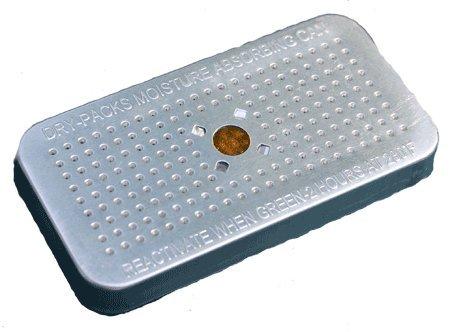
I use a Lock-and-Lock food container for general water/dust/bump protection. +1 on the silica gel. You can buy cans with silica gel and a moisture indicator. Dry-Packs markets the one below.

Silca gel can

Bummer on the dead camera. I went with a Pentax waterproof for snapshots. I can leave it in a pocket and not worry about water, perspiration, pocket debris, mud and bumps.

I got off a bus on Mount Vesuvius, facing strait into a 30mph breeze loaded with volcanic dust. No way I was going to take my camera out there! I've seen many cameras that died on the beach when the owner set them down on a beach towel thinking it safe, but the wind delivers a constant supply of low-level fine sand particles that will jam your optical toys shut for life. There's nothing like the feel of a fine focusing helical with sand in it. Like clams with sand on your teeth— SKRITCH!

PostedAug 5, 2013 at 10:38 pm

My friend is the photog, and he camera bag like this (http://www.amazon.com/Case-Logic-SLRC-202-Medium-Camera/dp/B001TZWNF0/ref=sr_1_5?s=electronics&ie=UTF8&qid=1375767310&sr=1-5&keywords=dslr+camera+bag). He rigs the harness to his pack. 2-3 years ago, he was out for about 75 days in the Sierra Nevada with a Canon 5DMark 2, didn't have any problems. Right now he's out again for about 135 days again the Sierra Nevada using the same system except he actually took a tripod this time.

While he was out he said the majority of people with SLRs simply had them hanging on their neck.

Viewing 20 posts - 1 through 20 (of 20 total)
Loading...