


take a poncho. leave the rain jacket at home.
Topic
Become a member to post in the forums.
take a poncho. leave the rain jacket at home.

"The 10 essentials were not born of field experience. They were born out of arm chair paranoia, selling books, and catering to the lowest common denominator."
That's why every outdoor organization and SAR unit recommends something like a 10 essentials list. These things come from a long history of people heading into the back country unprepared and getting themselves in serious trouble or just plain dead.
The idea that an "experienced" hiker doesn't need these things is hubris indeed. An experienced hiker knows better. The problem is that you get into a situation, don't show up or call for help and the resources are taken that could go for someone who has a real medical emergency or accident, not to mention the costs and risks to the SAR folk. All in the name of saving a few ounces? Shame on you.

Also, as Dale has pointed out in many times, it is as much the ideas behind the list as the items themselves. Just bringing them does not insure anything. Hopefully if people see such list many of them will reason out the special condition where the items could make a material contributions (if not a mortal one) to their safety.
Even though a lot of us are experienced, I think in addition to backpacking newbs some people here, because of the sometime emphasis on weight as the ultimate metric of utility, could use the review as a chance to think more clearly about how they would deal with the rare but potentially life-threatening events.
This recurrent debate over hiking essentials is exactly why I felt like writing about it back in 2007. It seemed everybodies numbered essentials list was different and listed 10 items or more. I decided it was better for me to list groups of items that needed to be covered in order to be safe. No two essentials lists may be the same based on experience, length of trip, location, etc.
http://texas.sierraclub.org/dallas/page.asp?10essentialgroups
Of course the original list was based on field experience. The original 10 essentials was probably geared for mountaineering in groups, and that may be why it did not include a whistle (or maybe the types of whistles available in the 1930's were not good for use in the cold), an item some would think today is essential for any outing. I think even their "systems" approach does not include a whistle. Other items in that original list could be used for signaling such (fire or a flashlight).
For what it's worth, I have hardly ever taken all of the orginal list of 10 essentials, leaving out sunglasses on most 3 season trips. I use a brimmed hat that keeps the sun out of my eyes and realize the need for sunglasses when on water or snow for extended periods.

"The 10 essentials were not born of field experience. They were born out of arm chair paranoia, selling books, and catering to the lowest common denominator."
–
I could not disagree more. I carry the essentials with me on every hike. My survival kit fits in one ziploc sandwich bag, my med kit in another. They take virtually no room in my pack, and I could even drop them into the cargo pockets in my pants. I've had hypothermia. I've had a bad sprain 3 hours from the trailhead (which incidentally was also only 3 miles- a bad sprain really slows you down). I've had a companion break their leg in the back country, I've seen people who blew out both knees on a descent and were still 10 miles from the trailhead. Even if I don't need my kit, someone else might. And even if no one needs the kit, the weight is so negligible that I can't imagine how stupid I would feel to need something in those kits and to have left them at home to save weight.

I carry eVent or Gore-Tex jacket on every trip – versitile.
Keeps me warm down to 40 F or even 30 F. I almost never go on a trip where it won't get down into 40s. Also good if windy. Here in PNW even in summer.
Occasionally I'll go on a trip where 0% chance of rain, but I can think of one such trip where it rained so good I had jacket.
Although everyone thought Anthony Hopkins was a bit eccentric in The Edge, he was prepared. The others that had chuckled were left feeling foolish.
Orr practiced his skills in Catch-22. They all thought he was a bit nuts. His practice paid off.
Sounds like you have a trim kit and have put thought into it.
In general and not to you, no one should ever be made to feel self conscious for taking things they believe will help them. There are ways to provide additional information or help them develop experience without making them feel foolish.
In mountains I almost always have some sort of rain protection. In deserts I usually have rain gear.
I think the emphasis needs to be on injury prevention, as most injuries I read about are sprains and injuries from slips and falls. So, IMO the smart hiker is:
– Not overweight.
– In good physical condition for the trip.
– Analyzes routes and aligns them with their skill/equipment
I never bring all of the “10 essentials.” I bring what is appropriate for the trip. There are a few things I bring on every trip in my first aid kit. Most trips I bring a compass, but not always a map.
Solo hiking is the safest, because you will tend to be more focused on what you are doing and not chit-chatting with others.
Mountaineering and rock climbing have a different set of requirements.
Further thoughts on the subject and probably highly controversial for this thread.

As a higher BMI hiker, there are pros and cons.
Pros: If my party were to get stuck in Donners Pass in November, I'd probably survive longer than most.
Cons: I'd probably look like a bigger meal to my cannibal companions than some of you scrawny athletic types
Pros: I can throw someone over my shoulder and carry them a short distance to an LZ
Cons: Very few people can throw me over their shoulder and carry me to an LZ
Pros: I'm more likely to intimidate a mountain lion
Cons: I'm more likely to receive unwanted attention from amorous bears
Fozzie, Papa, or Huggy… ?!
I always carry the essentials. These items do not have to be heavy, but they are essential. Do I use them on every trip? No, but I also have not used my fire extinguisher in a very long time either. There are so many lightweight options available, that it is stupid to not be prepared.
Good Luck reinforces bad habits.
The high Sierra is my stomping ground. It is mostly a very forgiving place, but it also kills. As Search and Rescue, we routinely meet those who have stacked the deck against themselves.
I encourage everyone I know to critically examine the weight of all there gear. A lighter pack is more enjoyable and will prevent some injuries. However, if you find yourself tempted to leave essential safety items behind, you have lost sight of the purpose. The summit is optional, returning home is mandatory!
"Solo hiking is the safest" is a myth. Ask a SAR member.

Where I hike, storms seem to come from no where and then get trapped in the mountains. My area has a lot of rain.
I would likely never go without my goretex jacket. Having said that, if you live in a drier environment with predictable weather patterns, I might carry just a trash bag.
Become a member to post in the forums.
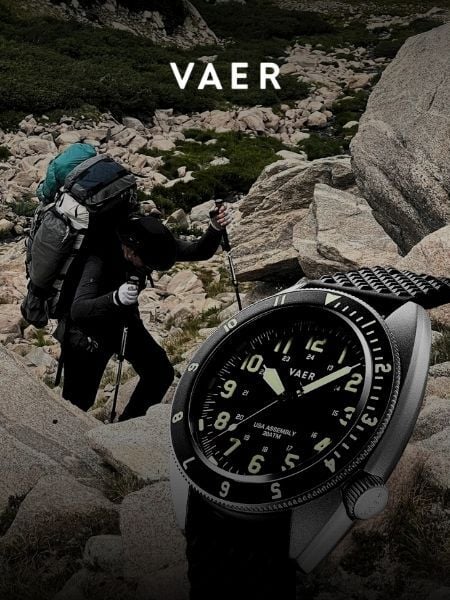 Vaer C4 Tactical Field SolarDurable timepiece for wilderness users - 20ATM (200m) water resistance, 120-click bezel, 316L SS casing, sapphire glass, solar-powered, Epson VS-42 Japanese movement, C3 Lume, USA assembly.
 © Beartooth Media Group Inc.
 Loading...