


Methinks the thinking comes from the big tent makers who sell footprints for their tents. Last time I was at REI they had more footprints than tents. And they weren't cheap either. Create a need, sell the need.
Topic
Become a member to post in the forums.
Methinks the thinking comes from the big tent makers who sell footprints for their tents. Last time I was at REI they had more footprints than tents. And they weren't cheap either. Create a need, sell the need.
A full-length wide foam pad might be enough on clean pine duff. It would be a bit pathetic on wet or muddy ground though.
Yep. Tried that. It was pathetic. ;-D
From my experience on trips in the BWCAW, we took Cliff Jacobson's advice on placing the groundsheet on the inside of our tent. If you add an additional 6" to each dimension of your shelter's footprint, you end up with a fully waterproof bathtub floor. If your camping areas are often in established sites with depressions you won't get wet from pooling water.
I have a almost 50 year old tent that has seen a lot of use without a ground sheet. The only real damage is a couple spots I dripped DEET on the floor.


Nick, this tent so explains your choice of hiking shoes…..
May I suggest — weed-block fabric.
I didn't think I needed a waterproof footprint underneath a waterproof floor, but I did want protection from punctures and abrasion (spruce needles) if the floor was going to remain waterproof. My father, a smart man, suggested the weed-block fabric.
This solved a problem I had with waterproof footprints: my climate is damp enough that I sometimes had condensation form on the underside of the tent floor, wherever there was an air pocket, and that moisture was trapped by the footprint. And then I'd put pressure on the trapped water from inside the tent. Same thing with occasional runoff finding its way between the two layers.
Weed-block fabric allows moisture through, but is very tough. Puncturing it is difficult. It doesn't wick, absorbs very little if any water (it doesn't get heavier when wet), and dries very quickly.
I wish I could tell you how much it weighs, but I don't have a scale that registers something so light.
Weed block fabric like this?
If the 3oz means per square yard, it isn't all that light. Maybe there are other versions? The idea is interesting.
Hi Stephen, I don't think that's quite the same stuff, Amazon says it's "black on one side". What I'm using is all black, and it's possible to see light through it in the centre of the meshes. Has a slightly fuzzy texture. Sadly I have no idea what brand I'm using, just that it's the cheapest kind in Canadian Tire. But it isn't the thick shiny 'professional' stuff I see in city parks. If that's any help. :P
Edit to add, my best guess is maybe 3 ounces, for a piece cut to fit a Copper Spur 1. It does weigh a bit less than the custom footprint for the Spur (4.5 oz), which I also have. Of course, that's with no grommets. Haven't bothered to add them as I originally planned, the stuff doesn't move once you've put it down.

I agree with most of the posts, I have rarely used a groundsheet. Never used one under my tarptent. The only time I used one was for a few days while I was hiking the PCT in 2010. At that point I used it to cowboy camp with a thermarest zlite. Since then I have used the neoair and bivy combo. However, I am wondering if I shouldnt try out the polychryro groundsheet, xlite, tarp combo? I really only use my bivy to protect my pad, and perhaps the polychyro can do the same job for 4 ounces less?
Thoughts?
Evan
There is a very heavy version, more properly called "geotechnical fabric" used during road construction or under sand/ gravel in a playground. There are much lighter weights in small rolls (3' x 50') at the garden center.
Become a member to post in the forums.
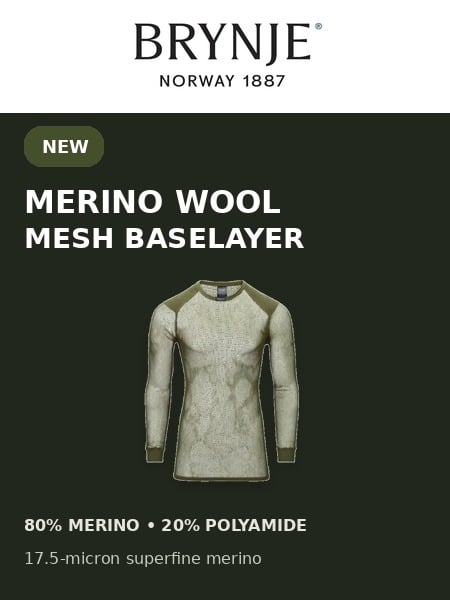 Tactical Wool Thermo ShirtSuperfine merino wool-blend mesh baselayer with a slim unisex fit and densely knitted shoulder panels for pack-carrying comfort. Weighs 4.9oz | 140g
 © Beartooth Media Group Inc.
 Loading...