“Those iconic heads on Easter Island?”
Jared diamond does a lot of selective cherry picking of data, and relies way too much on his own experience in basically south pacific type island cultures, relying on these cultures to try to prove his point, and fringe ecological cultures, like greenland.
This type of fairly major misreading is interesting in a sense, both Diamond’s and here, I said ‘here’, I did not mean by ‘here’ an island culture that was at the very edge of the Polynesian expansion, so far off their traderoutes, and in a basically different ecological niche from most other polynesian cultures. Island cultures prove basically nothing in any larger sense because they are too ecologically limited. Do the same stuff in Venezuela and 5 years later the jungles have returned, with a vengeance, because it’s a different ecological system.
Here means where we live, the Northern United States/Canada.
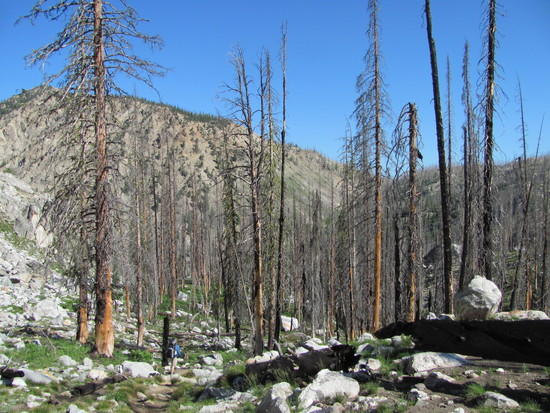
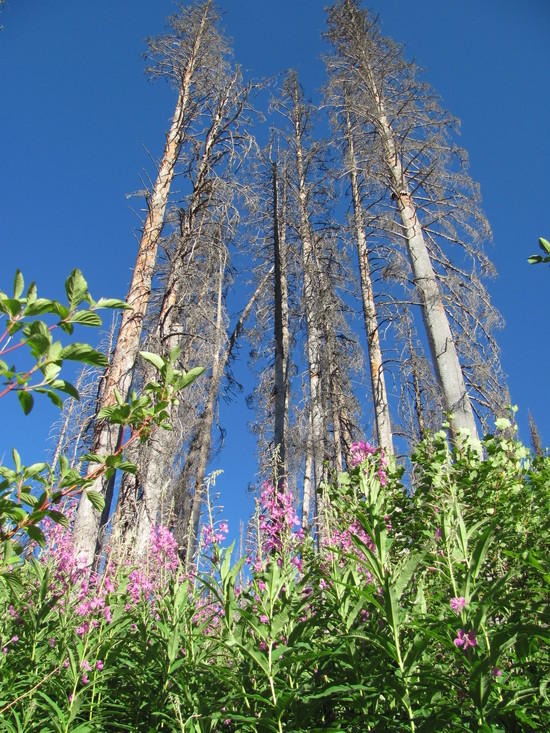
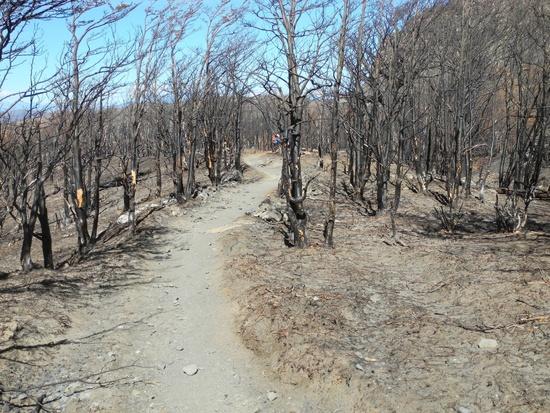
I have grown so disgusted with Diamond’s agenda that I won’t any more of his trash, reading Guns,Germs,Steel was the last straw for me, one of the most intellectually biased pieces of work I’ve ever come across. However, there’s a lot of great work being done now, 1491 has been mentioned, and rightly so, that’s an excellent piece of work, that highlights just how well the ecosystem was maintained in most areas, focusing on various forms of permaculture practiced here, and in South America in many locations. When we arrived here we didn’t find what we have now, I realize this is a hard point to accept, because it suggests that maybe, just maybe, we are ourselves at fault, as is our way of life and consumption / production patterns, which are directly altering the very fabric of our global climate system, which leads to worsening fire issues. You’ll note that everyone who deals directly with these issues is fully aware of cause of the increased fire, the only people who pretend it’s a question are fans of various rightwing formats that push industry agendas that have nothing to do with science or firefighting issues.
Again, this is not a complicated point, we are destroying our ecosystem, in the very short time span of about 400 years or so, major increases going right along with tranformation of complex ecologies to monoculture agriculture, fueled by fossil fuel burning. The more people this new food creates and enables, the more quickly the process occurs, that’s why they are getting increasingly worried in the more rational sectors of our culture, including those that have to pay some of the costs, the insurance industry. The people who lived here before us lived here for possibly up to 40,000 years, up to 100 times longer than us, that is, and when we got here, the planet was fine, give or take, still. Now it is not fine. I understand that it’s difficult to actually accept that your way of life is crushing the planet’s systems, rapidly, but 20 to 40,000 years vs what will probably end up to be around 500 years for us before the failures grown totally out of control, is just not that complicated to grasp. That’s the difference between cherry picked Easter Island, which was I believe occupied for only about 500 years as well, and a vibrant complex and diverse continental ecosystem, which can easily recover from basic attacks on it over time as long as they aren’t occurring at the scale we do them.
By the way, one way, if you read critically and pay attention, that you can see how badly Diamond cherry picks and excludes data is his attempt to suggest that large mammals were made extinct by human hunting practices when we arrived here 10-12k years ago, when in fact, and as 1491, and other newer research, show that we clearly were here much longer, which means Diamond’s attempt to exclude the data that suggested he was wrong to suggest that all humans hunt out all large game quickly when they arrive in a new ecosystem. For those interested in science, latest research suggests the large mammals here, like the mammoth, actually went extinct because of climate change some 10-12k years ago, not because of human hunting.
This is worth considering, because when the question grows to be: how can humans live sustainably, it’s useful to look at people who did just that, for a long, long, long time. For what it’s worth, neanderthals occupied the planet for about 250k years or so and also did no real damage, they were stronger than us and had larger brains, which I find very interesting, but it’s a different topic.