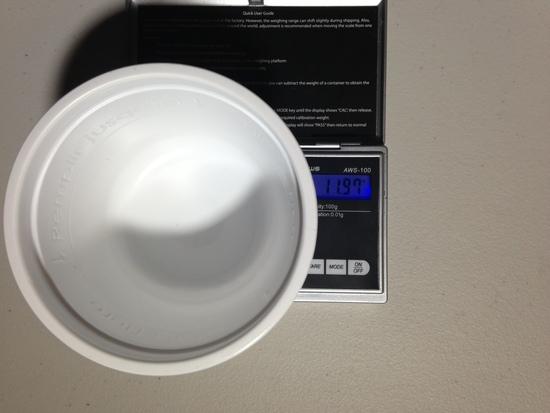
+1, Barry, on the bottom of a HDPE milk carton. One quart, half-gallon or one-gallon, depending on the diameter you want. Cut to be as deep as you want (using sturdy scissors is FAR safer and more controlled than using a razor knife). Especially if you cut them somewhat shallowly, something between a plate and a bowl, you can stack multiple ones together. That's what I do for family trips and something I recommended for Scout groups looking to save weight or money. Otherwise, as a single bowl, I'd look for that diameter into which my stove barely fits.
If you're lactose intolerant or you object to the subjugation of diary cows, you can dumpster-dive at the recycling center (Number 2 Plastics HDPE – high density polyethylene) and an unlimited number for free. It will smell of sour milk, but HDPE goes through the dishwasher just fine (it has higher AND lower temperature limits than other common plastics).
If you want a thicker plastic (but I've never had the milk jugs fail), detergent jugs and kitty litter also come in HDPE containers, but are thicker (and often more rectangular in shape. Again, run it through the very hot water and caustic detergent wash of a dishwasher prior to use and after a trip.
HDPE is wonderous stuff. Food grade. Resists many solvents (gasoline, alcohol). Maximum Temperature: 248°F / 120°C – so you can use it as a dipper in boiling water. Minimum Temperature: -148°F / -100°C – I use it to -40F, it is the base of most skis, and dog-sled runners and sees -55F in that application. It doesn't glue well, but repairs can be made with hot air welding or, my favorite in the field – lighting a strip on fire and dribbling the molten drops into the area to be repaired.