Hey Adam,
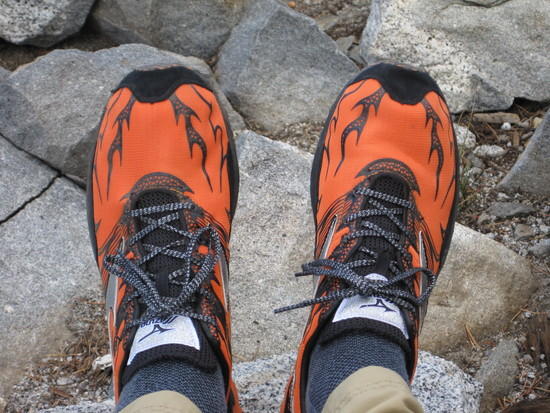
Thought I'd finally weigh in on the issue since I just made my morning double espresso. It seem like you may be making a heavy shoe vs. lighter shoe argument. But for that sake of argument lest call the heavy shoe a "boot". I bought some heavier "hiking" shoes from New Balance and they felt like boots on my feet.
Firstly keep an open mind – the issue of boot versus shoe has largely been decided, seemingly without any serious completion, on the shoe side by pretty much all of the backpackers who have done through hikes and/or have tons of experience using a *lightweight* packing approach where they are not lugging a huge 30-60+ lb pack. I find that pretty convincing myself.
Also keep in mind they have nearly all folks here *tried* both boots and shoes in the past and it would seem most people, sometimes with great initial resistance (myself included), that lightweight (running, hiking) shoes, were in every way superior. My story is a good example of this as I started with extra reasons why I might believe I needed more boot (a surgically fused right angle due to an injury) – I may write about that learning curve some day. This community is full of iconoclasts, so if there were a legitimate argument for heavier boots I'd expect someone here to artfully defend boots.
At this point the "forget about boots, they suck in every way" mentality has more or less passed down as the inherited knowledge of a ton of people and enough trail miles to probably go to the moon an back 1000 times over. Full analysis of this question can be found in Ray Jardine's early books, as well as whole articles on this site about 10 years ago.
The main myths for using boots over shoes the the corresponding refutation based on experience are as follows:
1. Boots provide ankle support. Not really! A boot can't really protect you from a twisted ankle (or worse) if you stumble badly or fall, so if you think that you are dead wrong. As many people have pointed out the amount of actual ankle support required to prevent such an injury once you are slipping/falling would be so much that it would probably prevent comfortable walking at all. What heavy boots will do is both keep you from feeling what is under your feet (hence increase the chance of slipping or stumbling), AND having a slower reaction time once you loose your balance. So the refutation of this idea is that with boots you will loose your balance MUCH more often, and once you loose you balance a little, the chance this will slide into a possible injury-producing major slip or fall is also MUCH higher. Final result – the net chance of injuring yourself is MUCH greater with boots. This one is in position 1 since I think it is the most counter-intuitive one. But it is oh so true! I resisted too, many years ago, but I experienced the material difference. There was a great story, I think it was on this site about 10 years back, of a guy hiking with his buddy (in traditional boots), and he had just switched to trying running shoes. They both were hiking with the same weight on their backs, and on the same trail. What he observed (he was hiking behind him for a while) was that his friend would have a little slip and slide or slight stumble about every 100-200 step, while he didn't have any. Every 100 of so slips would escalate into a more serious stumble, and so on. Case closed. If you are not wearing a heavy pack (and possibly even if you are) you are safer in shoes in most cases, and boot are not going prevent or substantially mitigate an injury once you start to go down.
2. Waterproof boots protect your feet from water. Yes, they do, when you walk the drizzly streets of Seattle to the local coffee house – not on a back-country trip. Again, some inexperienced people might find this a paradox, but it really is not. If you have to cross a stream, and water gets into a waterproof boot, this is a total nightmare. With shoes it is generally only a minor inconvenience. From the other end, water-proof breathable boots hold more moisture from sweat IN much more than shoes. End of that story. OK, not really. But in general terms, yes. Managing water rather than preventing water seem to be what most people do.
3. Boots protect you feet from blisters. This is pretty much a lie. What boots will do is amplify the things that actually DO cause blisters much more than shoes.
4. Boot protect you feet from rocks. They do, but in line with 1. you will NEED to protect you feet from rocks much more wearing boots. Good trail running shoes are enough protection, most people have found, provided you aren't wearing a huge heavy pack.
5. My local retailer told me I need boots. Go read Jardine if you want to see some nice rants about this. The most important thing to know, it that most shoe maker don't care, and sometime don't realty know, what is best. The just want to sell you the shoes, preferably the heaviest most expensive possible. Just forget about the labels, in most cases, saying "running", "hiking" etc. Unfortunately in order to navigate this you are going to have to break down the actual component that are important for what you want to do, and analyze things for yourself, because there is a ton of total crap coming from the marketing departments mixed in with the occasional small amount of truth. You are just going to have to educate yourself, or else go by trial an error until you find something that works for you.
There are more of these, but reason FOR switching to shoes are obvious – your legs will be much less tired using lightweight shoes when hiking – much more so than wearing boots around the town and at work will allow you to understand. This is a good in itself, of course, but it also prevents injury through fatigue-related events. I find especially going over a mountain pass I appreciate the lack of heavy boots on my feet, though that is probably also due to my total energy level being taxed more.
All of these above is totally old hat on this site, possibly to Adam as well, so I hope people will fogive me for going over the "obvious".
OK, need to refuel on espresso now.


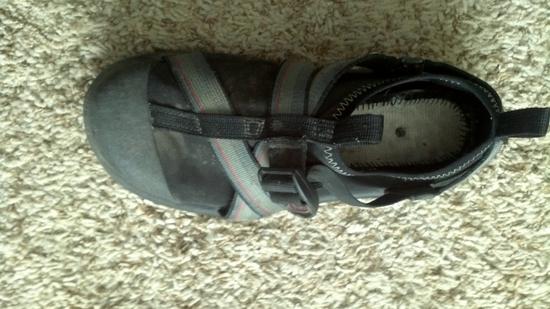 I've been wearing the Ponsul shoe from Chaco. While they are waterproof, water over the top has no way to exit. Good for mushy ground, but not walking down the creek. What I like is dirt doesn't enter. I wear them in the desert. I notice foot sweat only when I'm sitting, but not when I'm walking. Then only when not wearing socks.