


You think Patagonia is already talking to this guy? Isn't nano-technology evil, though?
Mark Shaw: One very dry demo
http://www.ted.com/talks/mark_shaw_one_very_dry_demo.html
Disclaimer: I've done no follow up research on this…
Topic
Become a member to post in the forums.
You think Patagonia is already talking to this guy? Isn't nano-technology evil, though?
Mark Shaw: One very dry demo
http://www.ted.com/talks/mark_shaw_one_very_dry_demo.html
Disclaimer: I've done no follow up research on this…
That was really, really cool. I think it will be a long time before it's economic to put on clothes, and there's no indication what it might do to breathability.. but let's dream of a Houdini covered in that in 20 years – forget eVent.

"Wait! there's more! We'll send you an additional bottle for just the cost of shipping and handling ($20)"
Not that the technology might not be useful. It just made me think of infomercials : )
It will be interesting if there's fabric made into clothing and tested in the field
It's a parlor trick. Water repellency is about the easiest thing to provide in material science. Spray some paraffin on a cinder block and you've got the latest "breakthrough" in nano-technology. Ok that's a bit harsh but the point stands. Making something water repellant is relatively easy. Nikwax and graingers have multi-million dollar companies doing this already. The trick is the "durable" part of any DWR. That's the crux of the technology and much harder nut to crack.
For static applications like cars and building materials these little companies are fine, but to date NONE have broken into the textile industry and successfully competed against the wax (nikwax) technology, fluorocarbons (graingers and most manufacturer applied dwr), or silicone (epic/nextec).
Abrasion kills any coating and that's pretty much the only thing that clothes do, abrade against themselves over time.
Become a member to post in the forums.
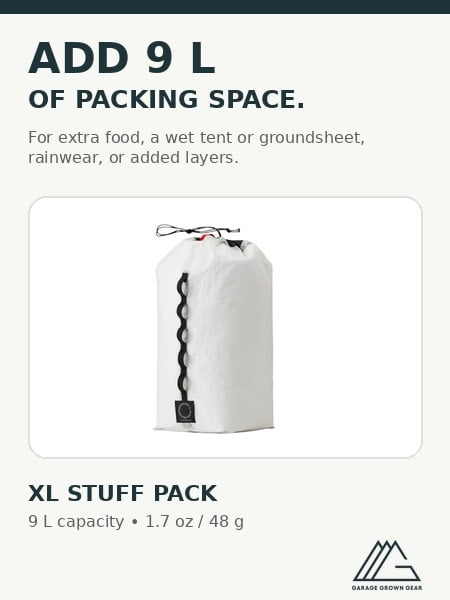 XL Stuff PackLightweight stuff pack designed to secure to the top of your backpack for carrying wet gear, extra food, rainwear, or layers.
 © Beartooth Media Group Inc.
 Loading...