


del
Topic
Become a member to post in the forums.
del

Like all new "technology" in the outdoor world market it's a 50/50 crap shoot whether it will work in practice or if the marketing department saw a 10s decrease in boil times and is going to claim "5% more efficient at minimal weight penalty, so pay us 25% more than normal!!!!"
I'm all for new technologies and hope this works, but I don't let that wonderment towards the future temper my distrust of any business (who, by definition, have the primary goal of convincing you to exchange cash for goods or services. The "how" is left at their discretion).
Hey Dustin
You're stealing MY (ultra-cynical) lines!
:-)
Cheers
PS – will the pots work? Dunno – the site is in Japanese.
"And "ATS" stands for Aluminum Thermal Spraying of (sprayed aluminum).
(Thermal) sprayed processing technology (Spraying), originally used to coat the bottom of the legs of the bridge and ship clogs dissolve another metal to prevent corrosion and deterioration of the underlying metal.
By spraying the aluminum with good heat conduction applied to the pan bottom of this titanium processing technologies, have been dramatically increasing the heat transfer efficiency than pure titanium in EPIgas. Surface of the aluminum coating has become a fine uneven, slippery on the trivet with heat spread becomes larger overall surface area is a result, cooking is easier.
Of pan bottom grainy, please try to realize all means pick up."
Somehow, it all make sense.
"Somehow, it all make sense."
Until you looks at the thinness of the Ti. Then heat transfer issues become moot.
As for increased surface area, there is a reason the MSR fusion ring is deep, much much deeper than the bumps of sprayed aluminum.
I'm sure everything in the hype is true. Just insignificant when you consider water temperature, wind, altitude, flame patterns, etc.
Yes and no.
With canister gas and high output WG or Kero stoves, yes, it makes sense. The process would result in more even heating of the ti, regardless of the thinness or gauge of the material.
With low output stoves, some alchy, some WG, turning a canister stove down very low and esbits, probably not. You are already recovering all the heat possible from the heat source using other means, more'n likely. Wind screens/heat screen, perfect distance from heat source, correct diameter of pan for the burner, etc. Then no, it wouldn't help a bit.
As I wrote somewhere else, all that stuff, heat exchangers included, rely on excess heat being recovered and used. If you do not have excess heat, why bother trying to recover it? The logic doesn't make sense, 'ya know? This is generally a product of heavy weight campers trying to "flashboil" a quart of water in 3 miuntes by putting out 10000BTU of heat. Chances are, over half will be *excess* heat and wasted. The spray technology makes good sense even if it only saves a little.
The logical fallicy that I see is the assumtion that ti is lighter. It is not.

If the pot is too close to the flame, then there will be incomplete burning, soot, inefficiency.
What about if the pot is too far away from flame? Seems like it wouldn't make much difference, within reason.
Not the thermal efficiency hype, but the friction of the rough bottom surface.
Unfortunately they do not appear to be available outside Japan.
if this does anything, you would probably get more of that benefit by using an aluminum pot with a rolled texture finish… and it would be much cheaper without much of a weight penalty
Out of curiosity I bought one of these. The Al coating on the base has a high friction surface, so the pot is very stable on a stove like the Gnat (FMS-116T). I don't believe the coating has any significant effect on heat distribution. I don't envision much use for the shallow pan, but fortunatly the lid from the AGG '3-cup' pot fits perfectly. I'll post measurements and photos if anyone is interested.
This technology will be great when I pour the BPA-irradiated water from my nalgene into my carcinogenic aluminum pot!
-Max "Hypemaster" Dilthey
The aluminium is on the outside and in any case, it has a solid, impervious oxide layer (as has the titanium)
Become a member to post in the forums.
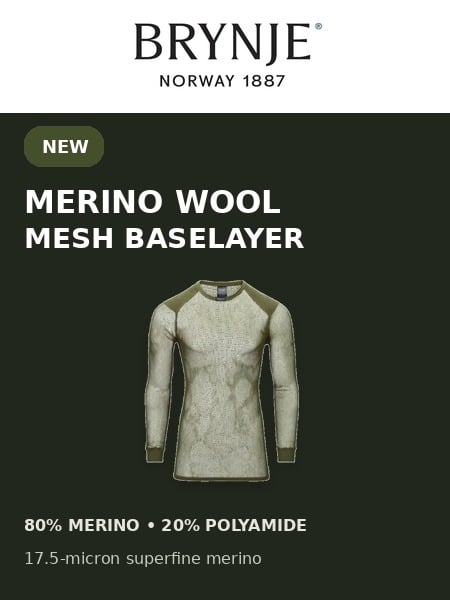 Tactical Wool Thermo ShirtSuperfine merino wool-blend mesh baselayer with a slim unisex fit and densely knitted shoulder panels for pack-carrying comfort. Weighs 4.9oz | 140g
 © Beartooth Media Group Inc.
 Loading...