Topic

They don’t build them like they used to… (why you shouldn’t buy a cheap modern sewing machine)

  • This topic is empty.
Viewing 13 posts - 1 through 13 (of 13 total)
Steve B BPL Member
PostedFeb 3, 2013 at 2:12 pm

getting an old Pfaff. When I got into making kites, which use slippery ripstop nylon, everyone recommended to me an old Pfaff, the kind with the built in walking foot. It has treated me very well for the past 20+ years, and it was old when I got it. 1222 series.

Many sewing machine repair shops will have older used machines for sale. No fancy stitches are needed, just zig-zag and straight. Needle down feature is really great to have (mine doesn't).

Steve

Konrad . BPL Member
PostedFeb 3, 2013 at 2:46 pm

Thanks Stephen, I'm actually on the hunt for a pfaff 130 at the moment, but your recommendation to get one with a walking foot also has me thinking. How does the 1222 do for thicker fabrics/layers? I'm trying to find something that I can build packs with, so I need something with the clearance and ability to power through layers, such as a sandwich of ripstop/closed cell foam/ 3D mesh.

Thanks!

PostedFeb 3, 2013 at 3:09 pm

I have been making my gear on a 130 for the past year and have loved. It's a world of difference from the New Home I had been using. Consider joining the old Pfaff forum on yahoo groups. They are very helpful for tip tricks and parts. Also, they might help you locate the perfect machine.

Though I don't have one the 130 can be equipped with a walking foot for about $15.00. It's an attachment and from what I hear it works well.

Good luck.

Steve B BPL Member
PostedFeb 3, 2013 at 8:04 pm

Personally I don't find the 1222 has much power. Sewing through multiple thicknesses of webbing has been a problem in the past.

But, the last time I had it in for a tune-up, the lady said it was one of the more powerful machines (non-industrial/commercial). But I'm sure they don't sew what I sew…

The after market walking foot attachments work off the motion of the needle going up and down (the ones that I have seen). Because the needle always goes up and down the same amount on every stitch, the walking foot doesn't necessarily match the motion of the bottom feet. The built in walking foot in the older pfaffs (and the newer ones??) matches it's motion with the bottom feet.

Steve

Backpack Jack BPL Member
PostedFeb 3, 2013 at 10:09 pm

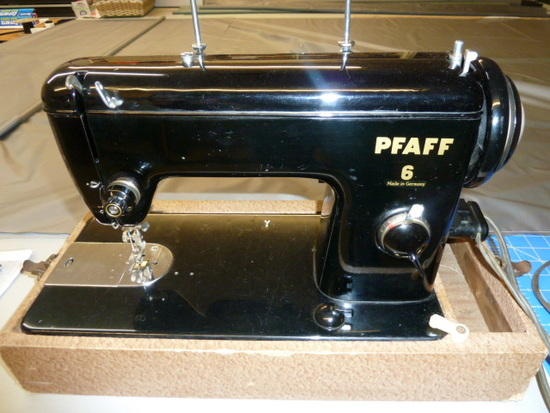
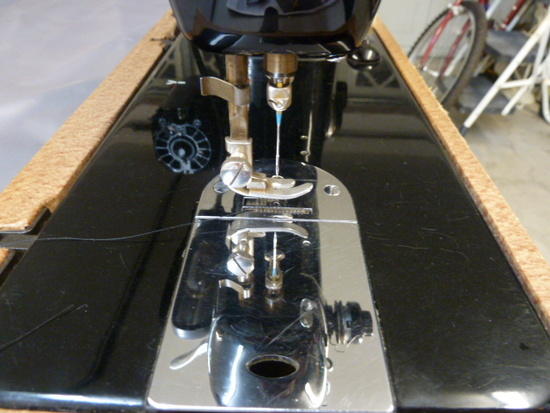
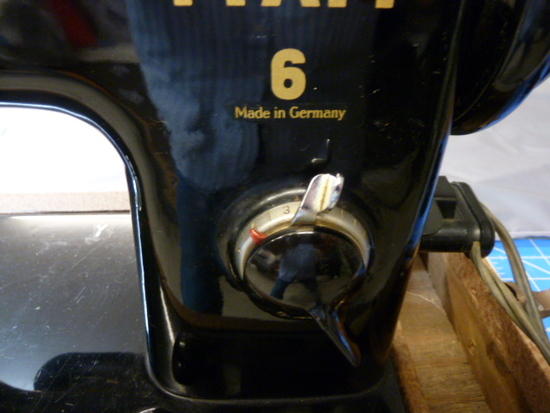
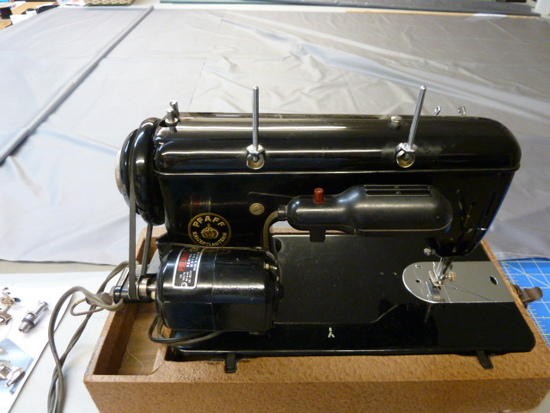
Konrad here are some pics

pfaff

pfaff

pfaff

pfaff

pfaff

pfaff

pfaff

p

PAY NO ATTENTION TO THE SECRET TARP MAKING IN THE BACK GROUND, YOU NEVER SAW IT. LOL

Jerry Adams BPL Member
PostedFeb 4, 2013 at 7:27 am

My mom's old machine (that I broke making a tent?) had this diagram with maybe 20 locations where you're supposed to apply a drop of oil. And it was tricky to set the tension and keep it from losing stitches. And it collected lint that had to be cleaned off.

I have a Janome that I have never oiled. I've vacuumed it out inside a little, but not very much. I never adjust the tension. Occasionally, like when I sew Velcro, there is a "rat's nest of thread" on the back side, but if I just let go of the fabric and let it sew it works okay. I've made maybe 8 tarps, 5 packs, 4 jackets, 8 pants or shorts, 1 shirt,… so I've used it quite a bit.

I think newer machines are better.

PostedFeb 4, 2013 at 7:28 am

Just to add some contrast to the input I have been using a cheap new machine ($60) for the last year or so and have been very pleased. I’ve sewn a tent and several packs with it. I also bought a walking foot for about $10.

The new machine costs less than a service call on my wife’s Bernina which I have used for 40 years. A walking foot for the Bernina costs more than the new cheap machine. Bernina is now on the shelf.

HERE

PostedFeb 4, 2013 at 2:52 pm

A plug for the old Kenmore zig-zag sewing machines. The later metal models, circa 1970s, work very well with material ranging from light silnylon to webbing. Sears repair service will still fix and maintain them, but the cost runs around $60-90 a trip. The ones with the 'free arm' are better than the table models because you can wrap a sleeve, stuff bag or whatever around the arm and sew the cuff or cord sleeve.
Wanted a back-up, so picked one up on Craig's List recently for $20 that needed only a top thread tension unit that Sears parts still sells. Fortunately, there is a Mom and Pop sewing machine shop in my area whose owner will maintain the machines with much less hassle and expense than sending them back and forth to Sears.

It may be more important to get to know the machine and all its idiosyncracies than to find the best one out there. Someday I may even learn how to replace the belts correctly.

PostedFeb 4, 2013 at 3:37 pm

Dunno, so far my new singer works pretty well, but then again, it's only been in use for about 3/4 of a year and somewhat infrequently. :”,ArcturusBear”

Joe Clement BPL Member
PostedFeb 4, 2013 at 4:19 pm

My 1953 Pfaff 130 has been awesome, and I think the walking foot cost $10. I paid $75 for the whole thing. I've sewed 7 layers of sunbrella canvas, but that was at the limit.

Buck Nelson BPL Member
PostedFeb 4, 2013 at 4:36 pm

Another satisfied user of a new, cheap, sewing machine.

If I were going to start some kind of sewing business, I'd get a high-quality bomber machine. But for the kind of occasional sewing projects/repairs the vast majority of us do, I think a new, inexpensive modern machine is more likely to make sense because, properly chosen, it is likely to perform well without any inherited problems and at an extremely good price.

Bob Gross BPL Member
PostedFeb 4, 2013 at 4:42 pm

Exactly.

Buck was standing in line just ahead of me.

Currently I only sew lightweight fabrics, anyway, so I don't need some super powerful thing to sew through six layers of denim and webbing.

Besides, once you figure out how to take apart the housing, you can clean it out yourself and not need a repairman.

–B.G.–

Viewing 13 posts - 1 through 13 (of 13 total)
Loading...