I won't opine on the subject of whether BPA is safe to consume or not. My approach is simply to remove the lining, and then it is a non-issue.
The BPA in beer and soda cans can be removed by annealing the cans with the self-cleaning cycle of an oven. Whatever doesn't just burn off, or come off the first time you boil with the can to remove the burnt plastic lining, can easily be removed with steel wool.
If we used cans only once to consume the contents, the way most people use recyclable water bottles, exposure is probably minimal. But heating a can repeatedly breaks down the lining and it goes into the water and food being heated. Once the lining breaks down it can easily be scratched off by an eating implement and get into your food, and sometimes flakes off all by itself and into your water or food.
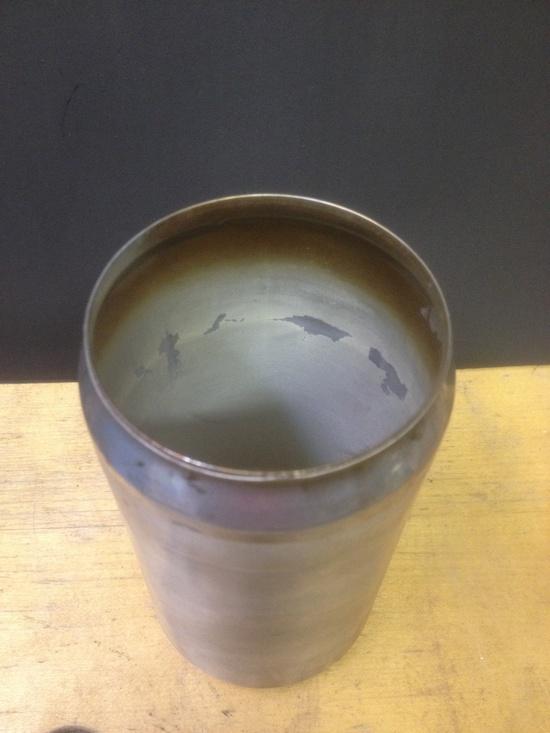
Here is a can that has been through hundreds of test boils, and the flaking plastic lining can be clearly seen: 
I personally would not consume water or food from such a can. My personal preference is to not cook in plastic or eat plastic.
On the other hand, heating acidic foods in an unlined can may leach some aluminum into the food. And then we get into the whole question of whether that is safe or not. But the simple answer for that is not to cook acidic foods in unlined cans.
Boiling water in an unlined can and then "cooking" in a plastic vessel like a Ziploc 1 quart or in a freezer bag may be the answer, as Sarah Kirkonell rightly states below, neither of those contain BPA.
[edited to include photograph and to acknowledge Sarah Kirkonell's comment]